The Modern Evolution of Moroccan Transit: A Comprehensive Guide to the Al-Boraq High-Speed Rail Network

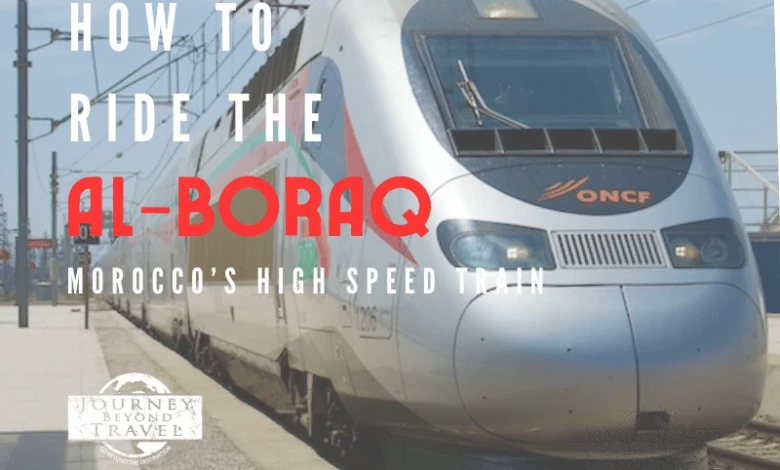
For generations, the rail journey across Morocco was synonymous with the romantic, rustic imagery of the 1960s—a time when the fabled Marrakesh Express chugged southward from Tangier, carrying the cultural aspirations, bohemian spirit, and musical influence of an era defined by global exploration. While that historic route served as a vital bridge connecting the West to the Maghreb, Morocco has since pivoted toward a future defined by technological precision and logistical efficiency. The inauguration of Al-Boraq, Africa’s first high-speed rail system, represents a paradigm shift in how the nation approaches infrastructure, connectivity, and economic integration.
The Genesis of High-Speed Rail in Morocco
On November 18, 2018, Morocco officially inaugurated the Al-Boraq line, marking a milestone in African transportation history. The project was the culmination of over a decade of planning and construction, overseen by the Office National des Chemins de Fer (ONCF), the state-owned railway operator. Named after the mythical creature from Islamic tradition—a winged steed said to have transported the Prophet Muhammad—the name symbolizes both speed and a deep-rooted cultural heritage.
The project was not without its critics; the substantial financial investment required to build the dedicated high-speed tracks led to public discourse regarding the allocation of national resources. However, the Moroccan government, supported by strategic partnerships with French railway expertise and funding from several international development banks, argued that the long-term economic gains of reduced transit times and increased regional cohesion outweighed the initial capital expenditure. By 2018, the reality of a 320 km/h train service began to reshape the logistical landscape of the North Atlantic coast.

Technical Specifications and Operational Scope
The Al-Boraq network currently covers a corridor stretching 323 kilometers from the northern port city of Tangier to the economic hub of Casablanca. The journey is divided into two distinct technical segments. The first phase, a dedicated high-speed track covering 186 kilometers between Tangier and Kenitra, allows the train to reach its maximum design speed of 320 km/h (approximately 199 mph). The second phase, spanning the remaining 137 kilometers between Kenitra and Casablanca, utilizes upgraded conventional tracks that accommodate high-speed rolling stock at lower, safety-regulated velocities.
This hybrid operational model has drastically reduced travel times. A journey that once took nearly five hours by conventional rail or bus is now completed in two hours and ten minutes. The fleet consists of dual-voltage, high-speed trainsets capable of navigating both the high-speed infrastructure and the existing electrified conventional network. These trains feature modern amenities, including climate control, spacious seating, and quiet zones, mirroring the standards of European high-speed rail travel.
Infrastructure and Key Hubs
The integration of the Al-Boraq into urban centers required the complete modernization of major rail hubs. The primary stations serving the line have been transformed into contemporary transport terminals designed to handle increased passenger volume and provide seamless transitions to local transit. These stations include:

- Tanger Ville: The northern terminus, strategically located to serve the growing industrial and tourism sectors of the Tangier-Tetouan-Al Hoceima region.
- Kenitra Station: A critical junction that facilitates the transition between the high-speed line and the conventional network.
- Rabat Agdal: Situated in the nation’s political capital, this station provides a vital link for government officials, business travelers, and international visitors.
- Casa Voyageurs: The southern hub in Casablanca, which serves as the gateway to the country’s primary financial and commercial center.
Strategic Implications and Future Expansion
The current line is merely the initial phase of a broader national strategy. The Moroccan government has outlined an ambitious master plan to expand the network to 1,500 kilometers by 2030. This expansion is intrinsically linked to the country’s joint bid with Spain and Portugal to host the 2030 FIFA World Cup.
The proposed "Master Plan 2040" envisions the high-speed network extending southward from Casablanca to Marrakesh and eventually to Agadir, as well as eastward toward Fez and Oujda. By connecting these major urban centers, Morocco aims to create an "Atlantic Corridor" that facilitates the movement of labor and goods, reduces carbon emissions by shifting passenger traffic from road to rail, and boosts domestic tourism.
Data from the ONCF suggests that the Al-Boraq has consistently seen high load factors since its inception, indicating a strong public appetite for efficient intercity transport. The environmental impact is also a key factor in the project’s long-term sustainability. By promoting electrified rail travel, Morocco is effectively decoupling economic growth from the high carbon emissions associated with heavy road traffic and short-haul domestic aviation.
Logistics for the Modern Traveler

For those planning to utilize the Al-Boraq, navigating the booking process requires a degree of foresight. The ONCF provides an online booking portal, although international travelers often report technical difficulties due to the site’s security protocols, which may reject certain foreign-issued credit cards.
Industry experts and local travel authorities suggest that travelers should prioritize purchasing tickets in person at station kiosks well in advance of their intended travel date, particularly during peak periods. The Moroccan academic calendar, religious holidays, and national festivals often lead to a surge in demand. When stations become crowded, the priority for travelers is to secure seats on early-morning departures, which are less prone to the delays that can accumulate throughout the operational day.
Economic and Social Impact
The presence of the Al-Boraq has catalyzed real estate development and urban regeneration around the key stations. The modernization of the station precincts has encouraged the growth of retail and service industries, effectively turning these transit hubs into mixed-use urban centers. Furthermore, the ability to commute between Tangier and Casablanca in roughly two hours has altered the labor market, allowing for greater professional mobility between the north and the commercial heartland.
Beyond the numbers, the Al-Boraq serves as a visible symbol of Morocco’s modernization efforts. By positioning itself as a leader in African infrastructure, the country has enhanced its appeal as a destination for international business and tourism. The transition from the "hippy trail" romanticism of the mid-20th century to the high-efficiency transit of the 21st century reflects a nation that is deeply invested in global standards of connectivity.

While the project has required significant state intervention and external financing, the objective evidence suggests that it has succeeded in its primary goal: providing a reliable, comfortable, and fast alternative to existing modes of transport. As the network continues to expand toward the southern provinces and inland cities, the influence of the Al-Boraq on the socio-economic fabric of Morocco is likely to deepen.
The evolution of Moroccan rail is a testament to the country’s strategic planning and its commitment to infrastructure as a primary driver of development. As travelers step off the train at Casa Voyageurs or gaze out at the landscape while cruising at 320 km/h between Tangier and Kenitra, they are witnessing the realization of a modern vision—a vision that honors the country’s past while aggressively building toward a more interconnected and efficient future. For the traveler, the Al-Boraq is more than just a convenience; it is a lens through which to view a country rapidly bridging the distance between its historic heart and the modern world.