The relationship between spinal alignment, biomechanical longevity, and heavy-load endurance is a critical yet frequently overlooked factor in outdoor recreation, according to sports medicine professionals and backcountry safety experts. Much like the wheel alignment of an automobile, minor postural deviations during short-distance excursions may go unnoticed. However, as the biomechanical odometer advances over multiday backpacking trips, micro-traumas accumulate, resulting in measurable wear and tear across vulnerable joints and soft tissues.
Unaddressed postural collapse under loads ranging from 30 to 40 pounds frequently precipitates chronic injury, diminishing both athletic performance and the overall safety of the trek. Clinical specialists report that poor alignment under weight is a leading precursor to debilitating conditions such as thoracic spine strain, cervical myalgia, IT band syndrome, chronic hip impingements, and lumbar disc pathologies. As outdoor participation rates continue to rise globally, physical therapists and wilderness medicine practitioners are increasingly emphasizing pre-trip conditioning and structural awareness to mitigate preventable injuries.
Anatomy of Trail Posture: The Mechanics of Alignment
Defining optimal hiking posture requires an understanding of kinetic chains and load distribution. Steve Brown, a chiropractor and physical therapist based in Boulder, Colorado, often utilizes a snowman analogy to explain spinal integrity to patients. When building a snowman, independent spherical masses must be stacked directly upon one another; if the central mass tilts forward, the structural integrity of the entire assembly is compromised. Similarly, human anatomy functions as a vertical stack where the cervical, thoracic, and lumbar regions must remain centered over the pelvis and lower extremities.
To maintain this integrity under a heavy pack, biomechanists recommend visualizing a plumb line running vertically through the knees, hips, spine, and crown of the head. Elongating the vertebral column, depressing and retracting the scapulae, and projecting the sternum forward establish a stable baseline. Furthermore, the pelvis must remain level, with the lower back held in a neutral position—neither excessively lordotic (arched) nor kyphotic (rounded). Achieving this neutrality demands steady activation of the transversus abdominis and oblique musculature, particularly when an external load attempts to pull the spine out of alignment.
Cervical alignment is equally vital. Habitually gazing downward at one’s footwear places continuous shear stress on the cervical spine. Experts advise shifting the focal point 10 to 15 feet ahead along the trail corridor. While this adjustment requires conscious habituation, it significantly reduces chronic neck strain over long distances.
Equipment Calibration: Troubleshooting Pack Fit and Load Distribution
Before addressing muscular conditioning or postural habits, specialists emphasize the critical role of equipment configuration. Marc Monroe, a Colorado-based strength and conditioning coach, identifies improper backpack fitting as the primary catalyst for postural degradation on the trail.
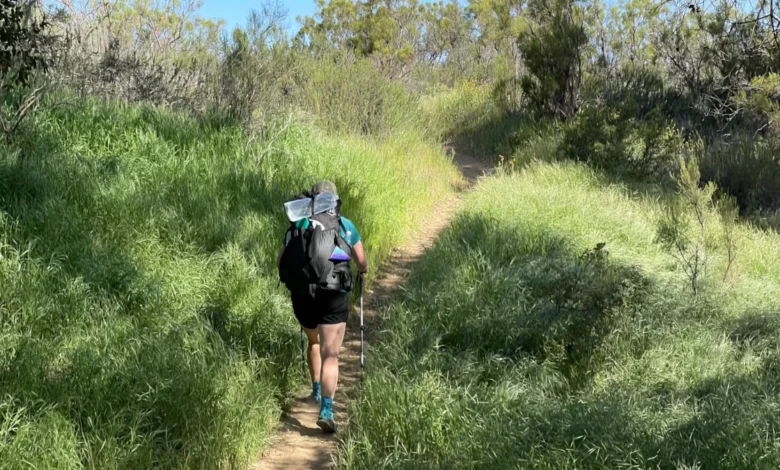
Industry standards dictate that a properly adjusted hipbelt should bear approximately 70 to 80 percent of a pack’s total mass. When a hipbelt sits too low or lacks adequate tension, the pack inevitably migrates downward. This gravitational shift forces the wearer’s upper back to round, the chin to protrude forward, and the smaller muscles of the shoulders and neck to compensate for the displaced load. Adding 30 to 40 pounds to an already compromised posture exponentially accelerates fatigue and tissue inflammation.
Load distribution within the pack compartment is another critical variable. Packing dense items too low creates a rearward pull, forcing the hiker to lean forward unnaturally from the waist. Conversely, concentrating weight at the top destabilizes the center of gravity, increasing the risk of falls on technical terrain. Optimal packing strategy places the heaviest items close to the spine and centered between the shoulder blades and hips, aligning the external mass with the body’s natural center of gravity.
Core Stability and Kinetic Chain Conditioning
When equipment is properly calibrated yet discomfort persists, attention must shift toward core stability and muscular endurance. Clinical specialists stress that the core encompasses a comprehensive anatomical network surrounding the trunk, including the deep spinal stabilizers, scapular retractors (trapezius and rhomboids), rotator cuff complexes, and the gluteal musculature.
In many modern populations, these stabilizing structures suffer from underdevelopment due to sedentary lifestyles. Consequently, verbal cues to "stand up straight" on the trail fail because the neuromuscular system lacks the endurance required to maintain those positions under load. To bridge this conditioning gap, fitness professionals recommend initiating a targeted resistance training regimen at least six to eight weeks prior to an extended backpacking expedition.
The conditioning protocol should prioritize two primary phases: foundational core and upper-body stabilization exercises, followed by heavy compound movements—such as barbell squats, deadlifts, step-ups, and walking lunges—to integrate the entire musculoskeletal system.
Targeted Resistance Protocols for Backpackers
To prepare the body for the unique biomechanical demands of carrying a heavy pack, coaches recommend specific resistance movements designed to fortify the kinetic chain:
Lat Pull-Downs
Executing lat pull-downs on a cable machine builds upper-back strength essential for resisting forward shoulder roll. Using a moderate resistance setting and a wide grip, the movement initiates by depressing the shoulder blades downward toward the back pockets before drawing the bar past the chin to the upper chest. Practitioners should maintain scapular retraction throughout the movement, aiming for three sets of six to eight repetitions.
Reverse Flies
To strengthen the posterior deltoids and rhomboids, athletes lie chest-down on an inclined bench holding lightweight dumbbells (five to ten pounds to start). By pinching the shoulder blades together, the arms are raised outward until parallel to the floor. The recommended volume is three sets of eight to ten repetitions.
Dead Bugs
This anti-extension core exercise trains the deep stabilizers to resist lumbar arching. Lying supine with the spine pressed flat against the floor, the practitioner simultaneously extends the opposing arm and leg toward the floor until hovering just above the surface, then returns to the starting position. Proper execution requires maintaining continuous contact between the lower back and the ground across three sets of five repetitions per limb.
Bird Dogs
Performed on hands and knees, the bird dog exercise targets spinal erectors and gluteal stability. By extending one leg backward and the opposing arm forward while maintaining a rigidly flat spine and level hips, the practitioner develops the endurance required for balanced ambulation. The protocol calls for three sets of five repetitions per side.
Hip Hinges
Simulating a weightless deadlift, the hip hinge teaches proper movement patterns at the hip joint without placing excessive shear stress on the lumbar spine. Practitioners stand with a neutral spine, pushing the hips backward while maintaining a soft knee bend until the torso reaches a 45-degree angle. Holding a rigid spine for a five-second isometric pause before returning to standing completes one repetition, with a target of three sets of ten.
Side Plank Dips
Side planks fortify the oblique musculature responsible for lateral spinal stability. Propped on one elbow with hips elevated, practitioners either hold a static position for 30 seconds or slowly lower and raise the hips through a controlled range of motion for 10 to 15 repetitions across three sets per side.
Suitcase Carries
To simulate asymmetrical trail loads, suitcase carries involve walking a designated distance while holding a single heavy dumbbell in one hand. By bracing the core and obliques to counteract lateral pull, the practitioner trains the body to maintain vertical alignment under uneven stress. Weight should be gradually increased to match anticipated pack weights.
Paloff Press
The Paloff press challenges anti-rotation stability through resistance band training. Standing perpendicular to an anchor point with tension in the band, the practitioner presses both hands outward from the chest while engaging the core and obliques to resist rotational torque. This movement reinforces the spinal rigidity necessary when navigating uneven terrain with a shifting pack.
Broader Implications for Wilderness Safety and Long-Term Mobility
The integration of proper biomechanics, equipment fitting, and targeted physical conditioning holds significant implications for wilderness safety and long-term athletic longevity. Orthopedic data indicates that cumulative microtrauma from poor load carriage is a primary driver of preventable backcountry evacuations and premature retirement from outdoor pursuits. By treating backpacking as an athletic endeavor that requires specific physical preparation rather than a casual weekend activity, outdoor enthusiasts can dramatically reduce injury rates.
As sports medicine research continues to illuminate the connections between core endurance and spinal health, educational initiatives within the outdoor community are shifting toward proactive prevention. Experts emphasize that investing time in gym-based conditioning and equipment calibration not only enhances comfort on the trail but preserves joint health for decades of future exploration.