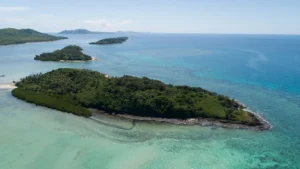
When Christopher Wilmot-Sitwell first navigated the Indonesian archipelago in the late 1980s, the experience was fundamentally defined by a singular demographic: the intrepid backpacker. For the Western traveler of that era, the nation was effectively synonymous with Bali, a destination characterized by its burgeoning arts scene and surf culture, while the remaining 17,000 islands in the world’s largest archipelago remained largely inaccessible to those seeking creature comforts. Today, the narrative has shifted toward high-touch, hyper-curated exploration, as the region transforms into a premier destination for the ultra-luxury market.

The transition from a budget-traveler’s haven to a sophisticated hub for elite tourism has been a gradual, deliberate process. This evolution reflects a broader trend in global luxury travel, where affluent visitors increasingly shun traditional European hotspots in favor of "zigging when others zag." For agency directors like Wilmot-Sitwell, co-owner of Cazenove & Loyd, the mission is no longer merely to book a flight, but to curate an immersive, seamless three-week odyssey through one of the most geographically complex regions on Earth.
A Chronology of Indonesian Tourism Development
To understand the current state of Indonesian tourism, one must look back to the pivotal years of 1989 and 1992, when hotelier Adrian Zecha introduced the concept of the ultra-luxury resort to the region. The launch of Aman resorts in Indonesia marked a paradigm shift, proving that the nation’s rugged, remote beauty could be paired with world-class hospitality. Zecha’s vision provided the template for what is now a thriving luxury sector, yet the infrastructure challenges inherent in a nation comprised of thousands of islands remain significant.

Unlike the Greek Islands or the Caribbean, where short hops and frequent ferry services make island-hopping relatively straightforward, Indonesia’s geography presents a logistical hurdle. A journey from the United States to a remote Indonesian island can exceed 30 hours of transit time, followed by complex transfers via seaplane, private vessel, or local air charters. This reality has created a distinct market for "travel masters"—experts who possess the local connections required to mitigate the friction of navigating a nation that is still developing its high-end tourism backbone.
The Rise of the Ultraluxe Division
Recognizing this demand for friction-free travel, major industry players have begun to restructure their offerings. Edita Sgovio, a veteran in luxury travel, recently took the helm of the "Ultraluxe" division at Kensington Tours. The division’s objective is to synthesize land tours, private villa stays, expeditionary travel, and yacht chartering into a singular, cohesive itinerary. This approach acknowledges that the modern luxury traveler is not looking for a pre-packaged vacation, but a meticulously vetted experience that guarantees consistency in a region where such things are not always standard.

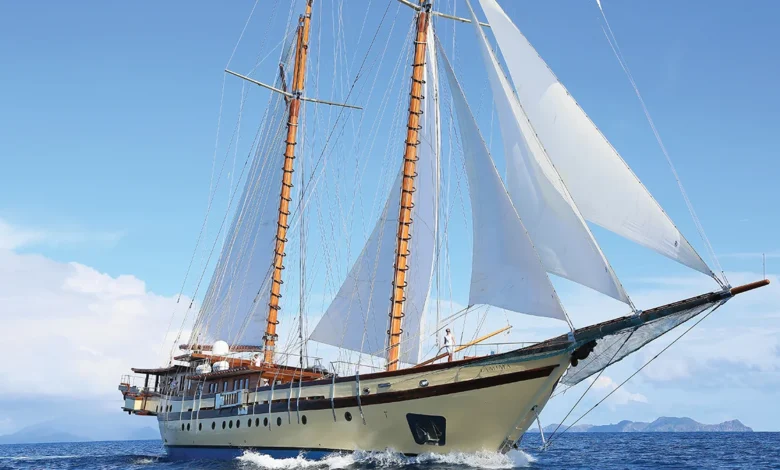
The "Indonesia Odyssey," a flagship nine-day itinerary priced at approximately $70,000 per person—excluding international airfare—serves as a case study for this new era of travel. The itinerary begins at the Mandapa, a Ritz-Carlton Reserve in Ubud, Bali. The property functions as a necessary sanctuary for international travelers to acclimatize. Following this, the journey moves into the Lesser Sunda Islands, often utilizing traditional Indonesian phinisi yachts such as the Lamima.
The Lamima experience illustrates the fusion of cultural heritage and modern comfort. These traditional vessels, designed with the aesthetic of historical spice-trade ships, offer state-of-the-art amenities. The crew, integral to the experience, provides a level of service that blends professional hospitality with the warmth of local tradition—often incorporating local performances and traditional customs into the daily routine. These excursions frequently include trips to the Komodo National Park to observe the island’s namesake dragons, a testament to the country’s focus on leveraging its unique biodiversity for high-end eco-tourism.

Data and Infrastructure: The Future of Connectivity
The Indonesian government has recognized that to sustain this influx of high-net-worth individuals, significant investment in infrastructure is mandatory. Current statistics suggest that while Bali remains the primary gateway, secondary and tertiary islands are seeing a surge in development. The construction of an international airport on the northern side of Bali is perhaps the most significant indicator of this strategy. Designed to alleviate the pressure on the current Denpasar facility, the new hub is expected to catalyze further expansion into the island’s less-visited, northern interior.
Furthermore, the expansion of the luxury portfolio in regions like Sumba—notably with the global recognition of Nihi Sumba—has proven that travelers are willing to venture beyond Bali if the payoff is sufficiently compelling. Nihi Sumba, which offers a blend of adventure sports like surfing and high-end wellness treatments, represents the current gold standard for remote luxury. The resort’s ability to combine raw, wild landscapes with impeccable service is the key to maintaining Indonesia’s appeal to the elite traveler.

Cultural Integration: The John Hardy Model
Luxury in Indonesia is not solely defined by the hospitality industry; it is deeply rooted in the nation’s artisanal heritage. Brands like John Hardy, which maintains a massive creative hub and workshop in Bali, have become anchors for luxury tourism. Reed Krakoff, the brand’s creative chairman, has frequently noted that the attraction of Bali is not just the accommodations, but the juxtaposition of the environment.
"The variety of landscape and locations there is kind of amazing," Krakoff stated. "There are the beaches and the forest. It’s really rare that you have these kinds of differentiated environments so close together." This sentiment is echoed by travel planners who note that clients are increasingly looking for "meaningful" luxury—the ability to interact with local craftsmen, participate in traditional water blessings, and engage with UNESCO World Heritage sites under the guidance of experts rather than as part of a mass-tourism tour group.

Implications and Future Outlook
The broader implication of this shift is that Indonesia is moving toward a bifurcated tourism model. On one side, the established, high-volume tourism of central and southern Bali continues to cater to the mid-market. On the other, an emerging, highly exclusive tier of tourism is reclaiming the more remote reaches of the archipelago.
However, the transition is not without challenges. Sustainability remains a central concern. As more luxury resorts are developed on ecologically sensitive islands, the demand for water, waste management, and energy will increase. Future-proofing the Indonesian tourism sector will require a delicate balance between the demands of wealthy travelers and the preservation of the very landscapes that draw them in.

For the traveler, the takeaway is clear: Indonesia is no longer a "do-it-yourself" destination for those accustomed to a certain standard of living. The logistical complexity of the archipelago, while a hurdle for some, is the exact barrier that ensures exclusivity for others. By engaging specialized agencies and utilizing curated itineraries, the modern traveler can access the raw, natural beauty of the Indonesian islands without sacrificing the comfort, security, or efficiency that defines the contemporary ultra-luxury experience. As the infrastructure continues to mature, it is likely that the "Odyssey" model will become the new standard for exploring this vast and varied nation.