Driving in Croatia: What the Crolibertas Electronic Toll System Launch Means for Motorists in 2027


The infrastructure of Croatia’s national transportation network is undergoing its most significant modernization in decades, marking the definitive end of an era defined by paper tickets, long queues, and physical cash transactions at motorway barriers. Scheduled for an official nationwide rollout on March 1, 2027, the introduction of a new electronic free-flow tolling system—officially designated as Crolibertas—will permanently transform how millions of domestic and international motorists navigate the country’s extensive highway corridors.
For decades, Croatia’s scenic coastal routes and vital inland transit arteries have relied on traditional, barrier-controlled toll plazas. While effective at securing revenue for state infrastructure, these stations have long served as notable bottlenecks, particularly during the peak summer tourism months when heavy influxes of international travelers lead to severe congestion, extended delays, and driver frustration. The deployment of Crolibertas seeks to eliminate these pain points by replacing physical infrastructure with an advanced overhead gantry network capable of tracking vehicles seamlessly at highway speeds.
As the implementation date draws closer, transport authorities, automotive associations, and tourism boards are ramping up informational campaigns to ensure that both local drivers and foreign visitors understand the operational mechanics of the new framework. Misconceptions regarding mandatory vehicle pre-registration, the potential introduction of time-based vignettes, and the treatment of international motorists have circulated widely. Clearing up these administrative details well in advance is vital to preventing compliance issues and ensuring a smooth transition for the millions of vehicles that traverse Croatian motorways annually.
Background Context and the Evolution of Croatia’s Toll Infrastructure
The decision to overhaul Croatia’s toll collection mechanisms did not happen overnight. For years, the state-owned motorway operators—primarily Hrvatske autoceste (HAC)—faced mounting pressure to modernize a system that struggled to cope with the rapid expansion of European tourism and rising freight volumes. Traditional toll booths, while familiar, require significant spatial footprints, incur high maintenance costs, and present continuous safety hazards due to sudden speed reductions and merging traffic patterns near plazas.
Discussions surrounding free-flow electronic tolling began to gain serious momentum following Croatia’s integration into the European Union, the Schengen Area, and the Eurozone. As regional integration deepened, cross-border travel surged, turning highway efficiency into a critical economic priority. The Croatian government recognized that maintaining legacy toll booths would increasingly handicap national competitiveness and detract from the overall travel experience of visitors arriving from neighboring countries.
The Crolibertas project was subsequently conceived as a comprehensive digital solution. Utilizing a combination of automatic number plate recognition (ANPR) and dedicated short-range communication (DSRC) technologies, the system is engineered to capture vehicle movements accurately without requiring drivers to alter their driving behavior or decelerate. This technological leap places Croatia alongside other European nations that have successfully transitioned away from barrier-based tolls, aligning the country’s transport logistics with modern continental standards.

Chronology and Implementation Timeline
The transition to Crolibertas follows a carefully structured timeline designed to minimize disruptions to ongoing traffic while allowing sufficient time for infrastructure installation and public education.
Phase one of the project involved large-scale legislative groundwork, technical standardization, and public procurement processes to select capable contractors for the nationwide deployment of overhead gantries, cameras, and optical sensors. Throughout 2025 and 2026, motorists traveling across Croatian motorways will continue to utilize the familiar legacy system, pulling physical tickets at entry ramps and settling balances at exit toll booths using cash, credit cards, or existing Electronic Toll Collection (ENC) units.
During this preparatory window, construction crews have steadily installed the necessary electronic architecture along primary motorway corridors, including the heavily traveled A1 Zagreb–Split–Dubrovnik route and the A3 trans-European corridor.
March 1, 2027, marks the official go-live date. From this moment onward, the physical barrier systems at main toll plazas will be deactivated or removed for free-flow transit, and Crolibertas will assume full operational responsibility for toll collection nationwide. To accommodate motorists who arrive without prior digital arrangements, transport authorities are establishing specialized infrastructure points, including approximately 140 rapid vehicle-registration lanes located at strategic border crossings and former toll plazas. These lanes are designed to facilitate fast, frictionless onboarding for drivers entering the country for the first time.
Mechanics of Crolibertas: How the System Operates
Understanding how Crolibertas functions is essential for anyone planning a driving itinerary in Croatia. The architecture of the system relies on overhead gantry structures equipped with advanced sensors, laser scanners, and high-definition cameras positioned at regular intervals across the motorway network.
Under the traditional framework, the journey sequence was straightforward yet cumbersome: take a ticket, drive, stop at a booth, and pay. The new free-flow model completely reimagines this workflow: a vehicle passes beneath a gantry, its presence and classification are recorded electronically, the journey continues uninterrupted, and the applicable toll is calculated in the background based on distance traveled and vehicle category.

For motorists operating standard passenger cars and other light vehicles, the system offers two primary avenues for compliance and payment:
-
ENC (Electronic Toll Collection): Drivers who already utilize Croatia’s established ENC transponder units can continue to do so without interruption. The small device, mounted securely inside the windshield, communicates directly with the tolling infrastructure, debiting the associated account automatically. Existing ENC users are not required to transition to license plate recognition simply because the new system has launched.
-
Automatic Licence Plate Recognition (ANPR): For motorists who do not possess an ENC device—particularly international tourists—the ANPR option provides a convenient alternative. By registering the vehicle’s license plate in the Crolibertas database prior to travel or immediately upon arrival, and linking it to a valid credit or debit card, the system automatically bills the registered payment method each time the vehicle passes a gantry.
Addressing Foreign Drivers and Cross-Border Travel
One of the most frequent concerns raised by international travelers involves whether foreign-registered vehicles are subject to different rules or automatic exemptions under the new Croatian toll regime. Transport officials have emphasized that foreign cars are fully integrated into the Crolibertas framework.
Motorists driving into Croatia from neighboring European nations—such as Slovenia, Italy, Austria, Hungary, Germany, and Bosnia and Herzegovina—must comply with the exact same toll-payment obligations as domestic drivers. Foreign-registered vehicles are not exempt from motorway fees. Consequently, international road-trippers must ensure their vehicles are registered in the ANPR system linked to a valid payment method, or utilize a compatible transponder, prior to embarking on extensive highway journeys.
Failing to register or secure an approved payment method before utilizing the motorway network risks triggering automated fines and enforcement measures. While the 140 rapid registration lanes at borders and key transit nodes will provide a safety net for unprepared arrivals, proactive preparation is strongly encouraged to avoid logistical delays at the start of a holiday or business trip.
Distinction Between Tolls and Vignettes
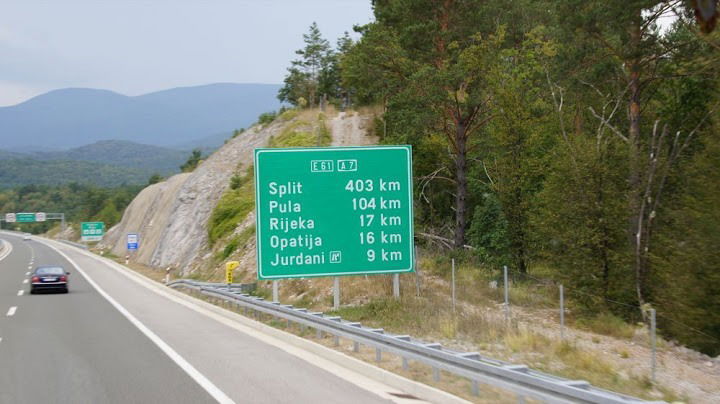
A common point of confusion among international visitors is whether Croatia’s shift toward electronic tolling signifies the adoption of a vignette system, similar to those utilized in Austria, Slovenia, or Switzerland.
Transport authorities have explicitly clarified that Crolibertas is not a vignette. A traditional vignette grants time-based access to a motorway network for a fixed duration—such as ten days, a month, or a year—regardless of the actual distance driven.
In contrast, Crolibertas maintains a distance-based and vehicle-category-sensitive pricing model. Motorists are charged strictly according to the specific entry and exit points of their journey and the classification of their vehicle. The core innovation lies entirely in the collection method—replacing physical toll booths with digital, free-flow detection—rather than a fundamental restructuring of how road usage is priced. Drivers should therefore avoid purchasing unauthorized third-party vouchers advertised online as "Croatia vignettes," as no such product exists within the official legal framework.
Special Requirements for Commercial and Heavy Vehicles
While passenger car drivers enjoy the flexibility of choosing between ENC transponders and license plate recognition, commercial operators and owners of heavier vehicles face stricter regulatory requirements.
Under the Crolibertas framework, vehicles classified within the third and fourth categories—including large trucks, heavy multi-axle freight carriers, and certain commercial vans—are legally mandated to utilize dedicated ENC devices rather than relying solely on license plate recognition. This distinction ensures higher accuracy in tracking heavy commercial traffic, which causes greater wear and tear on highway infrastructure and is subject to complex axle-based toll tariffs.
Travelers operating motorhomes, campervans, or large passenger vans are advised to verify their exact vehicle classification category well in advance of their trip to ensure full compliance with the appropriate technical requirements.
Economic Implications and Broader Industry Impact

The introduction of Crolibertas carries profound economic and environmental implications for Croatia. From an operational standpoint, the elimination of physical toll plazas significantly reduces administrative overhead for motorway management companies, cutting down on staffing costs associated with manual toll collection and reducing the extensive physical maintenance required for barrier gates and asphalt wear-and-tear lanes.
From an environmental perspective, the continuous flow of traffic yields tangible reductions in carbon emissions and fuel consumption. Eliminating the cycle of deceleration, idling in long queues, and subsequent acceleration at toll booths removes significant localized pockets of vehicular exhaust pollution, aligning with broader European Union targets for sustainable transport corridors.
Furthermore, tourism economists anticipate that the removal of highway bottlenecks will substantially enhance the competitiveness of Croatia’s coastal destinations. By streamlining transit times between major transport hubs like Zagreb, Split, Zadar, Rijeka, and the interior regions, travelers can move fluidly throughout the country, fostering increased regional exploration and boosting economic activity across local hospitality, retail, and service sectors.
Actionable Guidance for Motorists Planning 2027 Road Trips
For individuals scheduling a motoring holiday or business transit through Croatia in 2027 and beyond, preparation remains key to a seamless experience. While immediate action is unnecessary for travel occurring prior to the March 1 launch, prospective visitors should adopt a checklist-oriented approach ahead of their departure:
- Verify Vehicle Classification: Confirm whether your vehicle falls under standard light passenger categories or heavier commercial brackets that mandate ENC hardware.
- Choose Your Payment Pathway: Decide whether to acquire or continue using an ENC transponder device, or opt for the digital convenience of automatic license plate recognition linked to a secure credit card.
- Register in Advance: Utilize official state digital portals to register vehicle credentials prior to entering Croatia, thereby bypassing any potential queues at border registration lanes.
- Avoid Unofficial Resellers: Purchase toll products exclusively through authorized official channels to safeguard financial data and avoid fraudulent markup schemes.
By understanding the structural shifts accompanying the deployment of Crolibertas, motorists can ensure their journeys across Croatia remain efficient, compliant, and thoroughly enjoyable, setting a new standard for modern European road travel.