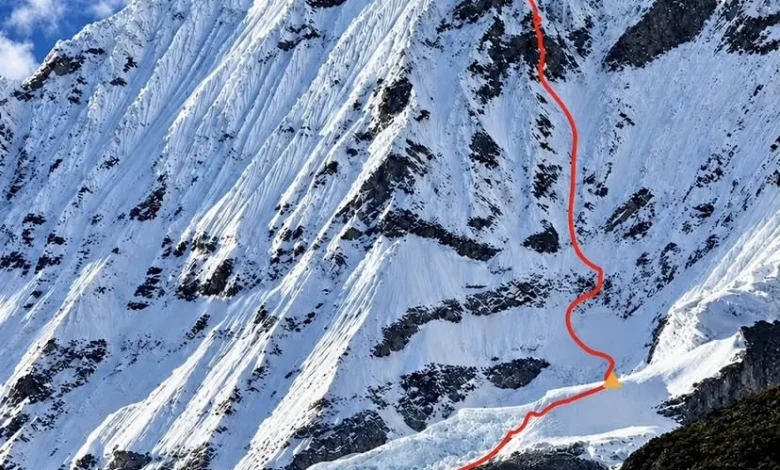
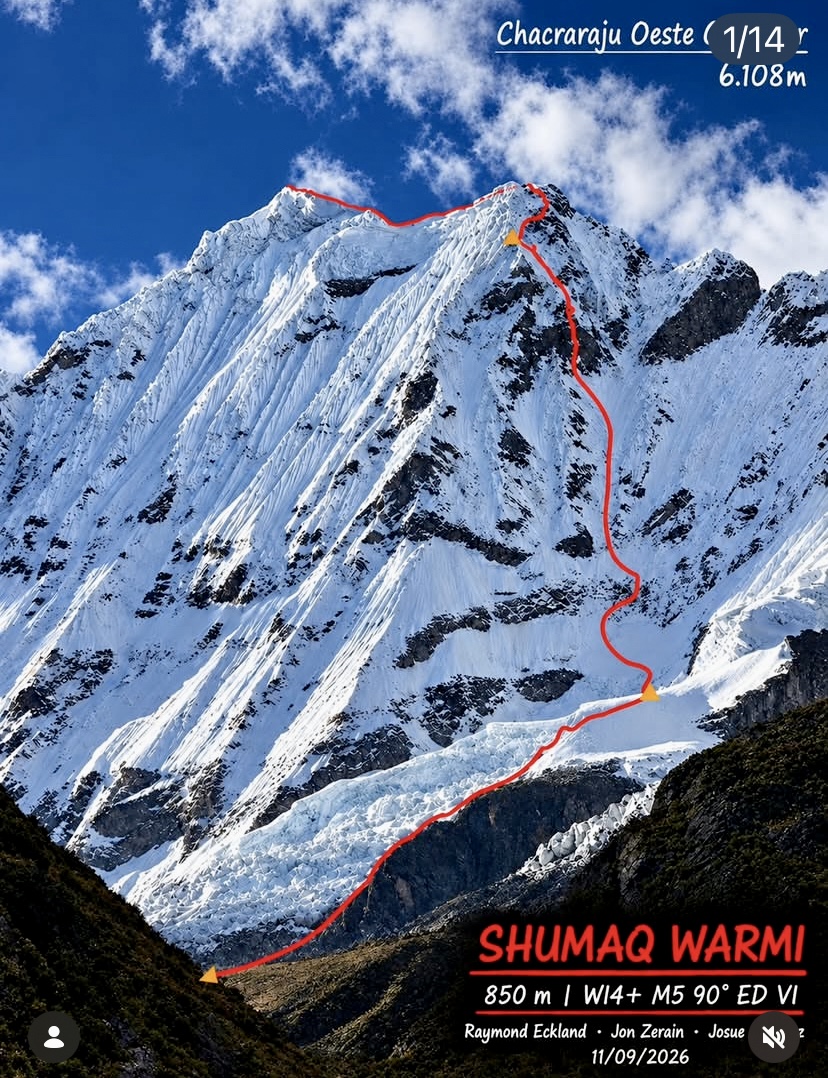
On September 11, 2026, an international climbing team comprised of Raymond Eckland, Jon Zerain, and Josue Sanchez successfully established a formidable new route on the 6,108-meter Chacraraju West in the Cordillera Blanca of Peru. The team christened their 850-meter line on the mountain’s notorious south face Shumaq Warmi—Quechua for “beautiful woman”—and assigned it a technical grade of WI4+ M5 90°, ED VI. This ascent represents a significant milestone in high-altitude technical mountaineering, as it reaffirms the enduring challenge posed by one of the Andes’ most formidable summits.
A Six-Day Battle Against the Elements
The expedition was defined by a grueling six-day effort characterized by volatile weather and high-consequence terrain. The team’s initial progress was stymied by two days of intense mountain weather that forced the trio to remain within the confines of their tents. Upon resuming their ascent on the third day, the climbers navigated through near-winter conditions, characterized by heavy, persistent snowfall that necessitated constant trail-breaking.
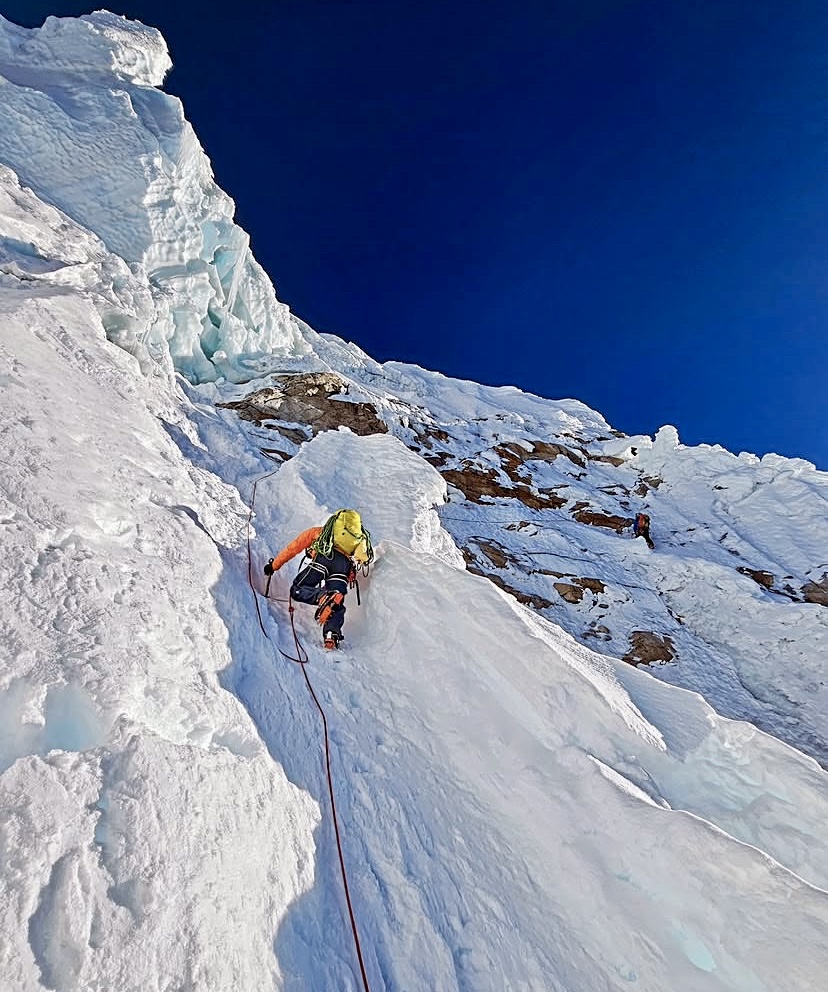
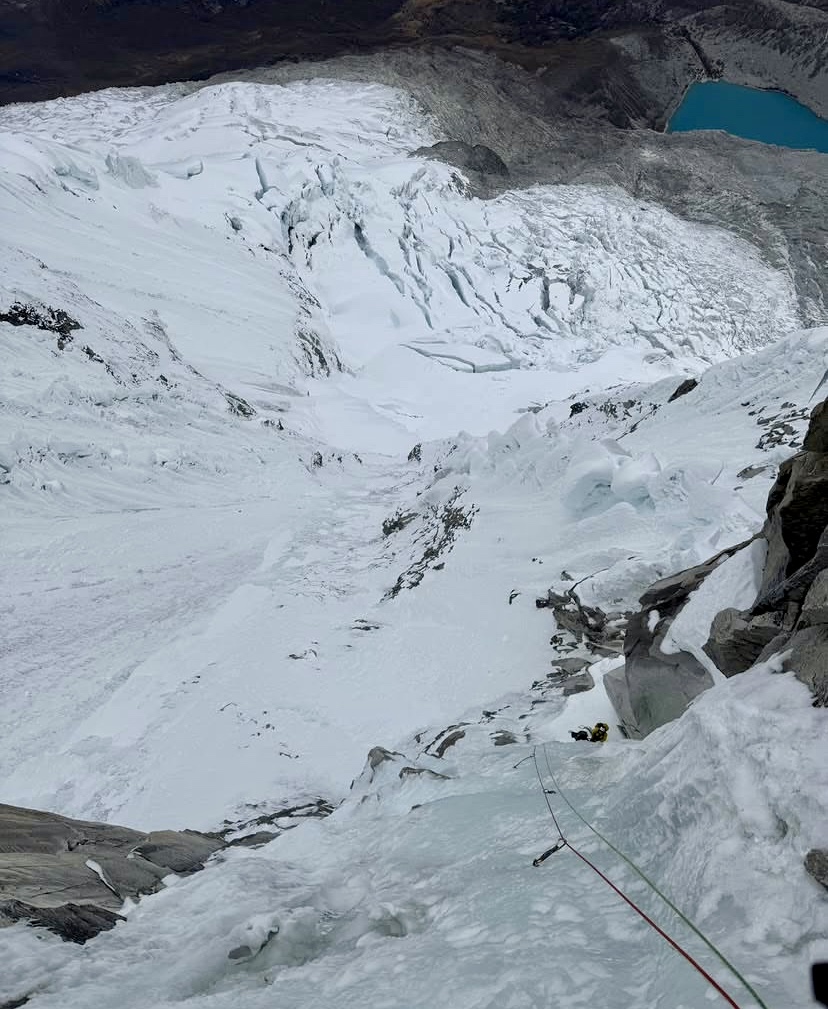
The physical hazards of the south face were immediately apparent. The team navigated a labyrinth of precarious ice bridges and gaping, unstable crevasses. After eight hours of intense labor, the climbers established their first bivouac at the base of the wall, utilizing a small cave that barely accommodated their tent.
The following day, departing at 4:00 am, the team navigated an 80-degree bergschrund composed of unstable, wet snow before committing to an exposed M5 section—a series of delicate, technical mixed-climbing maneuvers. They were forced to maintain a high pace through a hazardous rockfall zone where debris descended with the velocity of projectiles. This section culminated in the route’s primary crux: a vertical 70-meter wall of WI4+ ice.
The second night on the wall proved to be a test of psychological and physical endurance. The climbers spent two hours searching for a marginal site to sleep, eventually settling in. With their gear saturated and temperatures plummeting, they endured what they later described as one of the most grueling nights of their mountaineering careers, relying on thermal blankets to stave off hypothermia.
The Final Push to the Summit
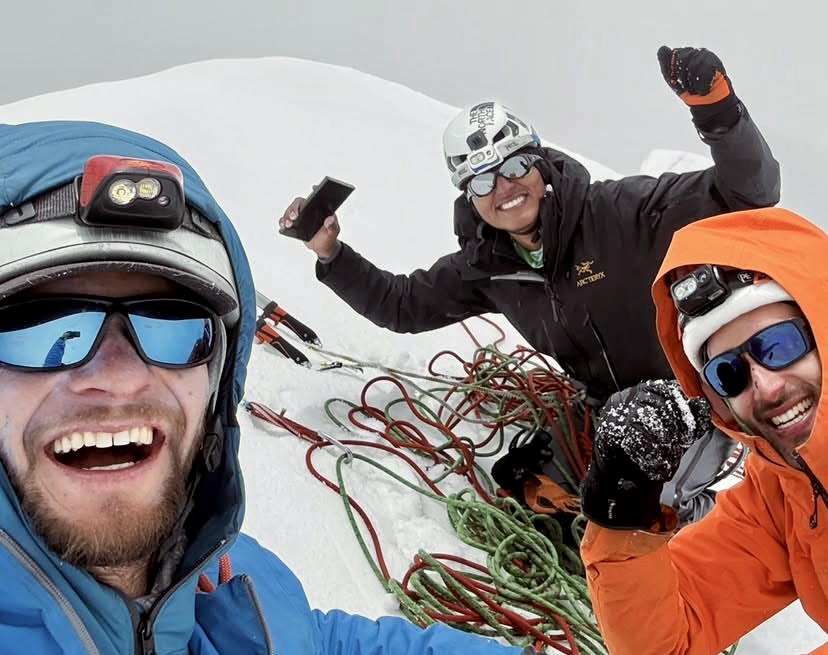
On the final morning, the trio departed at 4:00 am for the summit push. They successfully navigated the remaining M5 mixed sections, reaching the summit shoulder by 10:15 am. Ninety minutes later, Eckland, Zerain, and Sanchez stood on the main summit of Chacraraju West.
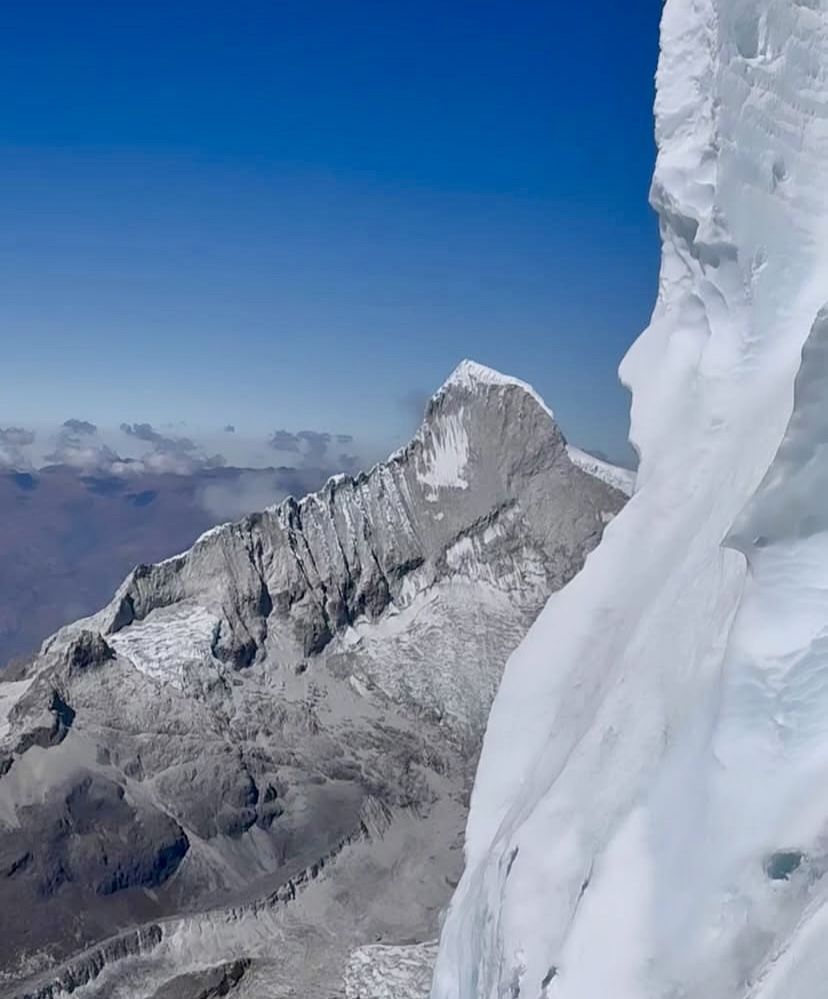
The ascent was marked by sustained technical difficulty, with several pitches maintaining angles between 60 and 70 degrees. The climb’s two primary ice pitches were particularly notable for their 90-degree verticality and high exposure. The descent was equally complex; it required 13 rappels and additional downclimbing before the team could traverse off the glacier. Navigating a final, unstable rock band, the group reached the vicinity of Laguna 69 at midnight, successfully concluding their six-day expedition. The route’s name, Shumaq Warmi, was inspired by a unique formation of snow near the summit that, at dawn, resembled a human face.
Historical Context: The Siege of Chacraraju
To understand the magnitude of this new route, one must examine the history of Chacraraju. In the 1950s, the mountain was widely regarded as the most difficult unclimbed peak in the Peruvian Andes. Its architecture—characterized by fluted ice walls and dangerously overhanging cornices—defied the climbing methodologies of the era.
In 1955, American mountaineer John C. Oberlin articulated the widespread apprehension surrounding the peak. In his scouting report for The Alpine Journal, Oberlin famously posited that reaching the summit would require “siege or suicide, or perhaps both.” His words echoed the sentiments of many elite climbers who, upon inspecting the mountain’s profile, chose to retreat rather than engage with what they deemed an impossible objective.
The eventual first ascent of Chacraraju West on July 31, 1956, by a French expedition led by the legendary Lionel Terray, remains a landmark event in mountaineering history. The team, which included Maurice Davaille, Claude Gaudin, Raymond Jenny, Robert Sennelier, and Pierre Souriac, utilized extreme siege tactics to overcome the final 800 meters of the peak. It took them 11 days of continuous, grueling effort. Terray later characterized the ascent as one of the most arduous experiences of his life, solidifying the mountain’s reputation as the most dangerous and technically demanding peak in the region. Chacraraju East was subsequently conquered in 1962, marking the final 6,000-meter summit in the Cordillera Blanca to be reached by humans.
Implications for Modern Mountaineering
The success of Shumaq Warmi provides a modern case study in how technical proficiency and lightweight tactics have evolved since the era of the great sieges. While the 1956 French ascent required nearly two weeks of fixed ropes and heavy logistical support, the 2026 team completed their route in under a week, operating as a light, independent unit.
However, the grading of the route as ED (Extremely Difficult) serves as a stark reminder that the objective hazards of Chacraraju remain unchanged. Despite advancements in equipment and predictive weather modeling, the mountain’s structural instability and extreme steepness ensure it remains a formidable test. Many climbing parties still refrain from attempting the final, precarious cornices that guard the true summit, opting to turn back before reaching the absolute high point.
The successful ascent by Eckland, Zerain, and Sanchez contributes to the growing corpus of technical data regarding the Cordillera Blanca. As climate patterns in the Andes shift, the stability of high-altitude ice is becoming increasingly unpredictable. The team’s ability to navigate the 850-meter south face while managing rockfall and unstable snow conditions highlights the necessity of both speed and technical versatility in modern high-altitude environments.
The Future of Technical Climbing in the Cordillera Blanca
The establishment of Shumaq Warmi is expected to draw renewed interest toward the south face of Chacraraju, though the extreme difficulty of the terrain will likely limit attempts to only the most experienced alpine climbers. The route serves as a testament to the endurance of the human spirit in the face of daunting, historic challenges.
From a geological and sporting perspective, the ascent offers valuable insights into the current state of the mountain’s ice formations. Observers note that the route’s success was largely due to the team’s decision to commit to the ascent despite the initial weather delays, illustrating the fine line between calculated risk and excessive exposure.
As the mountaineering community reviews the report from this 2026 expedition, the legacy of Chacraraju continues to grow. What was once considered an act of "suicide" in the mid-20th century has become a modern, albeit high-stakes, pursuit of technical excellence. The documentation provided by the team, including photographic evidence and detailed pitch descriptions, will serve as essential information for future expeditions looking to test their skills against the formidable, snow-fluted walls of the Cordillera Blanca.
In conclusion, the opening of Shumaq Warmi is more than just a successful summit; it is a continuation of the dialogue between humanity and the most challenging peaks on Earth. It honors the historical precedent set by pioneers like Lionel Terray while demonstrating the capabilities of the current generation of alpinists. The mountain, with its twin summits of 6,108m and 6,001m, remains an apex objective, demanding the highest level of respect and technical precision from any who seek its crown.