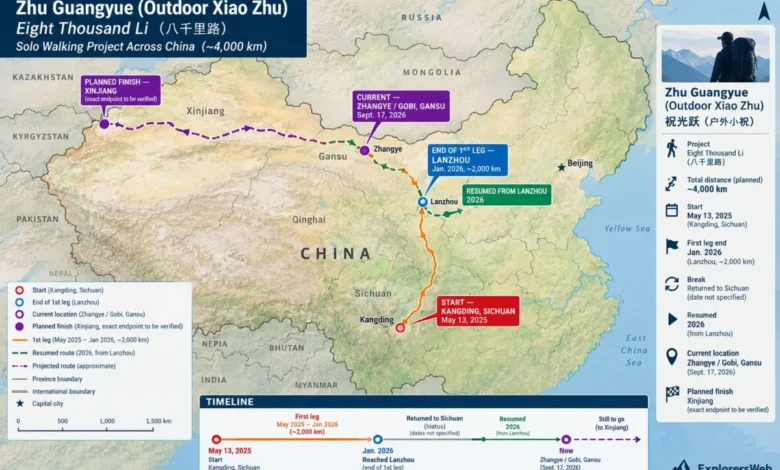
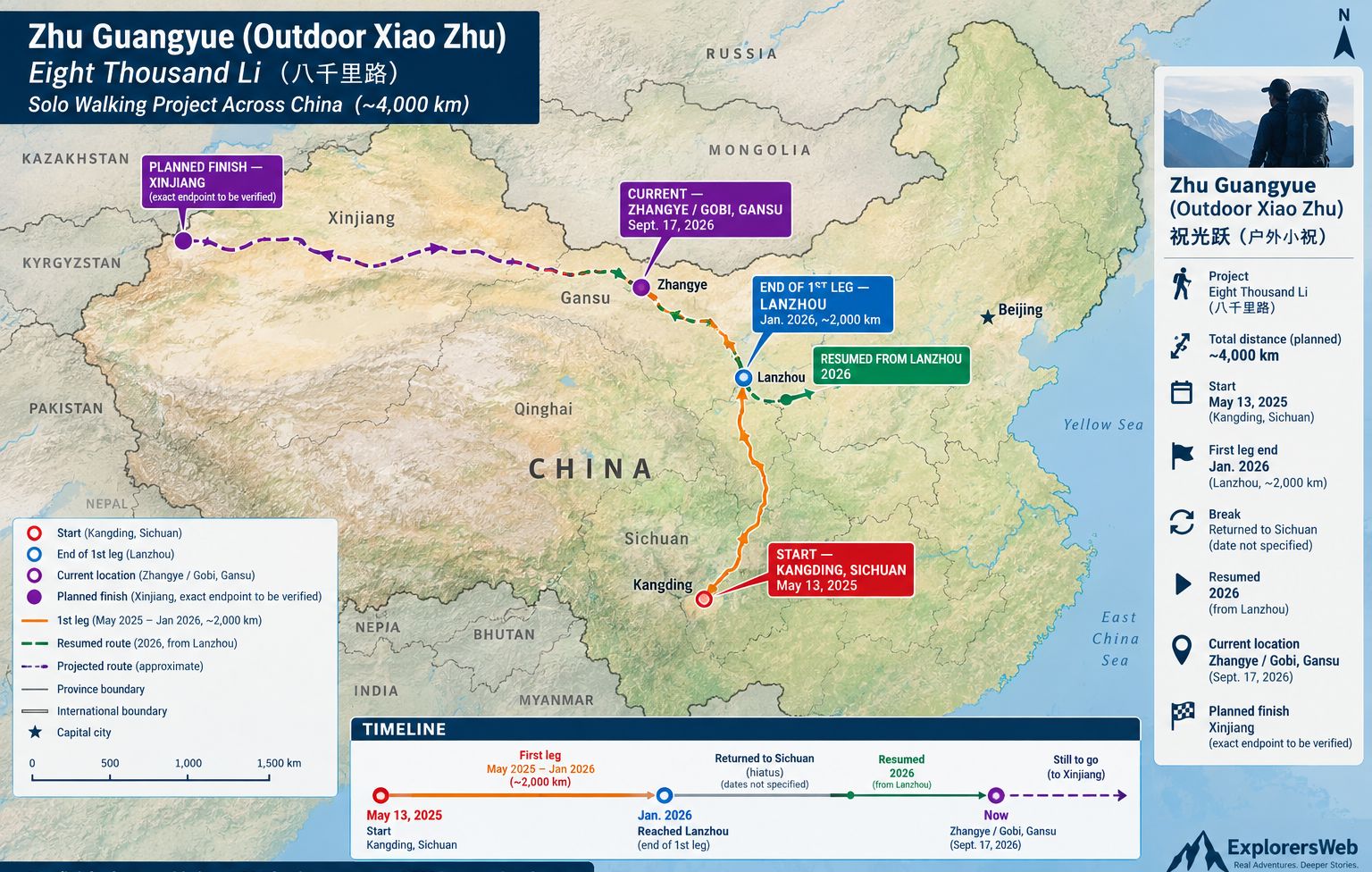
In May 2025, Zhu Guangyue, a Chinese adventurer known to his online followers as "Xiao Zhu," embarked on an ambitious solo expedition traversing approximately 4,000 kilometers of diverse and challenging terrain. Starting from his adopted hometown of Kangding, nestled in the high-altitude landscapes of Sichuan Province, Guangyue set his sights on reaching his birthplace in the far western Xinjiang Uyghur Autonomous Region. The journey represents not merely a feat of physical endurance, but a deeply personal pilgrimage for the hiker, who turned to long-distance trekking as a means of processing the loss of his parents and finding solace in the natural world.
A Chronology of the Expedition
The trek, which has captured the attention of a growing audience on Chinese social media platforms, is divided into distinct phases necessitated by the sheer scale of the geography involved.
The first leg of the journey commenced in the spring of 2025. Over the course of eight grueling months, Guangyue navigated the mountainous corridors of western Sichuan and the expansive plateaus of Qinghai. During this initial 2,000-kilometer stretch, he faced a variety of survival challenges, ranging from volatile weather patterns—including sudden, severe snowstorms—to the constant threat of predatory wildlife. Reports from his digital dispatches highlight an encounter with a yak carcass, presumably felled by a bear, and a period in the Qinghai highlands where he opted to travel with a Tibetan mastiff to mitigate the risks posed by wolf packs.
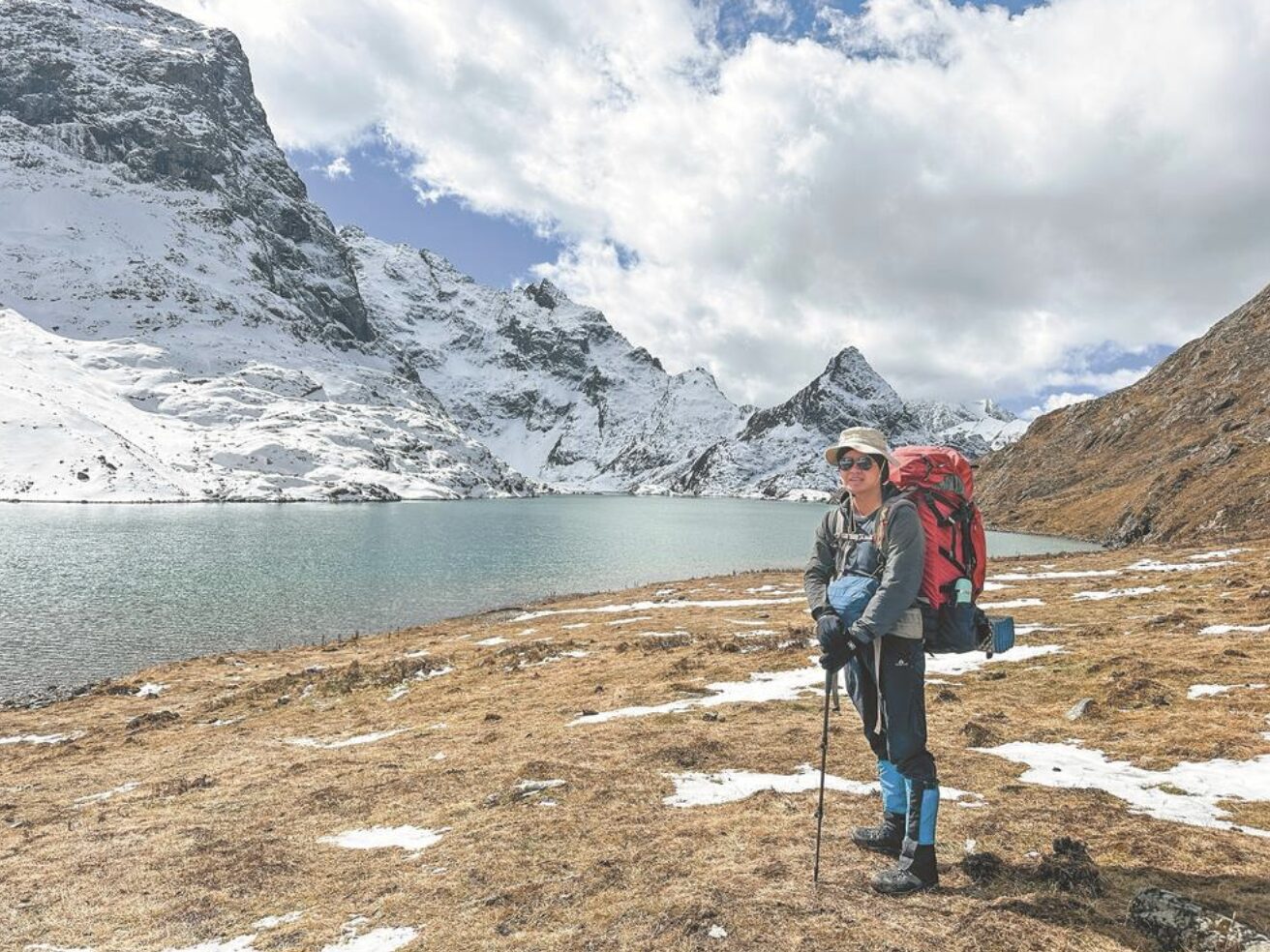
After reaching Lanzhou, the capital of Gansu province, Guangyue took a strategic hiatus to recover and recalibrate. He resumed the second half of his expedition this past July, pushing deeper into the Hexi Corridor. This historical transit route, a narrow, fertile strip of land trapped between the formidable Mongolian and Tibetan plateaus, serves as his gateway toward the Gobi Desert. As of late September 2026, he has been navigating the outskirts of Zhangye, utilizing the northern bank of the Heihe River and traversing the Zhangye National Wetland Park. His current objective is the city of Jiquan, situated approximately 200 kilometers ahead.
Geographical and Climatic Context
The route Guangyue has chosen is one of the most punishing in China, characterized by extreme temperature fluctuations and varying altitudes. The Hexi Corridor, while providing essential water sources and arable land, presents a stark contrast to the mountainous terrain of the previous year.
Climatological data for this region suggests that while daytime temperatures remain manageable—often peaking around 25°C—the onset of autumn brings rapid cooling, with nighttime temperatures frequently plummeting toward freezing. The hiker’s ability to time his passage through the Gobi Desert is critical; the transition from the humid wetlands of Zhangye to the arid, desolate expanses of the Gobi requires precise logistics regarding hydration and caloric intake. For a solo hiker, the lack of support infrastructure in these remote sectors means that every piece of gear must be carried on his person, adding significant weight to his load and increasing the risk of physical injury.
Personal Motivation and Developmental Path
Guangyue’s evolution into a long-distance trekker is a relatively recent development. Following the passing of his parents, he relocated to Kangding, a city famous for its proximity to Gongga Mountain—the highest peak in the Hengduan mountain range and one of the most isolated 7,000-meter summits in the world. The majesty of the mountain served as a catalyst for his transition from casual hiker to professional-grade endurance athlete.
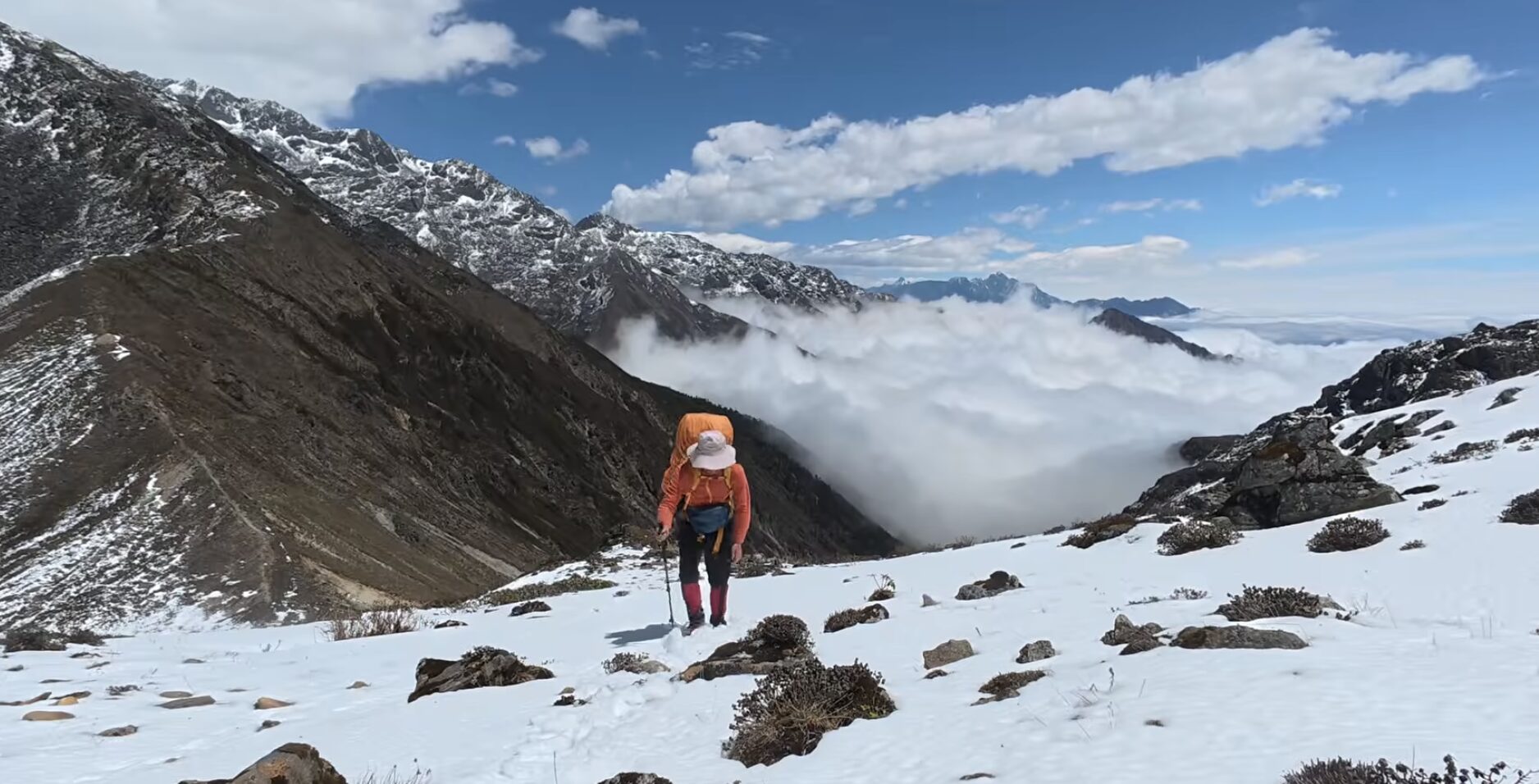
By 2023, he had mastered the art of autonomous camping and long-distance navigation. His 2024 expedition, a 1,500-kilometer solo hike through the Himalayan region, served as the primary training ground for his current trans-continental attempt. This earlier project, documented via a video series, allowed him to refine his equipment selection and gain the mental fortitude required for months of isolation. His current project is, in effect, a homecoming—a journey that seeks to reconcile his current life in the shadow of Sichuan’s peaks with his roots in the distant west.
Historical Precedents: The Legacy of Lei Diansheng
Guangyue’s journey is frequently compared by observers to the legendary treks of Lei Diansheng, arguably China’s most prominent long-distance walker. Diansheng’s decade-long odyssey, which began in 1998, remains a benchmark for endurance sports in the country. Inspired by the Ming Dynasty explorer Xu Xiake, Diansheng spent ten years traversing every province and interacting with all 56 recognized ethnic groups of China.
The parallels between the two men extend beyond the act of walking. Both lost their parents at an early age and sought meaning through travel. However, the intensity of their experiences differs. Diansheng’s decade on the road resulted in an accumulation of 81,000 kilometers, a journey marred by 19 robberies, multiple natural disasters including avalanches and mudslides, and the eventual crossing of the Lop Nur desert in 2008. While Guangyue’s journey is more focused in its linear progression from Sichuan to Xinjiang, it echoes the same spirit of exploration that characterized Diansheng’s era.
Implications and Societal Interest
The popularity of Guangyue’s video series highlights a broader societal trend in China: an increasing interest in "extreme tourism" and the pursuit of individualistic, nature-based goals as an antidote to urban stress. Experts in the sociology of sport note that these journeys often function as modern-day quests for identity. By documenting his progress, Guangyue provides his audience with a window into regions of the country that are rarely visited by the average traveler, fostering a greater appreciation for the geography of the Chinese hinterlands.
However, the implications of such solo endeavors are not without controversy. Search and rescue organizations have occasionally expressed concern over the "influencer effect," where the public normalization of high-risk, solo, unsupported treks encourages inexperienced individuals to attempt dangerous routes. Guangyue’s meticulous planning, his calculated use of rest periods, and his previous experience in the Himalayas are often cited as the necessary prerequisites that differentiate his trip from a reckless stunt.
Future Outlook
As Guangyue approaches Jiquan, the challenges will only intensify. The final stages of his journey will require crossing the vast, unforgiving expanses of the Gobi Desert before entering the high-altitude, wind-swept regions of Xinjiang. The logistics for this final phase are more demanding, as water scarcity becomes a life-or-death variable.
Whether he completes the remaining distance before the winter snows close the high passes of the west remains a point of speculation for his followers. If successful, he will have completed one of the most significant solo, non-motorized traverses of the Chinese interior in recent years. For Guangyue, the destination—his birthplace—is the goal, but the ongoing process of surviving the vast, empty landscapes of the corridor remains the true test of his character and commitment to his journey. His trek serves as a reminder that in the age of rapid digitalization, the most profound human experiences are still those carved out step by step, against the silence of the earth.