Delta Air Lines Premium Select Versus KLM Royal Dutch Airlines Premium Comfort: A Transatlantic Cabin Comparison

Crossing the Atlantic Ocean has long presented travelers with a fundamental dilemma regarding comfort, cost, and utility. While lie-flat business class seats offer the pinnacle of luxury, their steep cash prices and high mileage requirements often deter cost-conscious flyers. Conversely, traditional economy cabins frequently leave passengers fatigued and cramped after a seven-to-nine-hour overnight journey. In response to this persistent market gap, major international carriers have aggressively expanded their intermediate cabins, commonly branded as premium economy. These dedicated spaces aim to strike a balance, offering enhanced physical space, upgraded catering, and priority services at a fraction of the cost of business class.
To evaluate whether these mid-tier products genuinely justify their price premiums over standard coach, aviation reviewers Gunnar and a colleague recently put two prominent SkyTeam alliance offerings to a rigorous, direct test. Comparing Delta Air Lines’ Premium Select aboard an Airbus A330-900neo with KLM Royal Dutch Airlines’ Premium Comfort aboard a Boeing 777-200, the evaluation sheds light on how close SkyTeam partners execute the premium economy concept. The core inquiry driving the assessment remains central to modern travel planning: when heading overnight to Europe, do these upgraded seats genuinely satisfy passenger needs, or will travelers ultimately regret passing up the front cabin?
The Evolution and Strategic Importance of Premium Economy
The emergence of premium economy as a distinct, standalone cabin class rather than merely an economy seat with extra legroom represents one of the most significant shifts in commercial aviation over the past decade. Historically, international carriers experimented with various iterations of expanded-pitch seating, but these were largely treated as marginal add-ons. As corporate travel budgets tightened following global economic shifts and airline revenue management systems grew more sophisticated, airlines recognized a distinct demographic of leisure and business travelers willing to pay a moderate premium for tangible physical improvements.
Industry analysts note that premium economy cabins typically generate significantly higher revenue per square foot than standard economy, often maximizing yield on high-demand long-haul routes. For transatlantic joint-venture partners like Delta and KLM—who operate under cooperative agreements allowing them to coordinate schedules, pricing, and capacity—aligning their service offerings while maintaining distinct brand identities is crucial. Both carriers operate within the broader SkyTeam alliance framework, making direct comparisons between their respective hard and soft products particularly relevant for frequent flyers utilizing transferable credit card points and airline miles.
Aircraft Hard Products: Delta A330-900neo Versus KLM 777-200
The physical aircraft environment forms the foundation of any long-haul flight experience. In this comparative evaluation, the two reviewers tested differing aircraft types that represent core pillars of their respective airlines’ long-haul fleets.
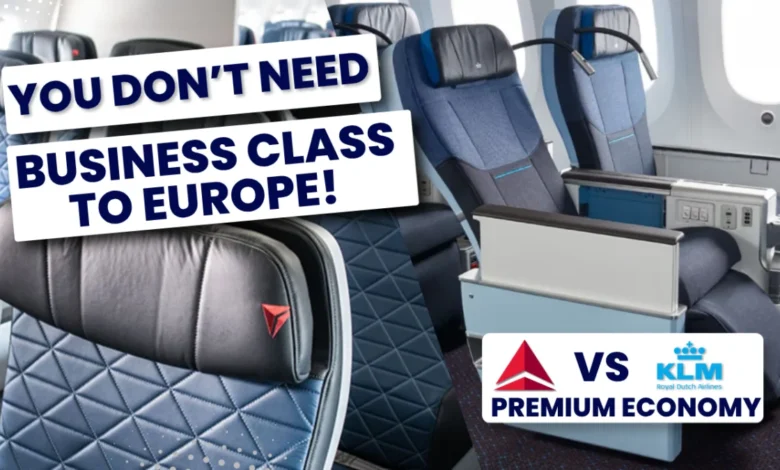
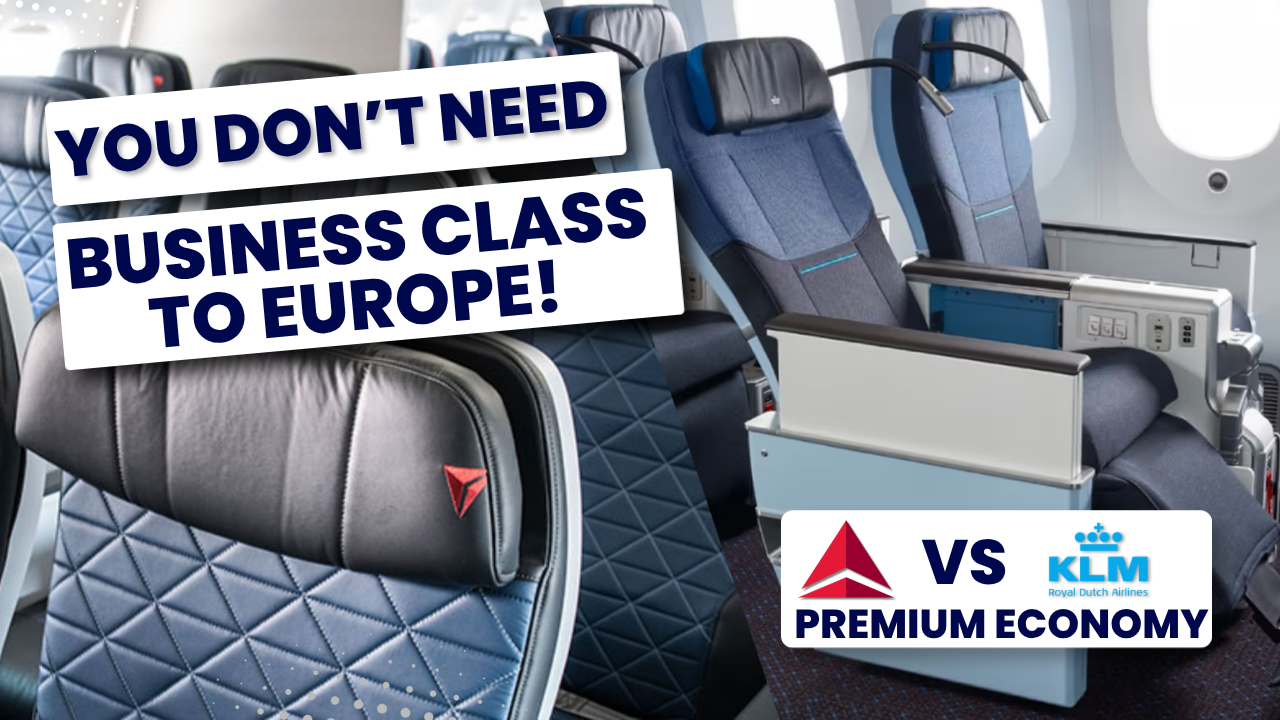
The reviewer flying Delta Air Lines boarded an Airbus A330-900neo, a modern widebody aircraft widely praised for its fuel efficiency, advanced cabin pressurization, lower cabin altitude, and modern interior aesthetic. Delta Premium Select on this aircraft is housed in a dedicated, intimate cabin separated from both business class and main cabin economy. The seats feature increased width, generous pitch, a substantial recline, and integrated footrests and legrests designed to support ergonomic rest during overnight sectors. The hard product also incorporates modern amenities such as larger touchscreen personal entertainment monitors, noise-reducing headphones, and easily accessible power ports.
Simultaneously, the second reviewer boarded a KLM Royal Dutch Airlines Boeing 777-200 at a European gateway. KLM’s Premium Comfort cabin on the 777 fleet represents a relatively recent retrofit initiative designed to modernize the carrier’s iconic widebody aircraft. KLM configured its Premium Comfort seats with a distinct shell design, ensuring that reclining does not intrude upon the personal space of the passenger seated directly behind. Much like Delta, KLM provides enhanced recline capabilities, dedicated foot and leg support, and expanded armrest space. However, subtle differences in cabin geometry, overhead bin allocation, and seat padding contribute to divergent passenger impressions regarding overall spatial comfort.
Pre-Flight Experience, Ground Services, and Priority Access
The premium economy proposition extends well beyond the physical aircraft seat, encompassing the entire journey from the airport terminal to final baggage claim. Both Delta and KLM incorporate various tier-based privileges into their premium economy tickets, though neither typically includes complimentary lounge access unless earned separately through elite frequent flyer status or credit card partnerships.
At the departure airport, passengers holding Delta Premium Select tickets benefit from Sky Priority services. This encompasses dedicated check-in lanes, expedited security screening where available, and priority baggage handling designed to ensure checked bags emerge promptly upon arrival at the destination. These ground advantages aim to reduce pre-flight friction and streamline the airport transit process.
Similarly, KLM’s Premium Comfort passengers receive priority check-in privileges and prioritized boarding lanes, allowing them to settle into their seats before the general economy boarding rush commences. Both airlines emphasize seamless digital integration via their respective mobile applications, offering real-time flight tracking, digital boarding passes, and straightforward management of ancillary purchases such as seat selection or excess baggage.
Dining, Beverage Service, and Culinary Execution
Catering represents a vital differentiator in the mid-tier market, serving as a primary justification for the fare differential between standard economy and premium economy. Airlines frequently market premium economy dining as a localized, elevated culinary experience served on upgraded tableware with enhanced beverage selections.
Delta Air Lines approaches Premium Select dining with a focus on regional ingredients and multi-course presentation. Meals are served on real tableware with cloth napkins, accompanied by a selection of complimentary beers, wines, and spirits. The menu curation typically reflects culinary trends from Delta’s major hubs, offering a choice of hot entrees followed by dessert, with a secondary meal or substantial pre-arrival snack served prior to landing.
KLM Royal Dutch Airlines leverages its Dutch heritage and partnerships with renowned culinary and design figures in its Premium Comfort service. Meals are served utilizing lightweight, sustainable tableware produced from recycled materials, aligning with the airline’s broader environmental commitments. The menu features thoughtfully prepared hot dishes, accompanied by specialized wine pairings and, on select flights, signature welcome beverages or Dutch treats.
Despite these elevated presentations, both reviews emphasize that premium economy catering, while superior in quality and presentation to standard coach meals, does not replicate the extensive, multi-course dine-on-demand flexibility found in business class.
In-Flight Entertainment, Connectivity, and Amenities
During an overnight transatlantic flight, the quality of in-flight entertainment and connectivity significantly influences the passenger experience, particularly for travelers attempting to balance work, relaxation, and sleep.
Delta Air Lines maintains an industry-leading reputation for its personal entertainment systems. The Delta Studio platform offers a vast library of newly released films, television series, audiobooks, and live satellite television channels, accessible via high-definition touchscreens. Furthermore, Delta’s widespread deployment of fast, reliable satellite Wi-Fi—frequently offered free of charge to SkyMiles members for messaging or available for purchase for full browsing—ensures passengers remain connected throughout the journey. Premium Select amenity kits, curated in partnership with premium lifestyle brands, provide essential sleep and skincare items packaged sustainably.
KLM matches this commitment with its own extensive in-flight entertainment system, featuring a responsive touchscreen interface loaded with international cinema, documentaries, and interactive flight maps. Connectivity options vary slightly depending on the specific aircraft sub-type, but reliable Wi-Fi remains accessible for purchase. KLM’s amenity kits, often featuring distinct Dutch design elements, include practical comfort items designed to mitigate the physiological effects of long-haul travel, such as eye masks, earplugs, and dental kits.
Sleep Quality and Ergonomic Evaluation
The ultimate test for any overnight transatlantic product is its ability to facilitate restorative sleep, enabling travelers to disembark and immediately transition into their professional or personal itineraries.
While neither Delta Premium Select nor KLM Premium Comfort offers the horizontal lie-flat capability of business class, the enhanced recline, articulated legrests, and increased pitch provide a markedly superior sleeping posture compared to standard economy. The reviewers noted that the physical design of both seats successfully reduces lower back strain and allows for varied resting positions.
However, physiological limitations remain inherent to reclining seats. Factors such as cabin noise, ambient temperature fluctuations, and passenger movement within the cabin continue to impact overall sleep duration and quality. The independent reviewers observed that while they achieved significantly more rest than they would have in the main cabin, neither product completely eliminated the fatigue associated with crossing multiple time zones in a seated position.
Financial Analysis: Cash Fares, Mileage Redemptions, and Value
A rigorous assessment of premium economy requires careful economic analysis, balancing the marginal comfort improvements against the prevailing financial costs. Transatlantic airfares fluctuate dramatically based on seasonality, booking windows, and route demand.
Historically, business class tickets between North America and Europe frequently range from $3,000 to well over $6,000 round-trip, or upward of 150,000 to 300,000 airline miles. In contrast, standard economy fares may drop below $600 during off-peak periods. Premium economy positions itself squarely in the middle, typically commanding a cash premium of $300 to $800 each way over standard economy, or requiring moderate mileage redemptions through programs like Delta SkyMiles or Air France-KLM Flying Blue.
Independent consumer advocates and frequent flyer experts emphasize that pricing transparency is paramount. Because Thrifty Traveler maintains a strict editorial policy of declining complimentary flights, media junkets, and press discounts—instead funding all travel independently using cash, points, or miles—their evaluations reflect genuine consumer value. The financial analysis suggests that for travelers who struggle to sleep upright or who prioritize physical space to prevent joint stiffness, the moderate upcharge for premium economy often represents an optimal balance of cost and comfort. Conversely, budget-focused travelers who can easily sleep in standard seats may find the financial savings of coach more compelling.
Implications for Transatlantic Travelers and Airline Industry Trends
The direct comparison between Delta Premium Select and KLM Premium Comfort underscores a broader strategic convergence among major global network carriers. As demand for experiential travel remains robust following global disruptions, airlines continue to refine their cabin segmentation strategies.
Industry observers note that the success of premium economy has prompted airlines to reevaluate the physical proportions of their widebody aircraft. Modern fleet modifications increasingly allocate greater square footage to premium economy and business class at the expense of ultra-dense economy configurations. This structural shift reflects changing consumer preferences, where a growing segment of the traveling public is willing to invest discretionary income into physical well-being and enhanced service reliability during long-haul transits.
Furthermore, the close alignment between SkyTeam partners Delta and KLM demonstrates the effectiveness of joint-venture operating models. By offering standardized, high-quality intermediate products, alliance partners ensure a seamless travel experience for passengers connecting across transatlantic networks, regardless of which metal operates the specific flight segment.
Conclusion: Is Walking Past Business Class Worth It?
Returning to the central question posed by the reviewers—whether either traveler regretted walking past the lie-flat business class cabin—the consensus points toward general satisfaction with the intermediate choice. While business class undeniably offers superior privacy, gourmet dining, and complete horizontal rest, the financial and mileage costs required to secure those front-cabin seats are frequently disproportionate to the actual duration of an overnight transatlantic flight.
For travelers seeking an upgraded journey that bridges the gap between basic transportation and luxury travel, both Delta Premium Select and KLM Premium Comfort deliver dependable, well-executed products. By offering enhanced physical space, improved catering, and streamlined ground services without the exorbitant price tag of business class, these mid-tier cabins have solidified their place as a cornerstone of modern international aviation.