Uncovering the Past in Prishtina: How Reporting House Preserves the Journalistic Legacy of the Kosovo War

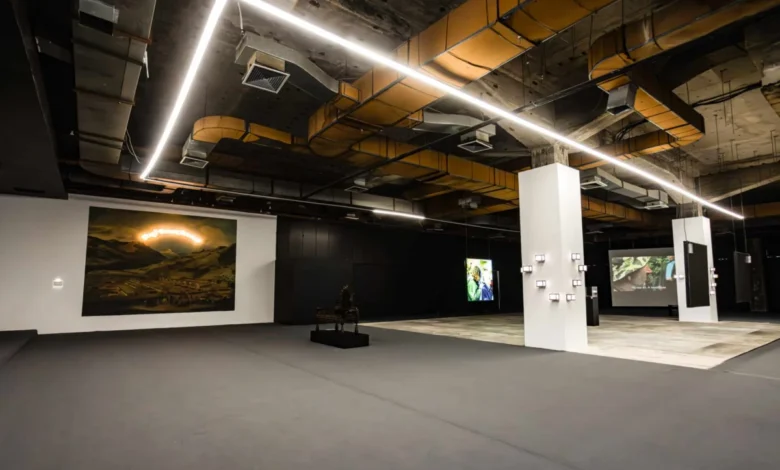
Nearly twenty-seven years after NATO fighter jets crossed the Balkan skies and hundreds of thousands of refugees began their journey home, the city of Prishtina is offering a profound new lens through which to view one of the late twentieth century’s most defining conflicts. Opened to the public in the heart of Kosovo’s capital, a groundbreaking cultural institution known as Reporting House has rapidly emerged as a vital repository of memory, housing the visual, written, and material records of the 1998–1999 Kosovo War. Set within the industrial-chic framework of a former Yugoslav department store on Mother Teresa Avenue, the museum has welcomed over 30,000 visitors in its first two years of operation. By examining the conflict through the dual perspectives of frontline journalism and the lived experiences of displaced civilians, Reporting House delivers an unvarnished, deeply moving narrative of survival, resilience, and the immense power of the free press.
Main Facts and Physical Architecture
Located just steps from the prominent equestrian statue of Albanian national hero Skanderbeg, Reporting House stands as a testament to adaptive reuse and historical reclamation. The building’s interior has been deliberately stripped back to its industrial skeletal framework, featuring exposed ductwork, raw concrete, and linear lighting that complement its weighty thematic contents. The exterior is framed by a striking architectural installation constructed from scarred timbers salvaged from houses burned during the height of the hostilities.

Inside, the museum curates approximately 500 photographs, 150 archived television reports, multimedia works, and regional and international contemporary art installations extending as far as Mozambique. Among its most striking artifacts is a shattered Sony mobile phone embedded within the belt-bag of a BBC television cameraman. The device stopped a high-velocity rifle bullet while the journalist was filming Serbian forces in 1998, quite literally saving his life. This artifact serves as a poignant symbol of the risks undertaken by international and local reporters whose dispatches galvanized global attention, shifted international public opinion, and ultimately triggered the humanitarian and military intervention that reshaped the region’s destiny.
Chronology of the Conflict and the Path to Intervention
To fully understand the gravity of the exhibits within Reporting House, one must examine the timeline of the Kosovo crisis that culminated in the events of 1998 and 1999.
- 1989–1997: Tensions escalate dramatically following the revocation of Kosovo’s autonomous status within Yugoslavia by Serbian leader Slobodan Milošević. Non-violent resistance by the ethnic Albanian majority eventually gives way to armed insurgency led by the Kosovo Liberation Army (KLA) by the mid-1990s.
- 1998: Full-scale conflict erupts across the countryside. Villages are destroyed, and tens of thousands of civilians are displaced. International media, operating under extreme danger, beam images of the humanitarian crisis directly into living rooms worldwide.
- March–June 1999: Following the failure of diplomatic efforts at the Rambouillet talks, the North Atlantic Treaty Organization (NATO) launches Operation Allied Force, a 78-day air campaign against strategic targets in the Federal Republic of Yugoslavia to halt the humanitarian catastrophe and ethnic cleansing.
- June 1999: Serbian forces withdraw from Kosovo, and an international peacekeeping force (KFOR) enters the territory. Hundreds of thousands of refugees begin returning to devastated towns and villages, initiating decades of reconstruction, state-building, and reconciliation.
Reporting House captures this turbulent timeline not merely through political milestones, but through intimate human histories. The museum displays the poignant love letters exchanged between Fehmi and Xheve Lladrovci, a married couple who served as KLA fighters, hiding in the hills together before perishing in a fierce firefight against Serbian forces in September 1998. Elsewhere, visitors can inspect an original, battle-scarred Land Rover Defender used by international correspondents to navigate treacherous frontlines—a physical manifestation of the hazardous conditions under which the truth was documented.

Expansion: The Exodus ’99 Initiative
Recognizing that the narrative of the war is incomplete without accounting for the mass displacement of civilians, the curators of Reporting House expanded their footprint to the Prishtina Train Station. Here, a secondary exhibition site titled Exodus ’99 has been established. Housed inside an authentic railway wagon that was utilized to transport refugees during the height of the expulsions, the site offers an immersive, sobering look at the logistical nightmare and human toll of forced migration. Adjacent galleries display personal belongings, documents, and oral histories gathered from those who fled across borders into neighboring Albania and North Macedonia, anchoring the macro-level history of the war in deeply personal accounts of displacement.
Cultural and Institutional Significance
The establishment of Reporting House and its sister site, Exodus ’99, fills a critical gap in the cultural landscape of the Western Balkans. In post-conflict societies, the preservation of historical memory is frequently contested, politicized, or neglected. By anchoring its exhibits in the tangible proof of journalism—unedited television footage, photographs, bullet-resistant electronics, and handwritten correspondence—the museum transcends partisan narratives.
Historians and cultural analysts note that institutions relying on primary-source media archives play an indispensable role in transitional justice and public education. By offering free admission, the museum ensures unhindered access for local youth, international tourists, researchers, and veterans alike, fostering a democratic space for dialogue and reflection. The inclusion of international art pieces alongside local artifacts further contextualizes the Kosovo conflict within a global framework of war, media manipulation, and civilian suffering.

Broader Impact and Implications
As Reporting House approaches its third year of operation, its impact extends well beyond Prishtina’s borders. In an era marked by misinformation, the erosion of press freedoms globally, and the normalization of conflict, the museum serves as a timely reminder of the indispensable role independent journalism plays in holding power to account and compelling international intervention.
The juxtaposition of raw industrial design with deeply emotional artifacts challenges visitors to reflect on the fragility of peace and the human cost of geopolitical failure. For Kosovo, an independent nation striving to cement its place on the international stage, Reporting House is more than a historical archive; it is a monument to resilience, an educational resource for future generations, and a global beacon demonstrating that while the pen may not always prevent the sword, it holds the power to record history truthfully and change the course of nations.
Visitor Information:
- Reporting House (Mother Teresa Avenue, Prishtina)
- Open Tuesday through Sunday, 10:00 AM – 6:00 PM (Closed Mondays)
- Exodus ’99 (Prishtina Train Station)
- Open Tuesday through Sunday, 12:00 PM – 6:00 PM (Closed Mondays)
- Admission: Free of charge
- Contact & Social Media: Phone: +383 48 831 998 | Instagram: @reportinghouse | Facebook: Reporting House