The Return of the Wild: How Europe’s Depopulating Countryside is Giving Rise to a New Wilderness

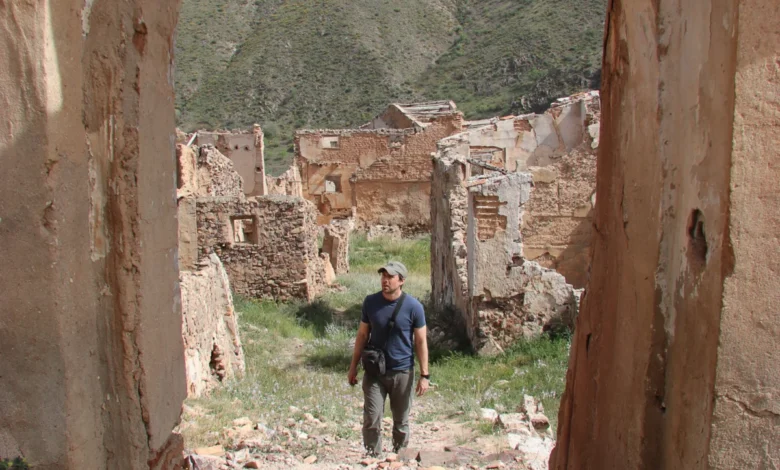
The first thing one notices in an abandoned Spanish village is the swallows. Outside, they swoop zestfully up and down in wavy crests and troughs, cutting through the air, darting through broken windows and front doors at reckless speed, slipping through holes in the masonry with astonishing precision, and alighting, casually, in their chosen nests. It is as if they know every corner of the building, as if they own the place.
And, in a very literal sense, they do. There is no human presence left to contest their dominion. Across Spain, estimates place the number of entirely abandoned villages at more than 3,000. In Las Casillas de Bezas, situated in the eastern half of the country within the rugged province of Teruel, visitors high-step over encroaching brambles and duck as swallows dart overhead, left to ponder whether such landscapes represent a lingering vestige of an ancient past or a glimpse into a profound ecological future. This phenomenon of rural abandonment is not isolated to the Iberian Peninsula; it is a sweeping continental trend reshaping the geography of modern Europe, with profound socioeconomic and ecological implications.
Main Facts of Rural Depopulation in Spain
Spain’s demographic crisis—often referred to in geopolitical and sociological discourse as la España Vaciada (Empty Spain)—is characterized by a stark imbalance between booming urban centers like Madrid and Barcelona and the vast, sparsely populated interior. The depopulation trend began in earnest during the mid-20th century, driven by rapid industrialization, modernization, and a shift away from traditional agrarian livelihoods.
As younger generations migrated to cities in search of higher-paying employment, better healthcare, and modern infrastructure, rural communities aged and ultimately collapsed. Entire hamlets, agricultural terraces, and pastoral outposts were left to the elements. Today, provinces like Teruel, Soria, and Cuenca boast population densities that rival some of the most sparsely inhabited regions of northern Scandinavia, dropping well below the European Union’s threshold for demographic desertification.
However, as humanity retreats from these marginal lands, nature is aggressively staging a comeback. The absence of heavy pesticide use, intensive farming, and constant human disturbance has created an unexpected vacuum. Into this vacuum rushed native flora and fauna, transforming quiet ruins into thriving ecosystems.
Chronology of the Great Rural Exodus
To understand the current state of abandoned Spanish villages, it is necessary to examine the historical trajectory that emptied them.
- 1950s–1970s (The Great Migration): Sparked by Spain’s post-war economic stabilization plans and industrial growth, millions of rural citizens abandoned small farming villages. Mechanization reduced the need for manual agricultural labor, while cities offered industrial jobs.
- 1980s–1990s (Administrative Consolidation): Regional governments began centralizing public services, closing rural schools, post offices, and medical clinics in hamlets with fewer than a few dozen residents. This accelerated the final wave of out-migration among the elderly.
- 2000s–2010s (The Rise of Ghost Villages): Real estate speculators and regional tourism boards began cataloging abandoned settlements. Some were bought up for symbolic sums to be transformed into rural tourism projects, eco-villages, or second homes, while others were left entirely to natural succession.
- Present Day (Rewilding and Ecological Transition): The conversation around abandoned rural spaces has shifted from economic despair to ecological opportunity. Scientists, conservationists, and government planners are increasingly viewing these deserted zones as laboratories for rewilding and biodiversity recovery.
Supporting Data and Demographic Metrics
The numbers underlying the phenomenon of rural abandonment illustrate the scale of the transformation currently underway across Spain and the broader European Union.
According to data from Spain’s National Statistics Institute (INE), nearly half of Spain’s 8,131 municipalities are currently considered at risk of depopulation. Over 3,000 villages are completely uninhabited, and thousands more have populations consisting of fewer than ten aging residents. Teruel, where Las Casillas de Bezas is located, has a population density of roughly 9 inhabitants per square kilometer—well below the Spanish national average and drastically lower than the EU average.
Conversely, ecological data collected by environmental groups indicates a parallel surge in wildlife populations across these depopulated zones. The Iberian wolf (Canis lupus signatus), once pushed to the brink of extinction through systematic culling and habitat loss, has expanded its range southward and westward into regions it had not inhabited in over a century. Similarly, populations of wild boar, red deer, roe deer, and griffon vultures have rebounded exponentially as agricultural pressure lifts and forests reclaim abandoned pastures.
Official Responses and Stakeholder Perspectives
The depopulation of the countryside and the subsequent natural reclamation have elicited mixed responses from policymakers, rural advocates, and conservation scientists.
Regional governments within Spain have attempted various initiatives to reverse or mitigate the economic drain. Programs offering tax incentives, remote-working infrastructure, and housing grants have been deployed to attract young families back to rural areas. Local authorities argue that completely abandoning the countryside increases the risk of catastrophic wildfires, as traditional brush-clearing and pastoral grazing practices disappear. Unmanaged forests, while ecologically rich in the short term, can accumulate dangerous fuel loads during increasingly severe Mediterranean droughts.
Conversely, conservationists and rewilding advocates view the unmanaged countryside through a different lens. Organizations dedicated to ecological restoration argue that nature possesses a remarkable capacity for self-healing if given the space. By allowing forests to regenerate and apex predators to return, Europe has a rare opportunity to restore complex trophic cascades without heavy-handed human intervention. Proponents of this view suggest that rather than fighting an inevitable demographic shift, society should embrace the transition of marginal agricultural land into protected wilderness corridors.
Broader Impact and Implications for Europe
The intersection of rural depopulation and ecological rewilding in Spain serves as a bellwether for the rest of Europe. Similar trends are visible in parts of rural France, Italy’s Apennine mountains, the Scottish Highlands, and Eastern Europe. As demographics shift and globalized economies prioritize urban agglomeration, vast tracts of land are quietly shifting from human custody back to nature.
The implications of this transition are multifaceted. Economically, the loss of cultural heritage, traditional agricultural knowledge, and rural architecture represents a permanent cultural deficit. Many historic stone buildings, ancient irrigation systems, and centuries-old terraced landscapes are crumbling into oblivion, swallowed by encroaching brambles and oak saplings.
Ecologically, however, the trend presents an unprecedented laboratory for biodiversity conservation in a crowded continent. The return of apex predators, the spontaneous afforestation of marginal lands, and the thriving populations of cavity-nesting birds like swallows demonstrate that nature can reclaim lost ground with astonishing speed.
Ultimately, standing in an abandoned village like Las Casillas de Bezas forces a fundamental reassessment of humanity’s relationship with the land. It reveals a world where the human chapter is closing in certain regions, only for a vibrant, untamed ecological chapter to immediately begin in its place.