The Best Family-Friendly Hiking Trails in Sedona for Travelers with Infants and Toddlers

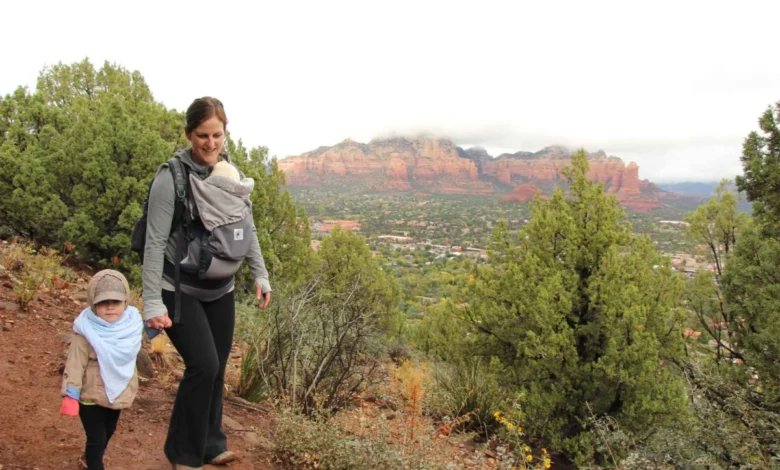
Sedona, Arizona, has long been recognized as a premier destination for outdoor enthusiasts, but in recent years, the region has increasingly catered to families seeking to introduce their children to the outdoors. With its iconic red rock formations, diverse desert ecosystems, and vast network of over 400 miles of trails, Sedona offers a unique environment that balances accessibility with natural wonder. For parents traveling with infants and toddlers, selecting the right trail requires careful consideration of terrain, sun exposure, and proximity to support services.

The popularity of Sedona as a family destination is supported by regional tourism data. According to reports from the Sedona Chamber of Commerce and Tourism Bureau, family-oriented travel has seen a steady increase, with a significant portion of visitors identifying outdoor recreation as their primary motivation for travel. This demographic shift has prompted land managers and the U.S. Forest Service to prioritize the maintenance of "easy-rated" trails that accommodate younger demographics without compromising the preservation of the Coconino National Forest.

The Logistics of Desert Hiking with Young Children
Planning a hiking itinerary in high-desert environments necessitates specific preparation. The climate in Sedona can be unpredictable, with high UV indices and significant temperature fluctuations. Unlike alpine regions, the desert environment offers limited shade on many trails, requiring parents to plan their outings during early morning or late afternoon hours.

Beyond timing, the choice of equipment is a critical safety and convenience factor. While some trails in the region are categorized as "stroller-friendly," this designation is often relative. Gravel, shale, and uneven rock surfaces are prevalent; therefore, standard city strollers are frequently inadequate. Experts recommend all-terrain strollers with large, air-filled tires for the limited pathways that support them. For the vast majority of Sedona’s scenic trails, an ergonomic baby carrier is considered the industry standard for safe navigation.

Top-Rated Trails for Families
Based on trail accessibility, safety, and engagement, several routes have emerged as the standard for families with small children.

1. Bell Rock Pathway
The Bell Rock Pathway stands as a hallmark of accessible outdoor recreation in the Red Rock District. Spanning roughly 2.7 miles in total length, it offers a relatively flat trajectory with minimal elevation change. The trail provides unparalleled views of Bell Rock and Courthouse Butte. Because of its packed, relatively smooth surface, it is one of the few trails where an all-terrain stroller can be used effectively. The trail is exposed to direct sunlight for the duration of the hike, making sun protection—including hats, UV-protective clothing, and high-SPF sunscreens—a mandatory precaution for infants.

2. West Fork Trail
For those seeking respite from the sun, the West Fork Trail is a notable exception to the arid, open-desert norm. Located within the canyon, this trail follows the path of Oak Creek, surrounded by towering canyon walls that provide natural shade. The route is characterized by its lush vegetation and multiple creek crossings. While the scenic beauty is high, the terrain is not stroller-compatible. The requirement to navigate stepping stones across the water necessitates that parents carry their children in a secure, high-quality hiking carrier.

3. Baldwin Trail
Situated near the Village of Oak Creek, the Baldwin Trail offers a loop-based experience that is manageable for families with limited time. At 2.7 miles, it is an efficient way to experience the transition between high-desert foliage and the riparian zones near the creek. The trail features moderate rock steps, which effectively disqualify it for stroller use, but the relatively low elevation gain makes it a manageable choice for parents carrying children on their backs.
4. Fay Canyon Trail
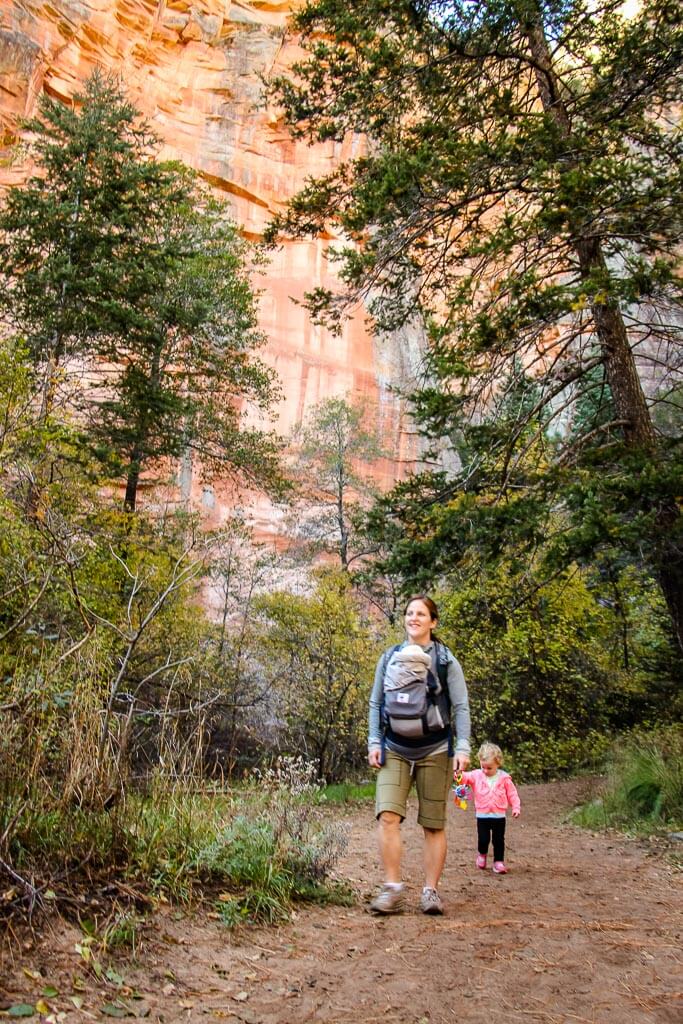
Fay Canyon is frequently cited as a preferred alternative to more heavily trafficked routes. It offers a direct path into a box canyon, culminating in a natural stone arch. The main trail is relatively level and easy to navigate; however, the optional climb to the arch itself is steep and requires agility. For families with infants, sticking to the main floor of the canyon provides a high-reward experience without the risks associated with the climb.

5. Huckaby Trail
The Huckaby Trail provides a more intimate view of the geological features that define the region. It is closer to the urban center of Sedona, offering logistical convenience. However, the path is consistently rocky and uneven, requiring sturdy footwear for parents and an appropriate carrier for the child. It is a favored choice for those looking to avoid the more crowded trailheads during peak season.

6. Airport View Trail
The Airport View Trail is notable for its proximity to town and the vantage point it provides over the Sedona valley. While the path is narrow and rocky, the short duration makes it an ideal "introductory" hike for parents testing their child’s tolerance for the trail.

Broader Impact and Environmental Stewardship
The influx of families into the wilderness areas of the Coconino National Forest carries significant implications for land management. The "Leave No Trace" principles are emphasized by local authorities, particularly as the number of families—and consequently, the amount of waste and trail wear—increases.

Land management agencies have expressed concern regarding the erosion of trail edges caused by off-trail excursions. When children are hiking, the temptation to wander off the marked path is high, which can disrupt the delicate biological soil crusts prevalent in the desert. These crusts take decades to form and are vital for the ecosystem. Consequently, the official response from regional park authorities has been to increase signage and educational outreach, urging visitors to remain on designated paths to preserve the area for future generations.

Economic and Social Considerations
The development of family-friendly infrastructure in Sedona has served as an economic driver. Hotels and resorts have increasingly partnered with local outdoor outfitters to provide "gear-lending" programs, allowing parents to rent high-end carriers or all-terrain strollers rather than transporting them via air travel. This shift indicates a maturing market that recognizes the specific needs of the "young family" travel segment.

Furthermore, the social environment on the trails is generally described as encouraging. Anecdotal evidence from parents who frequent the area suggests a culture of mutual support among hikers. When parents choose to introduce their children to the outdoors at an early age—often before they can walk—they contribute to a long-term trend of environmental literacy and appreciation for protected lands.

Expert Recommendations for Preparation
Before embarking on any of these trails, experts recommend a standard set of preparations:

- Consult AllTrails or Similar Mapping Software: Even for short, popular trails, GPS-based mapping is essential. Cell service in the canyons is notoriously unreliable, and offline map downloads are considered a safety baseline.
- Hydration Strategy: The desert’s low humidity can lead to rapid dehydration, which often goes unnoticed in toddlers. Parents are advised to bring significantly more water than they believe they will need.
- The "Rule of Two": Many experienced hikers advise that if a trip requires a two-hour hike, one should allow for four hours to accommodate feeding, changing, and the slower pace required by toddlers.
- Trailhead Timing: To secure parking at popular locations like West Fork or Fay Canyon, arriving before 8:00 a.m. is often necessary. During high-traffic periods, parking lots frequently reach capacity by mid-morning.
The decision to hike in Sedona with infants and toddlers is a commitment to both physical exertion and logistical planning. By choosing appropriate trails and respecting the fragility of the desert ecosystem, families can utilize the region’s natural assets to create a foundation for lifelong outdoor engagement. While the terrain is demanding, the accessibility of these six routes ensures that the iconic landscapes of Northern Arizona remain open to the next generation of explorers.
Related posts: