The Great Unboxing: How Premium Food and Beverage Advent Calendars Became a Seasonal Powerhouse

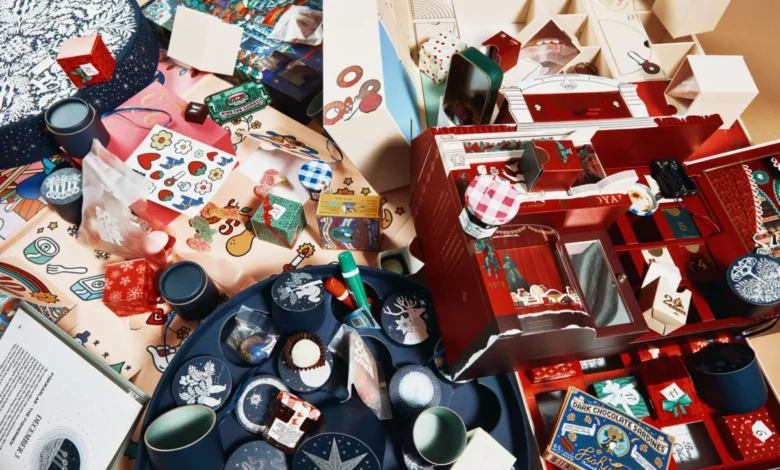
The modern holiday tradition has undergone a radical transformation, moving far beyond the cardboard-and-cheap-chocolate templates of the mid-20th century. Today, the Advent calendar has evolved into a high-stakes, multi-billion-dollar retail phenomenon that serves as a cornerstone of the seasonal marketing strategy for food and beverage brands worldwide. As the calendar market moves toward a projected valuation of $2.47 billion by 2033, the shift is no longer just about the countdown to Christmas; it is about curated brand discovery, the psychology of micro-indulgences, and the high-value social currency of the "unboxing" experience.
A Brief History of the Countdown
The origins of the Advent calendar can be traced back to the 19th century, when German Protestants began tracking the days leading up to Christmas with chalk marks or simple devotional images. By the early 1900s, the first printed versions appeared in Germany, eventually evolving into the small, windowed boxes containing mass-produced confections that defined the category for decades.
However, the 21st century sparked a "premiumization" of the ritual. The emergence of specialized, high-quality, and niche-market calendars began in earnest around 2014, when brands like Bonne Maman began releasing limited-edition, jam-filled calendars. These products tapped into a growing consumer desire for tactile, tangible experiences in an increasingly digital world. What began as a niche offering has exploded into a global industry where, according to the Advent Center, approximately 250 distinct food and beverage calendars are currently competing for shelf space—or, more accurately, for "digital drop" availability.
The Anatomy of the Modern Calendar
The current surge in popularity is driven by a convergence of socioeconomic and psychological factors. In an era marked by economic uncertainty and rising costs, consumers are increasingly seeking "micro-indulgences." A $100 to $150 Advent calendar—while seemingly expensive—is often perceived by the consumer as a high-value bundle that offers 24 or 25 separate experiences.
Max Zeshut, founder of the Advent Center, notes that food and beverage calendars occupy a unique psychological space compared to other subscription-based products. "Food and drink calendars provide a cheaper, noncommittal entry point into a brand’s ecosystem," Zeshut explains. "Unlike beauty or wellness boxes, which may require long-term subscriptions, an Advent calendar is a finite, contained commitment that promises a daily reward. It is a ritualistic purchase that bridges the gap between a luxury gift and a personal treat."

The data supports this sentiment. For brands like Fly By Jing, which saw its inaugural calendar sell out in weeks, the product acts as a top-of-funnel marketing tool. Their data suggests that 65% of their calendar purchasers are new to the brand, with 20% of those individuals converting to repeat customers within the same fiscal year. This suggests that the calendar is not just a seasonal revenue spike, but a customer acquisition vehicle.
Strategic Operational Demands
For brands, the decision to enter the Advent calendar space is not one made lightly. The logistical requirements—sourcing unique, shelf-stable ingredients, coordinating complex assembly, and managing short-window shipping timelines—are significant.
"As a small team, we try to be very conscious of the operational demands of every product launch," says Becca Millstein, CEO and co-founder of Fishwife. "Still, the demand grew too loud to ignore." For Fishwife, a company that has successfully leveraged online gifting, the decision to release a 12-day calendar was driven by the desire to engage a community that values "surprise and delight." By creating a product that is inherently shareable on platforms like Instagram and TikTok, brands create a cycle of user-generated content that effectively acts as free advertising throughout the month of December.
At the other end of the scale, established giants like Bonne Maman operate on a two-year planning cycle. Their team monitors global ingredient trends and consumer feedback to curate a selection of 24 limited-edition jams and spreads. The growth of this specific product line has been explosive, with production increasing by 400% since 2017. The brand treats the calendar as a collaborative project, using the feedback from social media "Jamvent" groups to influence their core product development, proving that these calendars are as much about data collection as they are about holiday cheer.
The Sensory Appeal and Educational Value
Beyond the commercial aspect, there is a tangible educational component to the current wave of calendars. Onyx Coffee Lab, based in Arkansas, has utilized the format to provide a masterclass in coffee production. By including 24 different 56-gram portions of whole beans—roasted specifically to reach their peak flavor profile on the day they are opened—they are not just selling a product; they are selling a sensory experience.
"There’s so much storytelling, education, and human connection surrounding coffee," says Andrea Allen, co-founder of Onyx Coffee Lab. "Advent gives us a unique opportunity to explore those things in ways that might not make sense within our everyday offerings." This approach turns the daily reveal into a moment of intentional consumption, differentiating the product from a standard gift box.

The Future of the Category: Have We Reached Peak Calendar?
As the global market trajectory aims toward $2.47 billion by 2033, industry analysts are beginning to ask whether the market is becoming saturated. However, the data suggests that consumer demand is not waning—it is simply becoming more specific.
The Advent Center notes that one of the most consistent search terms on their platform is for products that do not yet exist. "The clearest sign of demand is that people search for calendars that aren’t there," Zeshut notes. "The fact that people are actively seeking out niche, ‘zany’ collaborations—like requests for energy drink or specific condiment calendars—suggests that there is still massive room for innovation."
The industry may have reached "peak chocolate," in the sense that the traditional candy calendar has been commoditized and relegated to the bottom of the value chain. However, the premium sector—focused on coffee, tea, tinned fish, spices, and artisanal spreads—is in a growth phase.
Implications for Retailers and Consumers
The rise of these premium calendars has significant implications for the retail sector. Retailers are increasingly prioritizing "drop" culture, where calendars are released in limited quantities at specific times to drive urgency. This creates a scarcity model that benefits both the manufacturer and the retailer.
For the consumer, the trend represents a shift in how holidays are celebrated. The move from a singular event (Christmas Day) to a month-long celebration of small, daily gifts mirrors broader trends in the "experience economy." As long as brands can continue to balance the operational complexity with the need for genuine, high-quality, and surprising content, the Advent calendar is likely to remain a permanent fixture of the holiday season.
The success of these products lies in their ability to combine the old-world charm of a countdown with the modern-world demand for discovery. Whether it is a jar of limited-edition marmalade or a premium bag of specialty coffee, the modern Advent calendar is no longer a child’s toy—it is a sophisticated, curated, and highly profitable piece of retail strategy that shows no signs of slowing down. As we look toward the next decade of holiday shopping, the question will not be whether brands should launch an Advent calendar, but rather how they can innovate within a space that has become the gold standard for seasonal consumer engagement.