The Best Family-Friendly Hiking Trails in Sedona Arizona for Parents and Young Children

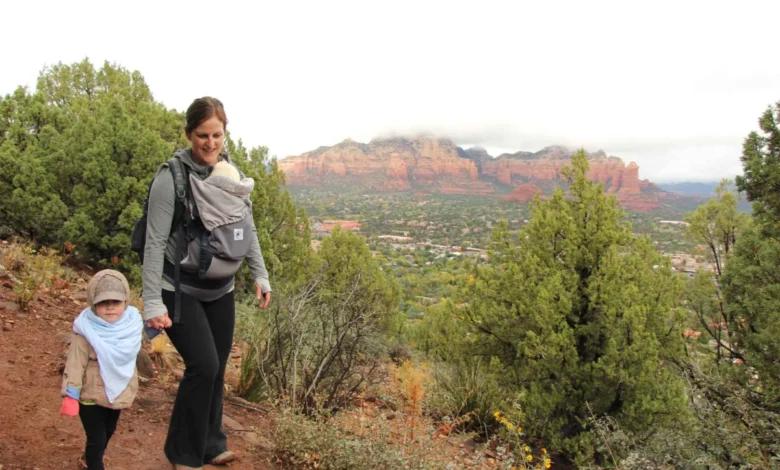
Sedona, Arizona, has cemented its status as one of the premier outdoor destinations in the United States, drawing millions of visitors annually to its iconic red rock formations. While the region is frequently associated with challenging, high-intensity treks, a growing demographic of traveling families has spurred increased interest in accessible, low-impact trails suitable for parents with infants and toddlers. According to data from the Coconino National Forest, outdoor recreation in the Sedona area has seen a consistent uptick in family-oriented tourism over the last decade, necessitating a clearer distinction between technical backcountry routes and family-accessible paths.

The geography of the Coconino National Forest, characterized by its dramatic sandstone cliffs and diverse desert flora, presents unique logistical challenges for families. For parents, the primary considerations when selecting a trail include surface stability, shade availability, and total distance. While seasoned hikers may prioritize elevation gain and rugged terrain, the family travel sector emphasizes safety and the ability to navigate trails with specialized equipment, such as child carriers or off-road strollers.

Navigating the Red Rock Terrain with Young Children
The appeal of Sedona for families lies in its accessibility to geologic wonders that typically require multi-day treks elsewhere. However, environmental factors play a significant role in the planning process. The high desert climate involves significant solar radiation and temperature fluctuations, requiring careful scheduling to avoid the peak heat of the day. Local park authorities frequently advise visitors to initiate outdoor activities in the early morning hours to mitigate the risks of heat exhaustion, particularly for young children who are more susceptible to temperature extremes.

Furthermore, the trail systems in Sedona are managed under a multi-use framework. Hikers often share paths with mountain bikers and, in some areas, equestrian groups. This underscores the necessity for families to remain alert and informed about trail conditions and potential congestion, especially during the peak spring and autumn tourist seasons.

Primary Recommended Trails for Families
The following selection of trails has been identified by local guides and outdoor experts as meeting the criteria for family accessibility, considering distance, terrain, and scenic value.

1. Bell Rock Pathway
The Bell Rock Pathway stands as a hallmark of accessible hiking in the region. Spanning approximately 2.7 miles, this route provides an unobstructed vantage point of the Bell Rock and Courthouse Butte formations. From a logistical standpoint, the path is largely comprised of compacted gravel, which permits the use of heavy-duty, all-terrain strollers. The elevation gain is negligible, making it an ideal choice for families looking to experience the geological grandeur of the area without the fatigue associated with vertical climbs.

2. West Fork Trail
Widely regarded as one of the most scenic trails in the Coconino National Forest, the West Fork Trail follows the course of Oak Creek. The presence of riparian vegetation provides a natural canopy, offering substantial shade that is rare in the surrounding desert. The trail involves multiple crossings of Oak Creek via stepping stones. While this adds an element of adventure for older children, it renders the trail unsuitable for strollers. Parents are advised to utilize ergonomic baby carriers to navigate the rocky banks safely.

3. Baldwin Trail
Situated near the Village of Oak Creek, the Baldwin Trail offers a loop configuration that rewards hikers with views of Cathedral Rock. At roughly 2.7 miles in length, it serves as an excellent intermediate option. The trail features natural rock steps and moderate undulations, requiring parents to rely on physical carriers rather than wheeled transport. It is particularly noted for its visibility of the sunset, though families are cautioned to ensure they have adequate lighting for the return journey.
4. Fay Canyon Trail
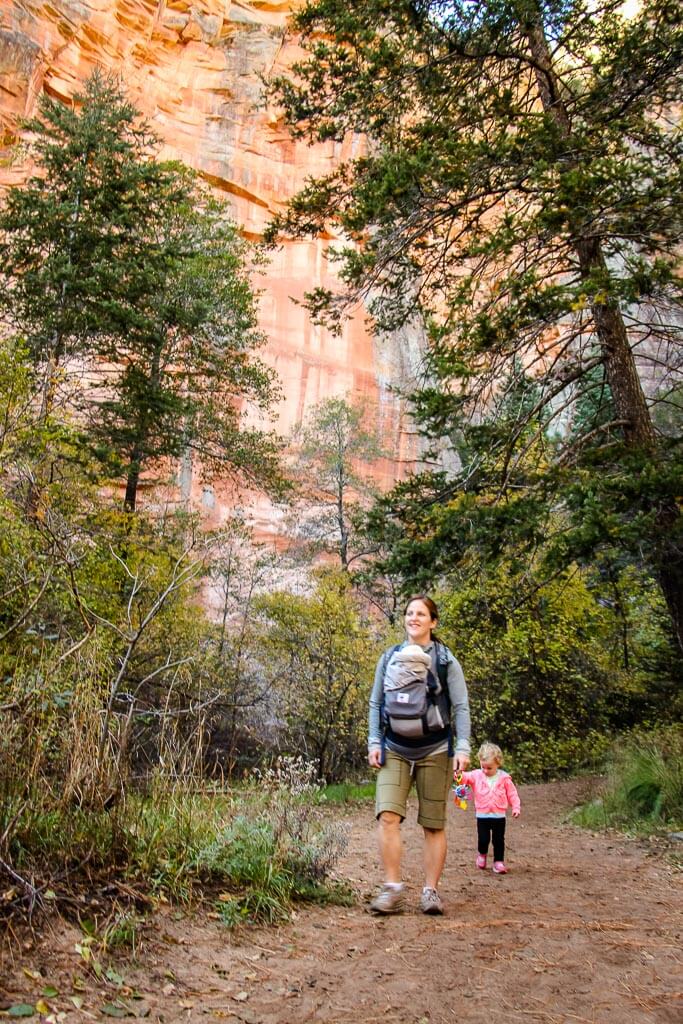
Fay Canyon is frequently cited as a preferred alternative to the more heavily trafficked West Fork route. The trail is characterized by its relatively flat trajectory, winding through a narrow canyon that provides consistent shade. A notable feature is the natural stone arch visible from the main path. While the main trail is accessible, the spur leading directly to the base of the arch is steep and requires careful navigation, leading many families to treat the main canyon floor as the primary destination.

5. Huckaby Trail
For those seeking a trail that captures the essence of the Sedona skyline, the Huckaby Trail offers panoramic views of the town and surrounding formations. The terrain is notably uneven, featuring rocky sections that demand sturdy footwear and a reliable baby carrier. While there is intermittent tree cover, the trail is largely exposed, necessitating comprehensive sun protection measures, including hats, sunscreen, and appropriate UV-protective clothing for children.

6. Airport View Trail
Located adjacent to the Sedona Airport, this trail is favored for its proximity to town. It is a short, efficient hike that provides an elevated perspective of the surrounding geography. Despite the ease of access, the narrow, rocky nature of the path makes it less than ideal for strollers. It serves as an excellent "quick" outing for families who may be short on time but wish to experience the iconic red rock aesthetic.

Safety Protocols and Environmental Stewardship
The influx of tourism in Sedona has led to a heightened emphasis on "Leave No Trace" principles. Local land management agencies consistently remind families that the desert ecosystem is fragile; biological soil crusts, which are essential for preventing erosion, can be destroyed by off-trail foot traffic.

Beyond environmental concerns, safety remains the paramount priority. The lack of reliable cellular service in many of the canyons means that families should not rely exclusively on digital devices for navigation. Downloading offline maps via applications such as AllTrails is recommended, but physical maps or a clear understanding of the trail markers remains the gold standard for safety.

Additionally, the hydration requirements for children in a high-altitude, arid environment cannot be overstated. Health experts suggest that children should be offered water at regular intervals, regardless of whether they express thirst. Proper preparation—including extra layers for temperature drops and a first-aid kit—is considered standard equipment for any family venturing into the wilderness.

Broader Implications for Family Tourism
The development of these trails reflects a broader trend in the American tourism industry: the professionalization and accommodation of the "active family" demographic. By maintaining trails that cater to various fitness levels and equipment needs, the Sedona region has successfully expanded its visitor base beyond the traditional demographic of extreme athletes and retirees.

Market analysis suggests that as millennial parents continue to prioritize experiential travel and outdoor education for their children, the demand for well-maintained, family-accessible infrastructure will only grow. This presents both an opportunity and a challenge for the City of Sedona and the Coconino National Forest. Maintaining the delicate balance between preserving the natural integrity of the land and providing public access requires continuous funding, volunteer trail maintenance, and ongoing public education campaigns.

The successful management of these trails serves as a case study for other regions looking to capitalize on their natural assets while ensuring that the experience remains safe and enjoyable for all age groups. By focusing on infrastructure that allows parents to safely introduce their children to the outdoors, Sedona is effectively fostering a new generation of environmental stewards, ensuring that the legacy of these unique geological sites is passed on to the future.

Ultimately, whether a family chooses the stroller-friendly paths of the Bell Rock Pathway or the more rugged, adventurous crossings of the West Fork, the key to a successful experience in Sedona lies in the intersection of thorough planning and a respect for the environment. As the region continues to evolve, the continued focus on accessibility ensures that the breathtaking vistas of the red rocks remain a shared heritage for families of all generations.