OpenAI Acquires Glass Imaging for 300 Million Dollars to Bolster Advanced Visual Processing Capabilities

In a significant move that underscores the escalating convergence of artificial intelligence and hardware-level image processing, OpenAI has reportedly completed the acquisition of Glass Imaging, a startup renowned for its pioneering neural image signal processing (ISP) technology. According to reporting by The Wall Street Journal, the deal is valued at approximately $300 million. This acquisition represents a strategic shift for OpenAI, which has primarily focused on large language models and generative AI, signaling a potential expansion into the physical hardware ecosystem and advanced computer vision.
A History of Innovation in Computational Photography
Glass Imaging, based in Palo Alto, has spent the last several years positioning itself at the forefront of computational photography. Unlike traditional software-based filters that often obscure the authenticity of an image, Glass Imaging’s "GlassAI" Neural ISP technology operates at the sensor level. By leveraging RAW image data and applying deep learning models that account for the physical constraints of smartphone lenses, the company successfully bridged the gap between the small-sensor limitations of mobile devices and the high-fidelity output typically reserved for professional-grade, large-sensor mirrorless cameras.
The company’s trajectory gained significant momentum in 2024. During that period, Glass Imaging demonstrated their software running on the Qualcomm Snapdragon 8 Elite mobile platform. These demonstrations provided empirical evidence that mobile devices could, through sophisticated AI-driven ISP, achieve resolutions and rendering qualities that rivaled dedicated hardware. This proof-of-concept phase caught the attention of both the photography industry and hardware manufacturers.
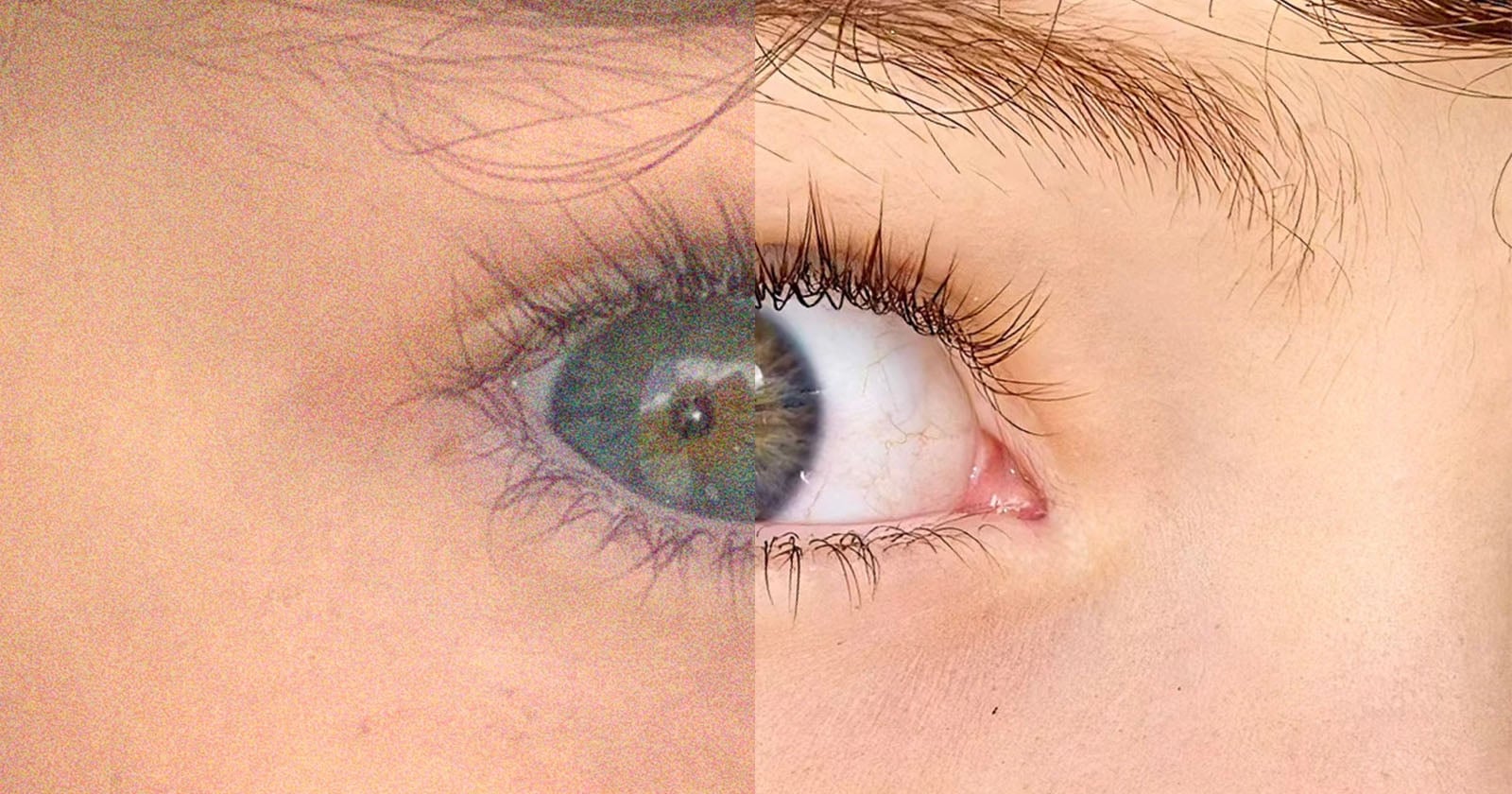
By June 2026, the technology saw its first major commercial implementation. The Honor 600 smartphone integrated GlassAI to specifically address the degradation in image quality often seen in high-zoom scenarios. By processing the raw data from the sensor in real-time, the technology allowed the Honor 600 to deliver significantly sharper, more accurate photos, effectively validating the business model that Glass Imaging had been refining for years.
Chronology of the Acquisition and Market Context
The valuation of $300 million represents a significant leap for the startup, which only last year was valued at roughly $100 million during a private funding round. This tripling in valuation in just twelve months highlights the premium that major AI players are currently placing on proprietary hardware-software integration.
- 2024 (Q4): Glass Imaging gains industry recognition for its successful demonstrations of AI-enhanced ISP on the Snapdragon 8 Elite platform, proving that mobile sensors could exceed their physical limitations.
- 2025 (Q2): OpenAI acquires Jony Ive’s AI hardware startup for $6.5 billion, signaling a long-term interest in creating proprietary physical consumer devices.
- 2026 (Q2): The Honor 600 launches, marking the first mainstream commercial deployment of GlassAI Neural ISP technology.
- 2026 (Q3): Multiple industry reports, led by The Wall Street Journal, confirm that OpenAI has finalized the purchase of Glass Imaging for $300 million.
The Role of Neural ISP in Modern Imaging
To understand why OpenAI would invest such a significant sum in a specialized imaging firm, one must look at the limitations of current hardware. Smartphone cameras are physically constrained by their thin form factors, which limit lens size and sensor surface area. Traditionally, manufacturers have used standard ISPs to perform tasks like white balancing, demosaicing, and noise reduction.
Glass Imaging’s approach is fundamentally different. By utilizing neural networks to interpret raw sensor data—rather than relying on heuristic-based processing—the company could "reconstruct" images with greater accuracy. This process involves predicting the physical behavior of light through specific lens geometries, thereby compensating for aberrations and light loss that occur before the data even leaves the sensor.
In a competitive market where the "megapixels race" has largely stagnated, the competitive advantage has shifted entirely to computational processing. Glass Imaging’s ability to extract professional-level results from consumer-grade hardware made them a high-value asset in an era where AI is expected to handle the heavy lifting in mobile photography.
Strategic Implications for OpenAI
The acquisition of Glass Imaging appears to be a missing piece in a much larger puzzle. With the previous acquisition of Jony Ive’s hardware firm, OpenAI is clearly moving beyond the realm of browser-based or app-based AI interfaces. The development of an "AI-first" hardware device—a concept that has been widely rumored within the tech sector—would necessitate an elite imaging system.
If OpenAI intends to create a device capable of "visual intelligence," the ability for that device to perceive the world with high resolution and low latency is paramount. Standard camera software is often optimized for social media aesthetics rather than data analysis. Glass Imaging’s focus on high-fidelity, raw-level processing suggests that OpenAI may be looking to use the camera as a primary sensor for its AI models, enabling the device to perform advanced computer vision tasks, object recognition, and environmental analysis with unprecedented clarity.
Furthermore, this move mirrors the strategies of companies like Apple and Google, who have long held their ISP development in-house to maintain a competitive edge. By owning the full stack—from the neural network to the image signal processing—OpenAI can ensure that the data fed into its future multimodal models is of the highest possible quality.

Industry Reaction and Future Outlook
While neither OpenAI nor Glass Imaging has provided an official statement, the industry reaction has been one of cautious observation. For the smartphone market, this deal creates a degree of uncertainty. If Glass Imaging’s technology is pulled from the open market to become an exclusive feature for OpenAI’s future hardware, it will remove a powerful tool from the reach of other smartphone manufacturers, potentially widening the gap between mainstream devices and whatever hardware OpenAI eventually brings to market.
Furthermore, the acquisition raises questions regarding the future of the GlassAI brand. Historically, when large AI firms acquire specialized startups, the acquired technology is often absorbed into the parent company’s infrastructure, and the startup’s original product roadmap is shelved. If this occurs, the transformative impact of Glass Imaging on the broader smartphone market may be stunted, leaving a void for other companies to fill.
However, the broader impact is clear: the era of "dumb" hardware is ending. As artificial intelligence continues to permeate every facet of consumer electronics, the focus will increasingly shift from silicon performance to how effectively that silicon can process real-world sensory input. By securing Glass Imaging, OpenAI has signaled that it is no longer content to simply provide the "brain" for the next generation of computing; it is now actively acquiring the "eyes" as well.
As the industry waits for the first glimpse of OpenAI’s hardware ambitions, the acquisition of Glass Imaging will likely be viewed as a turning point. It demonstrates that the future of AI is not just in the cloud, but in the ability of edge devices to see, interpret, and understand the physical world with the same nuance and precision as human vision. Whether this leads to a new standard in mobile photography or an entirely new category of intelligent, vision-centric hardware, the $300 million investment marks a definitive step toward a more integrated, AI-driven future.
Related posts: