Navigating the Adriatic and Aegean: An In-Depth Review of the National Geographic Orion Expedition Cruise

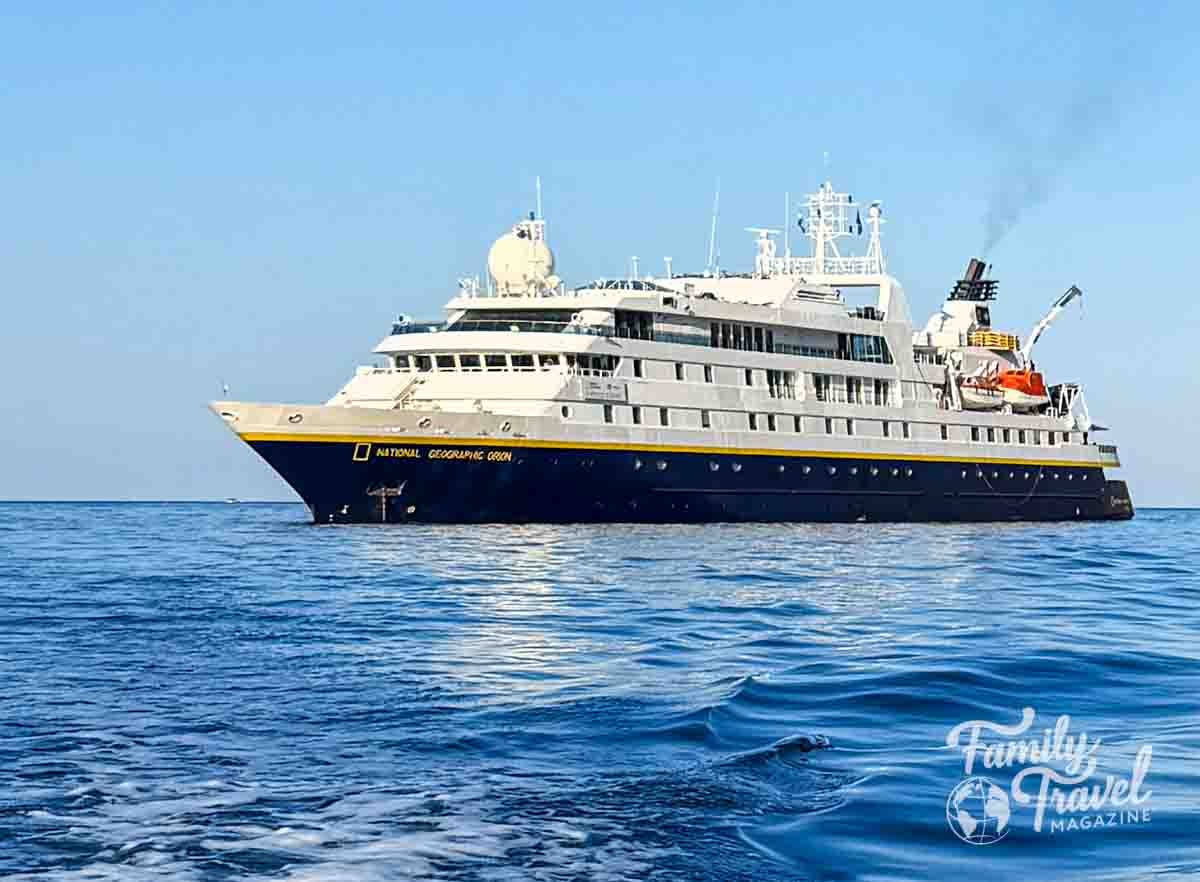
The evolution of modern leisure travel has increasingly prioritized experiential education, remote access, and active exploration over traditional mass-market tourism. Nowhere is this shift more evident than in the burgeoning sector of small-ship expedition cruising. A prominent example of this operational model is found in the joint venture between Lindblad Expeditions and National Geographic, which deploys a fleet of specialized vessels to culturally and ecologically significant global destinations. Among these is the National Geographic Orion, a 102-passenger expedition ship designed to traverse waterways and coastal fringes inaccessible to mega-liners.
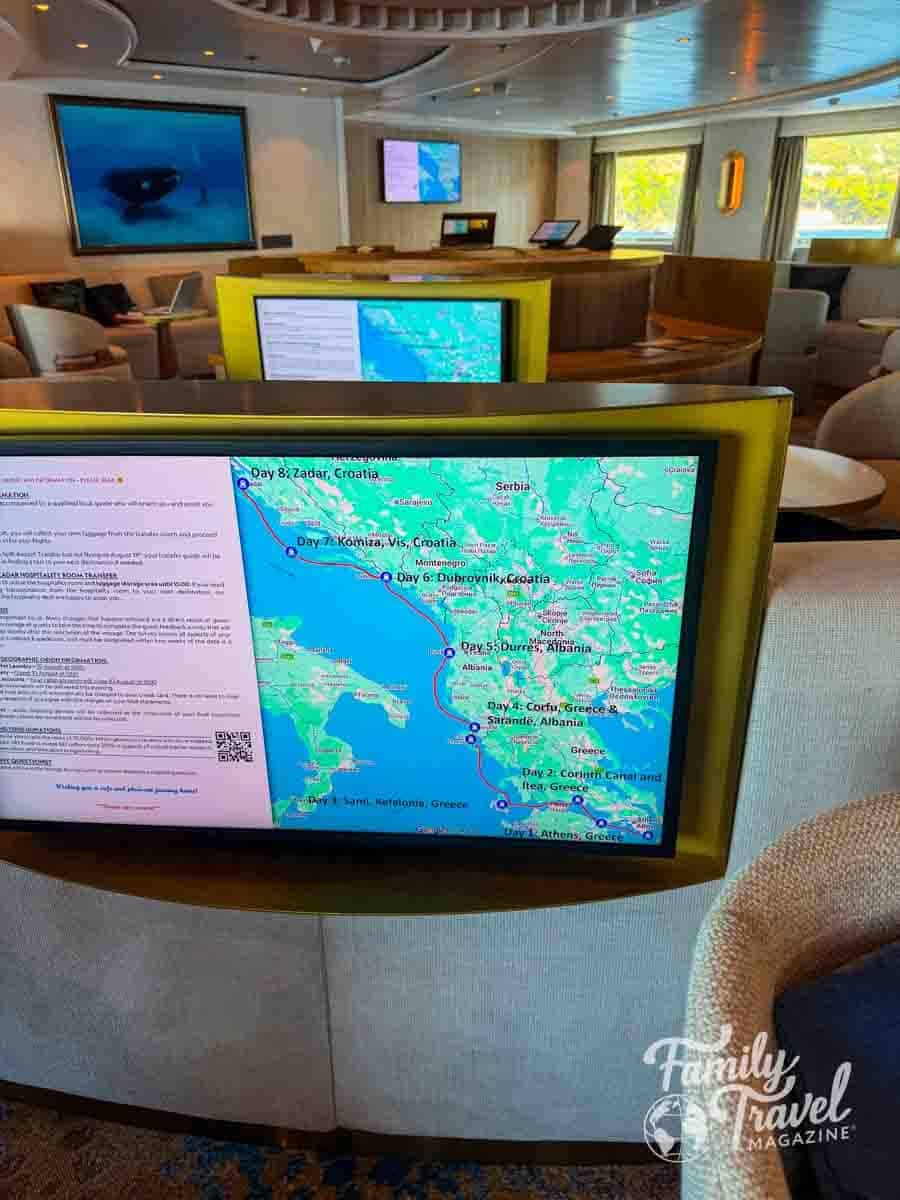
In a recent 7-night, 8-day itinerary spanning the coastal waters of Greece, Albania, and Croatia, travelers encountered a paradigm of travel distinct from conventional commercial cruising. Rather than focusing on onboard entertainment complexes, casinos, and large-scale theatrical productions, the Orion offers an immersive, academic, and expedition-focused environment. This review synthesizes the operational framework, onboard accommodations, daily logistics, and broader implications of small-ship expedition travel through the Mediterranean and Adriatic seas.
Vessel Architecture and Operational Design
Commissioned to operate in diverse marine environments, the National Geographic Orion features a reinforced hull and a specialized build that allows it to navigate narrow straits, shallow harbors, and complex internal waterways. Spanning four passenger decks, the ship accommodates a maximum of 102 guests across 53 ocean-view staterooms, supported by a crew-to-guest ratio of approximately 1 to 1.3.
The physical layout of the vessel emphasizes spatial efficiency and accessibility. Staterooms are concentrated on decks three, four, and five, serviced by two primary staircases and a single elevator. Unlike larger cruise liners characterized by long corridors and heavy passenger congestion, the Orion enables guests to traverse the ship within minutes, entirely eliminating elevator queues.
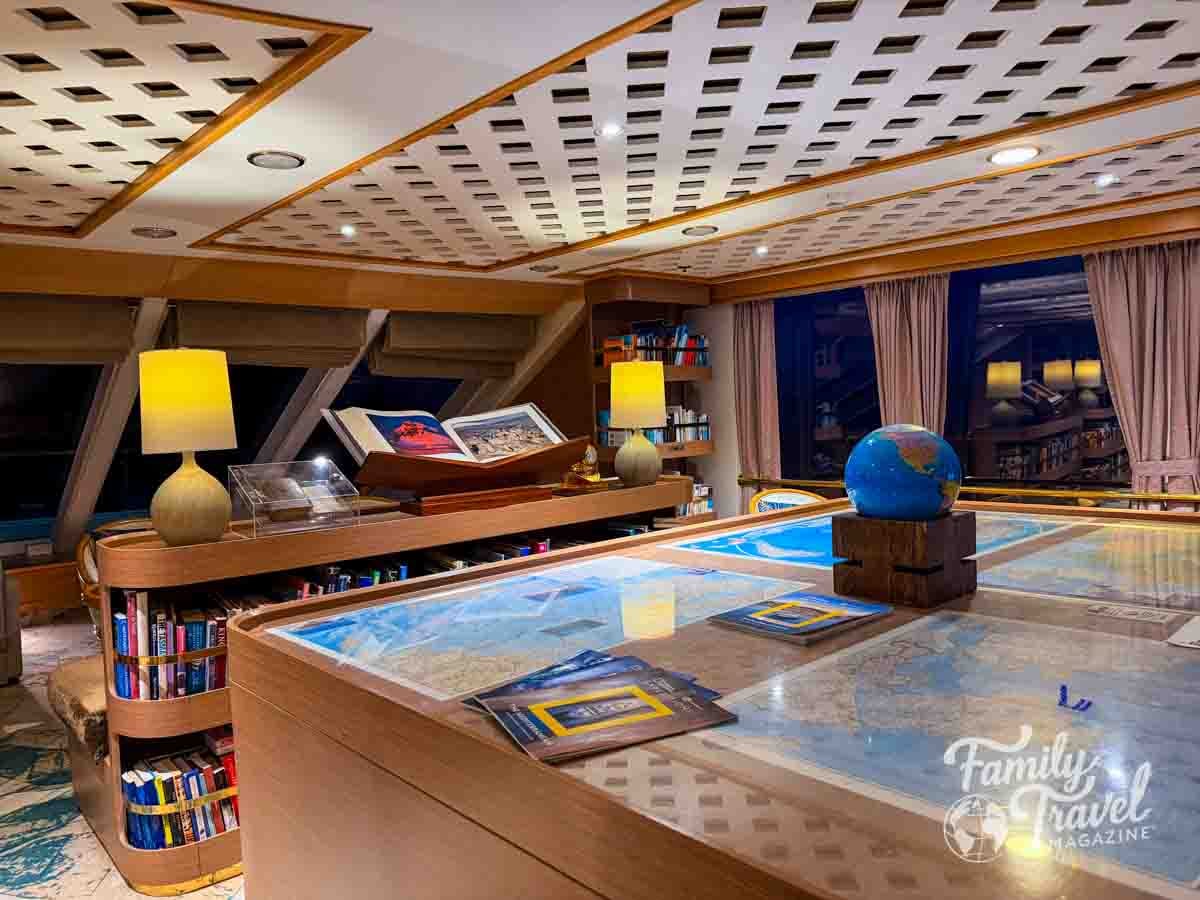
A defining architectural feature of the Orion is its open-bridge policy. With rare exceptions dictated by port pilotage requirements or captain discretion, passengers are permitted access to the bridge to observe marine navigation and maritime operations firsthand. Public spaces are similarly curated for educational and social interaction, including an observation lounge and library, a sundeck, an outdoor cafe, and a multi-purpose lounge used for evening briefings and expert lectures.
Stateroom Categories and Accommodations
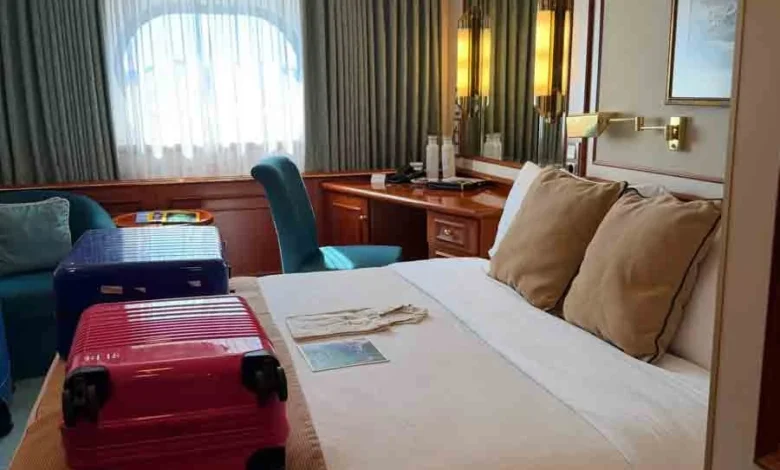
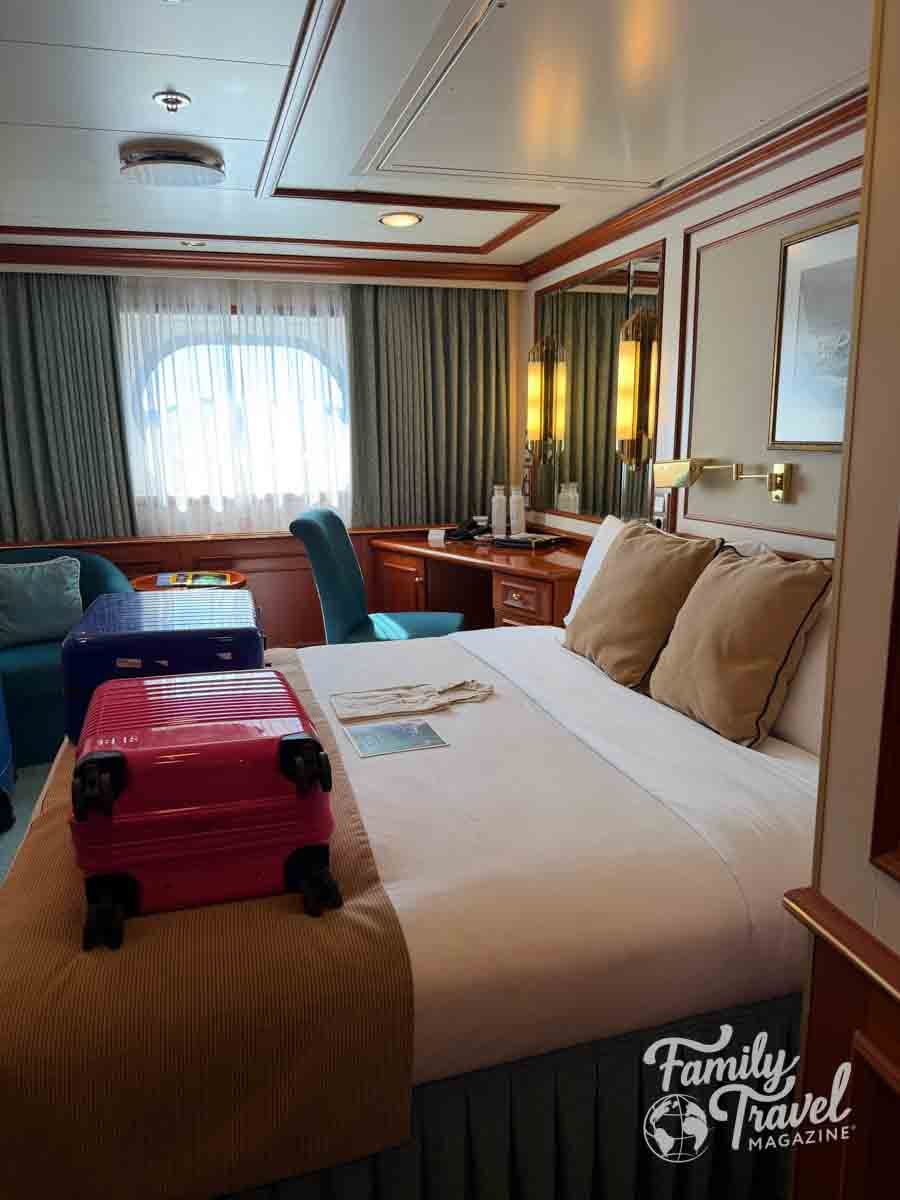
Accommodations aboard the National Geographic Orion range from standard 175-square-foot staterooms to expansive suites exceeding traditional expedition norms. Staterooms are categorized into tiers based on deck placement and spatial dimensions. Categories 1 through 3, situated primarily on the main deck (Deck 3) and lower-tier sections of Deck 4, offer configurations featuring either windows or portholes, with queen-size beds that can be converted into twin configurations.
Upper decks house premium categories. Deck 5 (the bridge deck) features categories 3S, 4, 5, and 6. Category 4 staterooms expand living space to approximately 230 square feet while retaining standard windows. Categories 5 and 6 introduce shared or private balconies, as well as floor-to-ceiling windows. Notably, none of the vessel’s staterooms feature connecting doors, reflecting the adult-centric and independent demographic profile of expedition travelers.
Storage solutions within the standard staterooms are optimized for multi-week expeditions, featuring dual upright closets and integrated drawer systems that allow passengers to fully unpack and stow luggage beneath the beds. Security features adhere to small-ship protocols; cabin doors remain unlocked unless manual deadbolts are engaged from the inside, facilitating fluid movement between private quarters and public lecture spaces.
Culinary Program and Sustainability Initiatives
The culinary operations aboard the National Geographic Orion are consolidated into a primary dining room and an outdoor cafe, scaling back the sprawling multi-restaurant configurations found on mainstream cruise ships while maintaining high nutritional and gastronomic standards.
The dining schedule aligns closely with daily expedition logistics. Mornings begin with an early-riser continental breakfast in the observation lounge, followed by a comprehensive buffet and cook-to-order station at the outdoor cafe. Lunches feature regionally inspired menus emphasizing local meats, fresh produce, soups, and specialized desserts. Dinners are served in the main dining room under an open-seating format, encouraging social integration among passengers. Menus are posted daily, with entrees selected in advance to minimize food waste and optimize galley preparation.
In alignment with Lindblad Expeditions’ corporate sustainability policies, single-use plastics are strictly prohibited onboard. Passengers are issued personalized, reusable metal water bottles upon embarkation, which can be replenished at automated hydration stations located throughout the vessel and via expedition-grade water coolers deployed during shore excursions.
Expedition Staffing and Daily Logistics
The core differentiator of the National Geographic Orion lies in its multidisciplinary expedition team. Rather than traditional cruise directors and entertainment staff, voyages are accompanied by a cadre of specialists. A typical sailing carries an expedition leader, an assistant expedition leader, a National Geographic documentary photographer, a photo instructor, multiple naturalists, a cultural historian, a marine biologist or undersea specialist, and a regional wine expert.
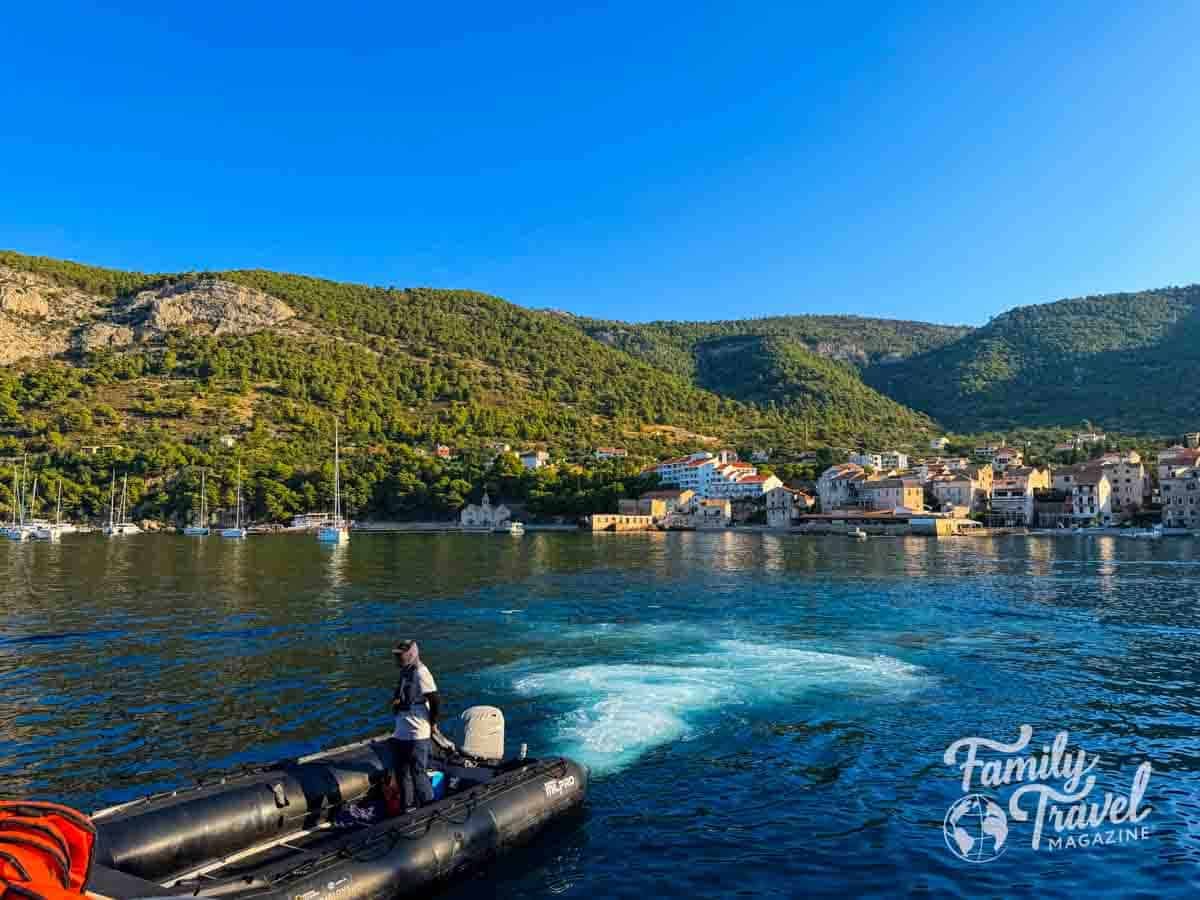
Daily life is structured around active exploration. Excursion options are communicated prior to embarkation, with allocations managed on a sequential registration basis. Because the vessel frequently anchors off-coast or utilizes minor ports, disembarkation often relies on a dedicated fleet of Zodiac inflatable watercraft.
Passengers undergo mandatory safety briefings and practical training regarding Zodiac embarkation procedures on the first full day of the voyage. Operating in rotations of 10 to 11 passengers, guests utilize marine-deck staging areas where life jackets and digital identification check-outs are managed by the crew. This system ensures rapid, secure deployment to shorelines, historical ruins, and ecological sites.
Itinerary Efficiency and Geographic Reach
The strategic advantage of small-ship expedition cruising is demonstrated through itinerary routing. Traditional Mediterranean cruises are often restricted to deep-water commercial ports, requiring extensive bus or train transits to reach inland historical sites. The Orion, by contrast, leverages its compact dimensions to execute overnight sailings, positioning passengers at new destinations each morning.
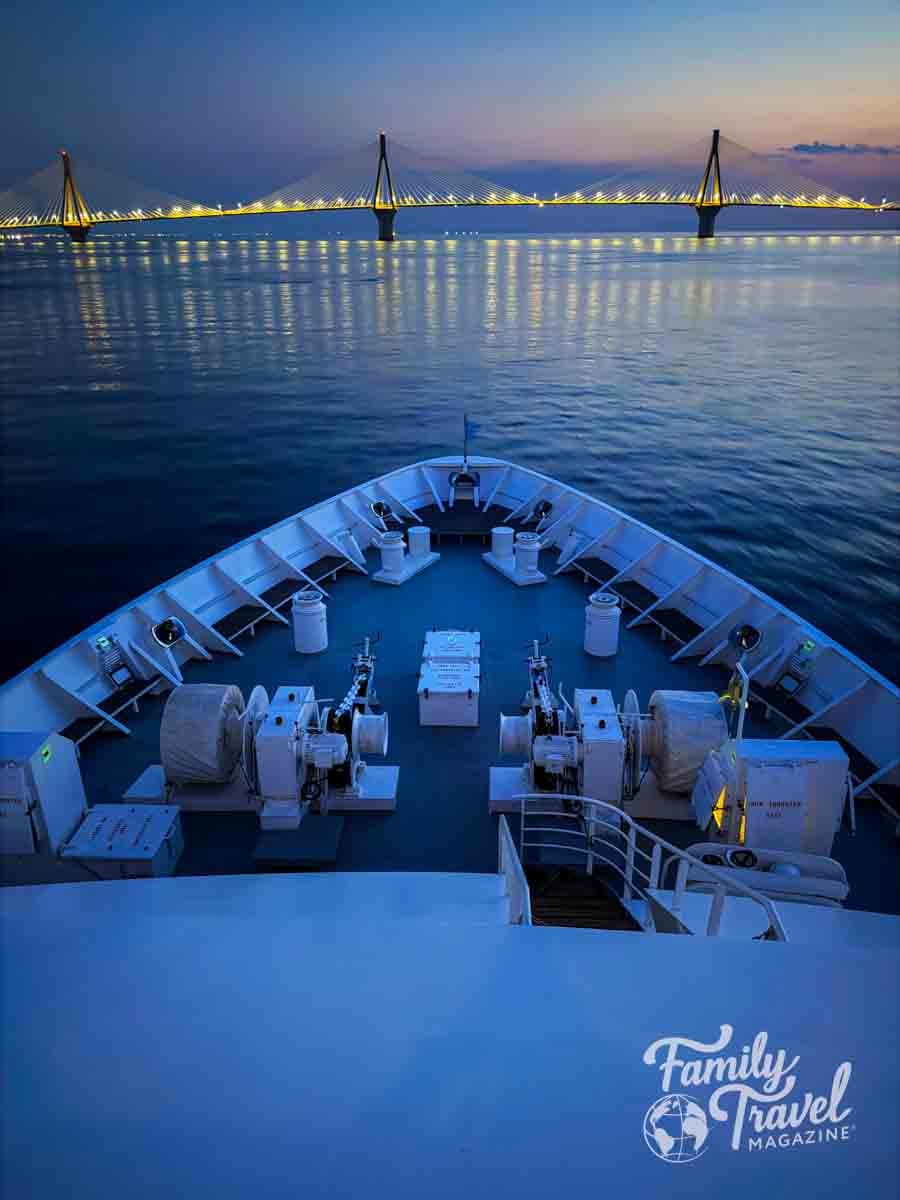
A notable geographical highlight of the reviewed itinerary was the transit of the Corinth Canal. Measuring merely 21.4 meters wide at sea level, the narrow canal is impassable for standard commercial cruise ships, underscoring the unique routing capabilities of expedition vessels. Additional stops included coastal enclaves in Greece, Albania, and Croatia, balancing maritime transit with intensive land-based explorations.
Evenings at sea are utilized for educational enrichment. Daily recaps led by the expedition leader outline the operational plan for the subsequent day, accompanied by slide presentations from naturalists and historical lectures. Concurrently, the resident wine expert curates complimentary regional wine pairings for dinner, representing the intersection of local culture and onboard hospitality.
Target Demographic and Market Implications
The National Geographic Orion caters to a specific segment of the global tourism market. Industry analysis indicates that expedition cruising appeals primarily to active travelers, lifelong learners, and demographics with disposable income who prioritize intellectual engagement over passive leisure.
The absence of traditional cruise amenities—such as casinos, expansive swimming pools, and dedicated youth facilities—defines its market boundaries. While families with older, academically curious teenagers frequently participate, the vessel is fundamentally unsuited for travelers seeking standard resort-style entertainment.
As the global cruise industry diversifies post-pandemic, small-ship expedition operators report sustained demand. The model addresses growing consumer preference for low-density travel, reduced environmental footprints, and authentic cultural immersion. By bypassing mass-tourism ports and fostering direct interaction between passengers and field experts, vessels like the National Geographic Orion illustrate the viable convergence of commercial maritime travel and scientific exploration.