Conquering Wat Phu Tok: Thailand’s Architectural Wonder and Cliffside Buddhist Sanctuary

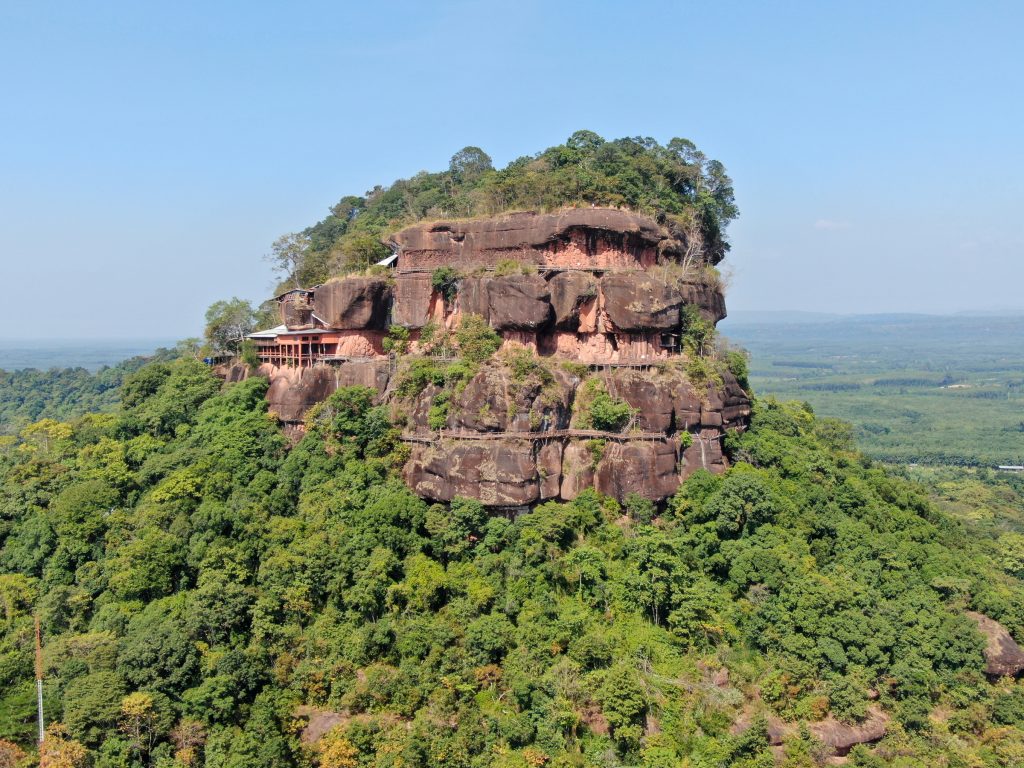
Rising dramatically from the flat, agrarian plains of Thailand’s remote northeastern Isan region, Wat Jetiyakhiri—universally known as Wat Phu Tok—stands as one of the most mechanically daring and spiritually significant religious sites in Southeast Asia. Located in the sparsely populated Bueng Kan province, this 359-meter-high isolated sandstone monolith challenges visitors not only with its sheer verticality, but also through a labyrinthine network of hand-built wooden walkways, suspended cliffs, and vertical ladders. Often drawing comparisons to Sri Lanka’s famous Sigiriya fortress on a smaller scale, the temple complex offers a rare intersection of architectural audacity, Buddhist philosophy, and off-the-beaten-path tourism.
Historical Origins and Spiritual Foundations
The genesis of Wat Phu Tok is deeply intertwined with the ascetic traditions of Thai Buddhism. For generations, the rugged terrain, dense surrounding forests, and abundance of indigenous wildlife—particularly venomous snake populations—rendered the isolated mountain inhospitable to all but the most dedicated forest monks. In Buddhist monastic traditions, environments characterized by isolation, untamed nature, and inherent physical peril are historically sought out as ideal catalysts for deep meditation, mindfulness, and the transcendence of earthly fears.

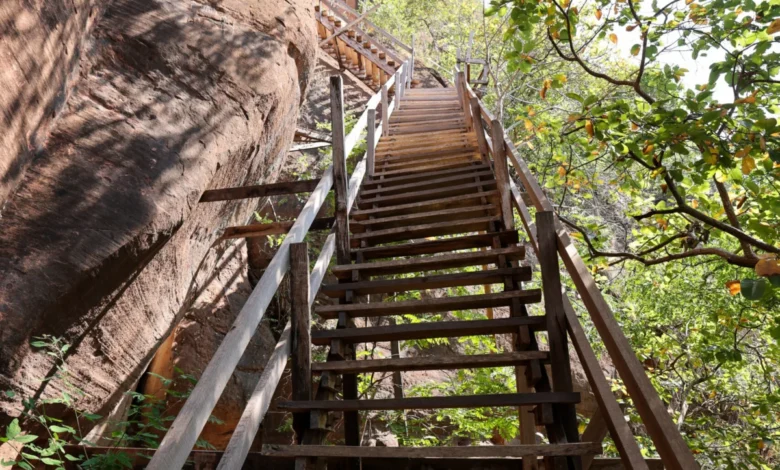
The transformation of the monolithic red rock into a multi-tiered sanctuary began under the direction of the revered Luang Pu Juan, a prominent Isan meditation master. Recognizing the spiritual potential of the landscape, Luang Pu Juan orchestrated the construction of a rudimentary system of wooden staircases, scaling ladders, and cliff-anchored pathways. These structures were meticulously engineered to connect various natural caves, shrines, and meditation platforms scattered across the ascent.
Architecturally, the seven distinct levels of the mountain were intentionally designed to correspond directly to the seven stages of spiritual enlightenment and Buddhist meditation, forcing practitioners to physically and mentally ascend through tiers of increasing detachment and focus. While Luang Pu Juan tragically died in a commercial aviation accident years after initiating the project, his disciples and subsequent generations of monks have continued to maintain and preserve the wooden framework, ensuring the structural integrity of the mountain paths.

Navigating the Seven Levels
Situated approximately a 30-minute drive from Bueng Kan city, the temple complex welcomes visitors with a sprawling park, a large reflective lake, and a traditional assembly hall at the base of the mountain. The journey begins near the primary entrance gate, where the flat dirt trails rapidly transition into a series of wooden plank staircases. Initially, the ascent is gradual, flanked by dense vegetation and occasional small shrines, but the grade quickly steepens, eventually transforming into near-vertical wooden ladders that test the physical endurance of climbers.

The first four levels serve primarily as transitional zones, featuring sparse monastic shelters and natural rock formations. However, upon reaching the fifth level, the complex opens into a wider plateau containing the mountain’s primary ordination hall and numerous secondary shrines. This level acts as a hub of religious activity, offering ground-level paths before the ascent resumes toward the more hazardous upper tiers. A notable deviation from the main trail on this level leads visitors along an elevated rock pathway and across a suspension bridge to an isolated rock temple perched precariously on the mountain’s periphery.
The sixth level represents the architectural climax of Wat Phu Tok. Approximately half of this level’s circumference consists of wooden plank walkways anchored directly into the sheer vertical face of the sandstone cliff. Despite swaying slightly underfoot and requiring intense spatial awareness, the walkways are robustly maintained. Traversing this section provides panoramic, unobstructed views of the expansive Mekong River basin and the verdant canopy of the Bueng Kan province below.

The final ascent leads to the seventh level, an area historically associated with high densities of venomous serpents. Signage advises travelers to proceed entirely at their own risk. Unlike the preceding tiers, the summit features no permanent wooden walkways or structural shrines, consisting instead of the natural, untouched plateau of the mountaintop. While regional authorities and local guides emphasize the sixth level as the primary destination for architectural sightseeing, the seventh level completes the theological allegory of the seven stages of enlightenment.
Regional Tourism and Economic Implications

The emergence of Bueng Kan as an independent province in 2011—having previously been administered as a district under Nong Khai province—has gradually brought increased administrative focus to remote infrastructure, including access roads to Wat Phu Tok. Despite these improvements, Isan remains one of the least commercially industrialized regions in Thailand, receiving a fraction of the international tourist volume directed toward southern beach destinations or northern cultural hubs like Chiang Mai.
Local tourism boards and regional stakeholders view sites like Wat Phu Tok as vital anchors for sustainable, low-impact cultural tourism. The influx of adventurous travelers seeking off-the-beaten-path itineraries provides seasonal economic support to surrounding rural communities, small-scale guesthouses, and local vendors in Bueng Kan city. Yet, the delicate ecological balance of the surrounding forest reserve and the intrinsic risks associated with aging wooden infrastructure necessitate careful management by temple authorities and forestry officials.

Safety Protocols and Visitor Guidelines
Due to the physical demands and inherent risks of scaling a cliffside temple constructed primarily from timber and steel anchors, regional safety advocates and tourism operators emphasize strict adherence to safety guidelines. Visitors are strongly advised to wear appropriate footwear with sufficient tread, maintain continuous three-point contact on vertical ladders, and refrain from utilizing mobile devices while traversing the cliff-hugging walkways of the sixth level.

Furthermore, environmental regulations prohibit the disturbance of local wildlife, particularly the region’s indigenous reptile populations. Meteorological conditions also play a critical role in site accessibility; heavy seasonal monsoons in northeast Thailand can render wooden planks exceptionally slick, prompting temporary closures of upper-level pathways to prevent accidental falls. Through a combination of monastic stewardship, careful infrastructure maintenance, and responsible visitor conduct, Wat Phu Tok endures as a monumental testament to human ingenuity, religious devotion, and the raw topography of the Isan borderlands.