Uncovering the Past: Inside Reporting House, Prishtina’s Groundbreaking Museum of Conflict, Journalism, and Resilience

Nearly three decades after NATO fighter jets crossed the Balkan skies and tens of thousands of displaced families returned to their war-torn homeland, the physical and emotional landscape of Kosovo continues to evolve. In the heart of Prishtina, a striking new cultural institution has emerged to document one of the defining chapters of modern European history. Reporting House, located on Mother Teresa Avenue within the cavernous industrial shell of a former Yugoslav-era department store, has rapidly established itself as a vital archive of the 1998–1999 Kosovo conflict. Since opening its doors two years ago, the museum has drawn over 30,000 visitors, offering a profound, multimedia exploration of how journalism, international intervention, and human endurance shaped the birth of a nation.
For veteran foreign correspondents who witnessed the crisis firsthand, the museum serves as a jarring yet deeply necessary portal to the past. Christian Jennings, a British journalist who arrived in Kosovo in June 1999 amidst the mass exodus of refugees returning from Albania and North Macedonia (then Macedonia), reflects on the dramatic transformation of the city. Backed by an imposing presence of international peacekeeping troops from over thirty countries, the streets of Prishtina were then defined by chaos, relief, and destruction. Returning years later, Jennings found that the harrowing events of those months have been preserved not merely in textbooks, but through a visceral, unvarnished curation of artifacts, testimonies, and visual art at Reporting House.
Main Facts and Architectural Concept
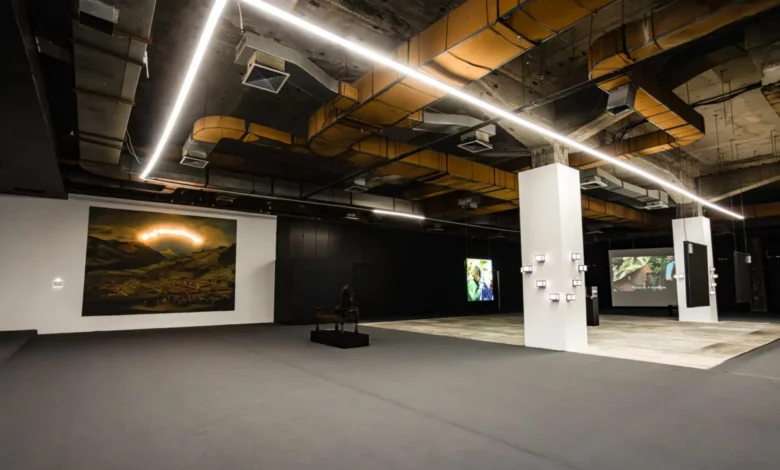
Reporting House occupies a massive, stripped-down industrial footprint that deliberately exposes the raw concrete and structural pillars of its former commercial identity. The exterior greets visitors with a powerful, minimalist installation constructed from scarred timbers salvaged from houses burned during the conflict. Inside, the museum houses approximately 500 photographs, 150 television broadcast reports, and diverse contemporary art installations contributed by creators from the Balkans, across Europe, and as far away as Mozambique.

Admission to the museum is entirely free of charge, welcoming both independent travelers and guided groups. The institution operates Tuesday through Sunday from 10:00 to 18:00. Recently, the curators expanded their footprint by launching a second exhibition site across the city at the Prishtina Train Station. Entitled Exodus ’99, this satellite museum is housed inside an authentic railway wagon utilized during the conflict to transport refugees, accompanied by an adjacent gallery displaying related historical artifacts.
Chronology and Historical Context
The backdrop of Reporting House is rooted in the complex geopolitical disintegration of the former Yugoslavia and the escalating ethnic conflict in Kosovo throughout the late 1990s.
- 1998: Armed conflict intensifies between Serbian security forces and the secessionist Kosovo Liberation Army (KLA). Violence displaces rural populations and draws intense international scrutiny.
- Late 1998 to Early 1999: Global media coverage intensifies. Correspondents operating in hazardous conditions capture the scale of human suffering, culminating in the diplomatic breakdown of peace talks.
- March – June 1999: NATO launches an air campaign against targets in the Federal Republic of Yugoslavia to halt the humanitarian crisis and ethnic cleansing. Hundreds of thousands of Kosovo Albanians are forced into exile in neighboring Albania and Macedonia.
- June 1999: Hostilities cease under the Kumanovo Agreement. Yugoslav forces withdraw, NATO-led Kosovo Force (KFOR) peacekeepers enter the territory, and hundreds of thousands of refugees return home.
- Recent Years: Cultural institutions like Reporting House are established to archive the memory of the conflict, bridging generational divides through documentation and art.
The Power of the Pen: Artifacts and Personal Testimonies
What distinguishes Reporting House from conventional military history museums is its acute focus on the intersection of human experience and international journalism. Among the most striking exhibits is a shattered Sony mobile phone mounted in a glass display case. In 1998, the device was tucked inside the belt-bag of a BBC television cameraman filming Serbian forces when it intercepted a high-velocity rifle bullet. The impact destroyed the phone but saved the cameraman’s life. Footage captured by crews operating under such extreme conditions formed the backbone of global news broadcasts that galvanized international public opinion, ultimately forcing political leaders to authorize NATO’s military intervention.
Alongside the tools of international journalism, the museum preserves deeply intimate personal narratives from the ground. Displayed within the galleries are the preserved love letters exchanged between Fehmi and Xheve Lladrovci, a prominent married couple within the Kosovo Liberation Army leadership. The two fought side-by-side in the hills before tragically losing their lives together in a firefight against Serbian forces in September 1998.

Further anchoring the physical reality of wartime reporting is an original Land Rover Defender, heavily scarred and structurally dented from years of frontline deployment by journalists navigating hazardous terrain. These exhibits collectively challenge visitors to examine the fine line between observation and participation in zones of violent conflict.
Broader Impact, Implications, and Cultural Legacy
The establishment of Reporting House and its sister site, Exodus ’99, arrives at a critical juncture for Kosovo. As a young European republic striving for deeper international integration, acknowledging and preserving the collective memory of the 1999 war remains central to the nation’s social fabric. By incorporating perspectives that extend beyond the immediate region—including artistic contributions from disparate global conflicts—the museum frames the Kosovo crisis within a universal dialogue on displacement, sovereignty, and the ethics of reporting.
Analysts note that cultural diplomacy and grassroots historical archiving play an indispensable role in post-conflict societies. Traditional state-sponsored monuments often lean toward monolithic nationalism, whereas Reporting House utilizes a journalistic lens that emphasizes human vulnerability, the cost of war, and the vital role of a free press. By placing the battered equipment of reporters alongside the personal effects of guerrilla fighters and refugees, the institution offers an unvarnished examination of how historical narratives are constructed and recorded.
For travelers and researchers navigating the Western Balkans, Reporting House provides an essential educational resource. It underscores Prishtina’s ongoing cultural renaissance, transforming spaces of commercial stagnation into vibrant hubs of historical reflection. As visitors navigate the industrial corridors of the former department store and step inside the refugee wagon at the railway station, they are confronted with a timeless truth: that the preservation of memory is the ultimate safeguard against the repetition of history.

Visitor Information:
- Reporting House
- Address: Mother Teresa Avenue, Prishtina, Kosovo (near the Skanderbeg statue)
- Hours: Tuesday to Sunday, 10:00–18:00 (Closed Monday)
- Admission: Free
- Exodus ’99
- Address: Prishtina Train Station, Prishtina, Kosovo
- Hours: Tuesday to Sunday, 12:00–18:00 (Closed Monday)
- Contact Phone: +383 48 831 998
- Social Media: Instagram (@reportinghouse), Facebook (Reporting House)