The Evolution of Global Tourism: How Regenerative Travel is Redefining the Relationship Between Visitors and the Planet

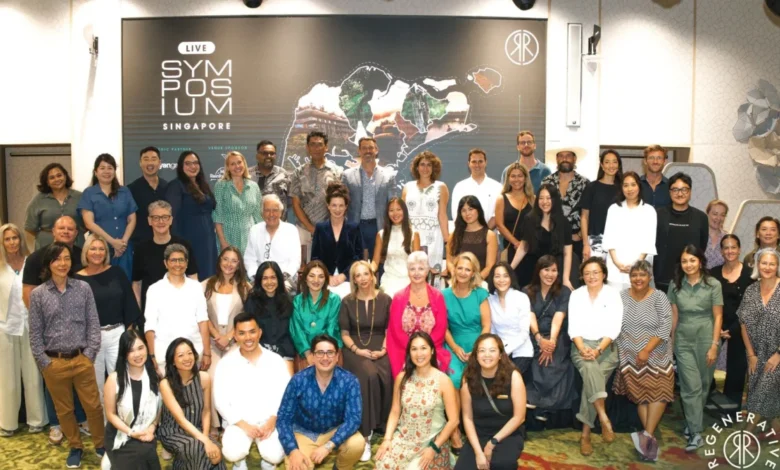
The global travel industry is currently navigating a profound paradigm shift, moving beyond the traditional frameworks of "sustainable travel" toward a more ambitious and holistic model known as regenerative tourism. For decades, the primary goal of ethical travel was damage mitigation—minimizing carbon footprints, reducing single-use plastics, and respecting local customs. However, as the climate crisis intensifies and the limitations of "doing less harm" become apparent, a new movement is emerging. This shift was the central focus of the recent Regenerative Travel Asia Symposium held in Singapore, where industry leaders, environmentalists, and policymakers gathered to explore a critical question: Can the tourism industry move from being a consumer of resources to a primary driver of ecosystem restoration and community empowerment?
The Shift from Sustainability to Regeneration
To understand the current landscape, it is necessary to distinguish between sustainability and regeneration. While sustainable tourism aims for a "net-neutral" impact—maintaining the status quo and ensuring that future generations can enjoy the same resources—regenerative tourism seeks a "net-positive" outcome. It operates on the principle that travel should leave a destination better than it was found. This involves actively restoring degraded environments, revitalizing local economies, and fostering deep, meaningful connections between visitors and hosts.
At the Singapore symposium, Amanda Ho, co-founder and CEO of Regenerative Travel, articulated this transition as a fundamental change in mindset. She described the movement as a shift from "head to heart," from "scarcity to abundance," and from the "individual to the collective." This perspective challenges the long-standing view of tourism as a transactional industry built on extraction—where travelers take experiences and photos while leaving behind waste and cultural erosion—and reimagines it as a reciprocal relationship between people, places, and nature.
A Chronology of Tourism Development
The emergence of regenerative travel is the latest stage in a decades-long evolution of the travel industry:
- The Era of Mass Tourism (1950s–1980s): Post-WWII economic growth and the rise of commercial aviation led to the democratization of travel. The focus was on volume, infrastructure development, and economic growth, often at the expense of environmental and social integrity.
- The Rise of Ecotourism (1990s): As environmental awareness grew, "ecotourism" emerged as a niche market. The focus was on visiting natural areas while conserving the environment and improving the well-being of local people.
- The Sustainability Movement (2000s–2010s): Sustainability became a corporate buzzword. Hotels and airlines began implementing carbon offsets, water conservation programs, and waste reduction strategies. However, critics argued that many of these initiatives were superficial or aimed at cost-cutting rather than systemic change.
- The Regenerative Pivot (2020–Present): The COVID-19 pandemic acted as a catalyst. The total halt of global travel allowed ecosystems to breathe and forced destinations to reckon with their dependence on volatile tourism markets. The current era focuses on resilience, biodiversity restoration, and community-led governance.
The Human Element: Interconnectedness and Biodiversity
Keynote speaker Juliet Kinsman emphasized at the symposium that humanity is not a separate entity observing nature, but an intrinsic part of an interconnected living system. In a world increasingly dominated by digital interfaces and artificial intelligence, Kinsman argued that the industry must focus on "regenerating humanity." This involves rebuilding the lost connection between individuals and the natural world.
This relational aspect of regeneration suggests that the well-being of the traveler is inextricably linked to the well-being of the destination. While "wellness tourism" has historically focused on the self—spa retreats, yoga, and personal detoxification—regenerative wellness asks if a traveler can truly be "well" if the community hosting them is struggling or the surrounding forest is dying. Regeneration, therefore, is as much about social justice and cultural preservation as it is about environmental science.
Analyzing Consumer Trends and the "Intention Gap"
Data suggests that the demand for more ethical travel options is no longer a niche preference but a mainstream expectation. Jeremy Tran of Sustainable Travel Asia cited research from Booking.com indicating that 85% of global travelers express a desire for more sustainable travel options. Furthermore, 69% of travelers state they want to leave the places they visit better than they found them.
However, a significant "intention gap" remains. While travelers say they want to be responsible, their behaviors are often dictated by social media trends and convenience. The "Instagrammability" of a location can lead to "overtourism" overnight, putting immense pressure on local infrastructure and ecosystems. Tran noted that the challenge for the regenerative movement is to move travelers away from "passive consumption"—following digital trends—toward "intentional engagement." This involves asking why one is traveling and how their presence affects the local socio-economic fabric.
Case Studies: Regeneration in Practice
Several industry leaders showcased how regenerative principles are being integrated into luxury and boutique hospitality models. These examples serve as blueprints for the wider industry:
- Song Saa Private Island, Cambodia: Built on what was once degraded land, Song Saa was designed with a vision of restoration. The resort led the establishment of Cambodia’s first Marine Protected Area, covering 200 square kilometers. Approximately 75% of the resort’s staff are from local villages, and the Song Saa Foundation manages waste, provides healthcare, and supports education in the region.
- The Banyan Group: Under the leadership of marine biologists like Nick Hardman, the group has moved beyond basic conservation. Their initiatives include large-scale coral restoration and community-based reforestation. Hardman emphasized that "connection is key," noting that when guests participate in a coral dive, the experience becomes personal, making them more likely to become long-term advocates for the environment.
- The Datai Langkawi, Malaysia: This resort has implemented the "Datai Pledge," a comprehensive program aimed at making the resort’s operations nature-positive. It includes wildlife corridors to allow animals to move safely through the property and a zero-waste-to-landfill policy that involves the local community in upcycling efforts.
The "Bali Warning": Balancing Growth and Local Needs
The symposium also addressed the darker side of tourism development, using Bali as a primary example. Maitri Fischer of Eco-Mantra, a leader in sustainable design, highlighted the tensions that arise when tourism growth outpaces infrastructure. Bali has faced severe challenges with waste management, water scarcity, and the loss of agricultural land to villa development.
Fischer argued that for tourism to be regenerative, local communities must be the primary architects of their own future. They cannot simply be "hosts" or "service providers"; they must be active participants in decision-making. When tourism is designed without local input, it becomes extractive, depleting the very resources (culture and nature) that attracted visitors in the first place.
Addressing the Risks of Greenwashing and Accessibility
As "regenerative travel" gains traction, experts warn of the risk of greenwashing. Much like "sustainable" and "eco-friendly" before it, "regenerative" could easily become a hollow marketing label. To prevent this, the industry requires transparency and measurable impact. Experts at the symposium called for rigorous reporting standards that track biodiversity gains, carbon sequestration, and local wealth distribution.
Another significant challenge is accessibility. Currently, many regenerative experiences are located within the luxury sector. For the movement to achieve its goals of global restoration, it must be scalable to the mass market. If regeneration is only for the wealthy, it fails to address the systemic impact of the billions of middle-class travelers who traverse the globe annually. This requires a shift in how budget hotels, tour operators, and transportation hubs operate, ensuring that regenerative choices are affordable and accessible to all.
The Path Forward: A Commitment to Healing
The urgency of the climate crisis means that the travel industry can no longer afford to be a neutral observer. With global tourism expected to return to and exceed pre-pandemic levels, the environmental and social stakes have never been higher.
Regenerative travel represents a fundamental shift in the "social contract" of tourism. It invites the traveler to move from being a consumer to a contributor. As the symposium in Singapore concluded, the success of this movement depends on a collective effort. It requires hotels to design for nature, governments to regulate for the community, and travelers to choose with intention.
Ultimately, regenerative travel is not about achieving perfection; it is about a commitment to a process of healing. It is an acknowledgment that every journey has an impact, and that through conscious choice, that impact can be one of restoration, connection, and long-term vitality for the planet’s most cherished destinations.