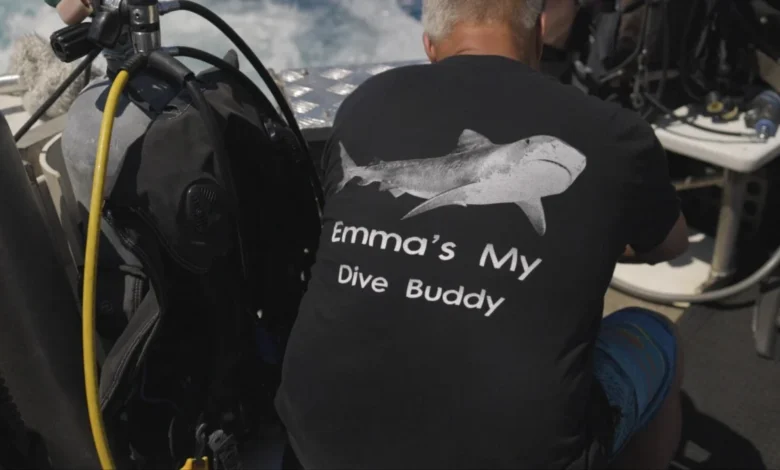
In the azure depths of the Bahamas, a profound and unconventional bond has been forged between a human and one of the ocean’s most formidable predators. Renowned conservationist and filmmaker, Scott Abernethy, is widely credited with pioneering tiger shark diving at a location he aptly named "Tiger Beach." This shallow, sandy expanse, situated on the western edge of the Little Bahama Bank approximately 19 miles west of West End, Grand Bahama, has become a sanctuary and a stage for a remarkable display of interspecies understanding. At the heart of this narrative is Emma, a majestic 15-foot tiger shark, whose years-long relationship with Abernethy has transcended fear and fostered a unique form of mutual respect, significantly influencing global perceptions of these often-misunderstood creatures.
The genesis of this extraordinary connection traces back to 2001. It was then that Emma, then a younger and perhaps more vulnerable shark, approached Abernethy, who was engaged in his conservation work. Abernethy, demonstrating an extraordinary level of calm and expertise, removed a fishing hook from her mouth. This initial act of intervention marked the beginning of an evolving relationship. Over the subsequent years, Emma has come to recognize Abernethy’s distinctive boat, often waiting beneath it upon his arrival. Abernethy, in turn, has become a vital resource for sharks in the region, having removed hundreds of fishing hooks and other entanglements from these magnificent animals. Emma herself has benefited from this intervention on multiple occasions, with Abernethy having removed four more hooks from her over the years. This consistent, gentle interaction has transformed Emma into one of the most recognizable wild sharks globally, and Abernethy into a leading advocate for a paradigm shift in how humanity views shark species.
Challenging Perceptions: The Reality of Shark Behavior
The pervasive fear surrounding sharks, often fueled by sensationalized media portrayals and a lack of accurate information, stands in stark contrast to scientific data. Contrary to popular belief, sharks rarely exhibit aggressive behavior towards humans. The Florida Museum of Natural History’s International Shark Attack File, a definitive global database, recorded a mere 47 unprovoked shark bites worldwide in 2024. Of these, only four were fatal, a figure significantly lower than the long-term annual average of approximately 70. Researchers consistently emphasize that the odds of experiencing an unprovoked shark bite remain exceptionally low. In fact, common aquatic hazards such as rip currents and drowning pose a far greater statistical risk to beachgoers and swimmers.
Tiger sharks, in particular, are among the ocean’s largest apex predators, playing a critical role in maintaining the health and balance of marine ecosystems. Their presence and survival are not only of ecological importance but also hold substantial economic value for countries like the Bahamas. Recognizing this, the Bahamian government took a significant step in 2011 by declaring its waters a shark sanctuary. This forward-thinking policy has paid dividends. A 2017 study commissioned by the Pew Charitable Trusts estimated that sharks and rays contribute approximately $114 million annually to the Bahamian economy, with the vast majority of this revenue generated through dive tourism. This economic reliance underscores the imperative of ensuring the continued survival and well-being of these vital marine species.
The Vulnerability of Apex Predators: Threats to Tiger Sharks
Despite their formidable reputation, tiger sharks are facing increasing pressures that threaten their populations. The species is currently listed as "Near Threatened" on the International Union for Conservation of Nature (IUCN) Red List. Scientific assessments indicate a suspected population decline of close to 30 percent over the past three generations. This decline is attributed to a confluence of factors, including poorly regulated fishing practices, controversial shark control programs in some regions, and the persistent demand from the shark fin trade.
The consequences of a decline in tiger shark populations extend far beyond the species itself. As apex predators, they are integral to the intricate web of marine life, helping to regulate populations of other species and maintain the delicate equilibrium of ocean food webs. Furthermore, recent research has illuminated their indirect yet significant role in mitigating the impacts of global warming. Studies have demonstrated that tiger sharks help prevent overgrazing of seagrass beds by green turtles. Healthy seagrass meadows are crucial carbon sinks, playing a vital role in the ocean’s capacity to absorb atmospheric carbon dioxide. The decline of tiger sharks, therefore, has a ripple effect, potentially impacting the health of these vital carbon-storing ecosystems.
Abernethy’s Mission: Beyond Tourism, Towards Conservation
While Abernethy is well-known for leading popular shark diving tours at Tiger Beach, his ultimate objective transcends mere tourism. His true passion lies in fostering a deeper understanding and appreciation for sharks, aiming to convert observers into passionate conservationists. Through his nonprofit organization, Wildlife VOICE, Abernethy actively mentors aspiring conservationists and educates individuals on humane and effective methods for disentangling sharks from fishing gear. He stresses the importance of employing gentle techniques, emphasizing affection over force, and crucially, cautions that handling sharks should only be undertaken by individuals possessing the necessary expertise and under appropriate conditions.
Abernethy champions the idea that with proper training and in the right environment, divers should be encouraged to experience the ocean alongside these often-feared creatures. He firmly believes that most human-shark encounters, often mislabeled as "attacks," are not driven by malicious intent. Instead, he posits that these incidents are typically the result of curiosity or playful investigation on the part of the shark. Abernethy famously states, "A shark attack is misnamed. It’s really a shark mistake." This perspective reframes the interaction, highlighting the potential for miscommunication and misunderstanding rather than inherent aggression.
A Timeline of Connection and Conservation
The relationship between Scott Abernethy and Emma, the tiger shark, represents a compelling case study in interspecies communication and conservation advocacy.
- 2001: The pivotal year when Emma, a tiger shark, first approaches Scott Abernethy. He successfully removes a fishing hook from her mouth, marking the beginning of their unique bond.
- Early 2000s: Abernethy establishes "Tiger Beach" as a recognized site for tiger shark diving, pioneering a new approach to interacting with these apex predators. He begins removing fishing hooks and other entanglements from numerous sharks in the area.
- Mid-2000s to Present: Emma consistently recognizes Abernethy’s boat, developing a predictable interaction pattern. Abernethy continues to remove multiple hooks from Emma and hundreds from other sharks, solidifying his reputation and raising the profile of tiger sharks.
- 2011: The Bahamas declares its waters a shark sanctuary, a landmark decision that provides critical protection for shark populations and supports marine tourism.
- 2017: A study highlights the significant economic contribution of sharks and rays to the Bahamian economy, estimated at $114 million annually, largely from tourism.
- Ongoing: Abernethy’s nonprofit, Wildlife VOICE, actively engages in conservation education, mentoring new conservationists, and promoting humane shark interaction techniques.
- Present: Abernethy’s work, including his relationship with Emma, is increasingly featured in documentaries and media, aiming to dismantle fear and foster respect for sharks globally. The full documentary on his relationship with Emma is now available on Matador Originals.
Broader Implications: The Ecological and Economic Imperative
The work of Scott Abernethy and the story of Emma at Tiger Beach resonate far beyond the immediate interactions. They serve as a powerful illustration of the interconnectedness of human activities, marine ecosystems, and economic prosperity. The Bahamas’ commitment to shark sanctuaries demonstrates a global trend towards recognizing the intrinsic and extrinsic value of marine biodiversity.
The economic reliance on healthy shark populations for tourism means that conservation efforts are not just an ecological necessity but also a sound economic strategy. The decline of tiger sharks, as indicated by their Near Threatened status, poses a direct threat to this vital industry. Furthermore, their role as ecosystem engineers, influencing everything from food web dynamics to carbon sequestration, highlights their importance in the broader context of climate change mitigation.
Abernethy’s approach, focusing on education and fostering understanding, offers a model for how to bridge the gap between human curiosity and the natural world. By challenging outdated narratives of fear and aggression, he encourages a more nuanced and respectful engagement with marine life. The success of his initiative suggests that by promoting accurate information and facilitating positive interactions, humanity can move towards a more harmonious coexistence with the ocean’s most magnificent inhabitants, ensuring their survival and the health of the planet for generations to come. The continued success of initiatives like Tiger Beach depends on sustained global efforts to combat illegal fishing, reduce pollution, and raise public awareness about the critical role sharks play in our oceans.