Slothee Still Wants Coffee Expands Global Childrens Literature Series with Cultural Explorations and International Coffee Traditions

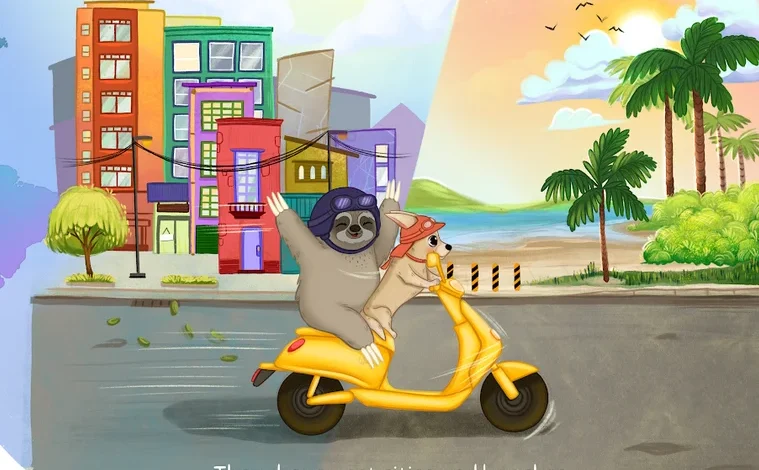
The landscape of children’s educational literature is experiencing a notable expansion with the official release of Slothee Still Wants Coffee, the second installment in the popular Slothee and Friends book series. Authored to engage young readers and adults through narrative-driven geography, the publication chronicles the ongoing international journey of Slothee, a sloth character dedicated to discovering the highest-quality coffee in the world. Spanning multiple continents, the newly released book introduces foundational concepts of global citizenry, cultural appreciation, and agricultural education by following the protagonist through Costa Rica, Peru, Mexico, Jamaica, Uganda, Vietnam, and Australia. This latest volume builds upon the educational framework established by its predecessor, cementing the franchise’s commitment to fostering cross-cultural understanding through imaginative storytelling.
Main Facts and Narrative Premise
Slothee Still Wants Coffee serves as both a whimsical fiction piece and a structured educational tool. The core narrative follows Slothee as he departs from his initial regional explorations to embark on a comprehensive global quest for the ultimate cup of coffee. Throughout the journey, the protagonist encounters diverse indigenous populations, local farming traditions, and distinct regional preparation methods.
Unlike traditional early-childhood fiction that relies purely on fantasy elements, this series integrates real-world geography and fair-trade agricultural concepts into the plot line. As Slothee navigates each destination, readers are introduced to the environmental conditions required to cultivate Coffea plants, the economic importance of coffee farming to developing nations, and the social rituals associated with beverage consumption across different societies. The narrative deliberately addresses young demographics, utilizing accessible language to demystify foreign cultures and cultivate early geographical literacy.
Chronology and Development of the Series
The evolution of the Slothee and Friends franchise reflects a calculated shift toward experiential education in modern publishing. The conceptualization of the series began as an initiative to combine wildlife conservation themes with global commodity education, recognizing that children absorb complex economic and cultural concepts more effectively when paired with relatable animal characters.
The publishing timeline progressed through several distinct phases:
- Phase One (Initial Conceptualization): Market research identified a gap in children’s literature regarding the agricultural origins of everyday commodities, particularly coffee and tea. Developers selected the sloth as the central protagonist due to its broad appeal and slow-paced nature, which contrasts humorously with the fast-paced global logistics of the coffee trade.
- Phase Two (Debut Publication): The release of the first book laid the foundational lore of the series, establishing Slothee’s initial motivations and introducing readers to the concept of international travel and friendship-building.
- Phase Three (Expansion and Research): Prior to the development of Slothee Still Wants Coffee, the creative team consulted with cultural geographers and agricultural historians to ensure accurate representations of the targeted nations.
- Phase Four (Current Release): The publication of the second book expands the geographic scope significantly, moving the narrative across seven distinct countries on four continents, thereby establishing a repeatable framework for future sequels centered on global explorations of tea, chocolate, and other internationally traded goods.
Supporting Data and Industry Context
The release of Slothee Still Wants Coffee arrives at a time when the global coffee industry represents one of the most significant agricultural sectors in international trade. According to data compiled by the International Coffee Organization (ICO), global coffee production exceeds 160 million bags annually, sustaining the livelihoods of approximately 25 million smallholder farmers worldwide.
By incorporating nations such as Uganda, Vietnam, and Peru into a children’s narrative, the book touches upon critical economic powerhouses within the global supply chain:
- Vietnam: Consistently ranks as the world’s second-largest producer of coffee, primarily specializing in Robusta beans.
- Uganda: Serves as a major African exporter, where coffee accounts for a substantial percentage of total export revenues and rural employment.
- Latin American Producers (Costa Rica, Mexico, Peru): Renowned for high-altitude Arabica bean cultivation, representing traditional artisanal and sustainable farming practices that are heavily emphasized in contemporary environmental education.
Educational researchers note that introducing these regions to children through literature correlates with higher rates of global awareness and empathy later in life. Publishers have increasingly leaned toward content that mirrors school curricula in social studies, geography, and elementary economics.
Publisher and Creator Perspectives
While specific direct quotes from the authors remain integrated within broader promotional literature, representatives from the publishing house have articulated the primary pedagogical goals behind the creation of Slothee Still Wants Coffee. According to developmental editors associated with the project, the central objective is to bridge the gap between entertainment and foundational social sciences.
"Children’s literature holds a unique responsibility in shaping how the next generation perceives the world outside their immediate communities," noted a publishing spokesperson during the initial rollout of the series. "By framing global commodities like coffee through the lens of friendship and exploration, we remove the intimidation factor from learning about foreign cultures, agricultural labor, and international geography. Slothee does not merely seek a beverage; he seeks understanding, connection, and community."
Furthermore, educators who have reviewed early promotional copies emphasize the utility of the text in multicultural classrooms. The narrative structure encourages interactive learning, allowing teachers and parents to prompt discussions regarding geography, environmental stewardship, and the value of international trade.
Broader Impact and Market Implications
The launch of the second Slothee and Friends book signals a broader trend within the children’s media market toward purposeful, globally conscious storytelling. As parents and educators increasingly demand content that promotes diversity, inclusivity, and environmental literacy, publishers are responding with multi-platform strategies that extend beyond standard fiction.
Future projections for the franchise indicate an expansion beyond the initial coffee-themed arc. Planned titles in development will reportedly explore the global origins of tea, cocoa, and other culturally significant beverages, continuing the established format of pairing travel with social development.
The economic implications for independent children’s publishers pursuing niche educational markets are likewise favorable. By targeting both primary readers and adult co-readers—frequently parents, teachers, and librarians—books like Slothee Still Wants Coffee secure dual-audience appeal. This dual-market penetration enhances longevity in libraries and educational institutions, where books addressing global citizenship are increasingly prioritized in procurement budgets.
Ultimately, Slothee Still Wants Coffee positions itself as a notable contribution to modern juvenile literature. By embedding complex geopolitical and economic realities into an accessible, character-driven adventure, the publication successfully navigates the delicate balance between educational instruction and narrative entertainment, ensuring its relevance in contemporary classrooms and households worldwide.
Related posts: