e Still Wants Coffee Expands Global Childrens Literacy and Cultural Exploration Series Through International Adventures
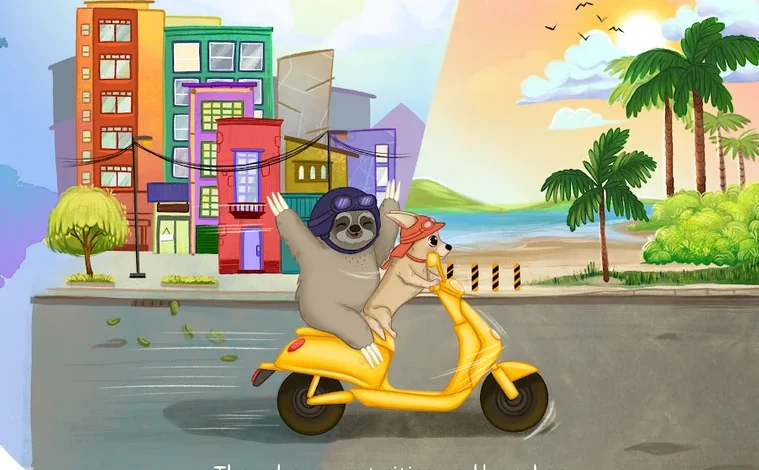
The literary landscape for early childhood education has experienced a notable expansion with the release of Slothee Still Wants Coffee, the second installment in the popular Slothee and Friends children’s book series. Authored to bridge the gap between entertaining storytelling and global education, the publication chronicles the ongoing journey of Slothee, a deliberate and curious sloth, as he traverses continents to discover the ultimate brew. Following the foundational success of the series’ debut, this latest volume broadens its geographic and cultural scope, taking young readers on an expedition through Costa Rica, Peru, Mexico, Jamaica, Uganda, Vietnam, and Australia. Designed to foster cultural awareness, geographical literacy, and social-emotional learning, the book arrives at a time when educators and parents increasingly seek multimedia and literary tools that introduce children to international diversity and the interconnected nature of the global economy.
Main Facts of the Release
Slothee Still Wants Coffee serves as both a narrative adventure and an educational resource, carefully tailored for early readers, elementary students, and the adults who guide their learning. The core narrative follows Slothee as he departs from the familiar landscapes of his initial adventures, driven by an unyielding quest to find the best cup of coffee in the world. Along his meticulously charted route, the protagonist interacts with a diverse cast of animal characters native to each region, learning about indigenous agricultural practices, local traditions, and the distinct social customs surrounding coffee cultivation and consumption.
The publication is structured to introduce complex concepts—such as international trade, cultural heritage, and biodiversity—in a manner that remains accessible and engaging for children aged four through ten. By embedding educational milestones directly into the plot, the book avoids didactic instruction in favor of experiential learning. Readers are invited to track Slothee’s movement across global map coordinates, observe the varying climates of the equatorial and southern hemispheres, and appreciate the human labor involved in producing a globally consumed commodity. The release is accompanied by supplementary educational materials, including classroom reading guides, interactive maps, and cultural activity packets designed for elementary educators and homeschooling families.
Chronology and Development of the Slothee and Friends Franchise
The conceptualization and execution of the Slothee and Friends series follow a deliberate developmental timeline tailored to meet the evolving demands of modern children’s literature. The genesis of the franchise began with preliminary market research into children’s books that successfully combine geography with narrative fiction.
The timeline of the franchise includes several key milestones:
Phase One: Conceptualization and Market Research (2018–2019)
Creators identified a significant gap in early childhood literature regarding agriculture-based global trade. While many books introduced children to foreign countries via landmarks, few explored the journey of everyday commodities like coffee and tea from farm to cup.
Phase Two: Launch of the Debut Publication (2020)
The series introduction established the foundational lore and introduced readers to Slothee’s primary motivation. The book received positive critical reception for its vibrant illustrations and its gentle introduction to sloth conservation and Central American geography.
Phase Three: Expansion and Research Expeditions (2021–2022)
To ensure authenticity in portraying international coffee-growing regions, the creative team consulted with agronomists, cultural historians, and local artisans across Latin America, East Africa, and Southeast Asia. These consultations ensured that depictions of farming communities, traditional attire, and regional flora and fauna remained respectful and accurate.
Phase Four: Publication of Slothee Still Wants Coffee (Current Release)
The second book broadened the franchise’s scope from a localized regional journey to a truly global expedition, incorporating seven distinct countries across four continents. This release established a scalable blueprint for future volumes, which are slated to explore tea plantations, cocoa farming, and textile traditions worldwide.
Supporting Data and Industry Context
The release of Slothee Still Wants Coffee coincides with broader shifts within the global children’s publishing sector, where titles focusing on diversity, geography, and STEM/STEAM (Science, Technology, Engineering, Arts, and Mathematics) education have seen sustained market growth. According to publishing industry analytics from 2023, children’s non-fiction and culturally focused fiction categories have experienced a steady year-over-year demand increase, driven largely by educators seeking to diversify classroom libraries.
Furthermore, the subject matter of the book intersects with one of the world’s most valuable traded commodities. Economic data regarding the global coffee industry underscores the relevance of introducing these concepts to young audiences:
- Global Consumption: Worldwide coffee consumption exceeds three billion cups per day, making it an integral part of daily human routine across diverse cultures.
- Agricultural Dependence: More than 125 million people globally depend on coffee for their livelihoods, with the vast majority of production concentrated in smallholder farms across developing nations in Latin America, Africa, and Asia.
- Educational Value in Agriculture: Experts in agricultural education emphasize that teaching children where food and beverages originate fosters early appreciation for global supply chains, fair trade principles, and environmental stewardship.
By selecting coffee as the thematic vehicle for cultural exploration, the authors tap into an universally recognized subject, translating complex economic and agricultural realities into child-friendly narrative elements.
Official Responses and Creator Statements
While specific promotional statements from the creative team emphasize the joy of discovery and friendship, the pedagogical philosophy behind the book has drawn commentary from educational specialists, early childhood literacy advocates, and cultural consultants.
Educational specialists note that the narrative structure of Slothee Still Wants Coffee aligns closely with the Constructivist learning theory, which posits that learners construct knowledge actively rather than passively taking in information. By watching Slothee ask questions, try new things, and build relationships with characters from different backgrounds, young readers internalize positive behaviors regarding curiosity and cross-cultural communication.
Librarians and children’s literature reviewers have highlighted the book’s efficacy in addressing the "windows and mirrors" principle coined by scholar Rudine Sims Bishop—providing readers with both mirrors to see their own lived experiences reflected and windows to view the lives of others. Representatives from international school networks have praised the book’s inclusive representation of diverse global landscapes, noting that the incorporation of regional terminology and environmental specifics enriches reading comprehension modules for early elementary students.
Broader Impact and Implications for Early Childhood Education
The long-term implications of Slothee Still Wants Coffee extend beyond commercial success within the children’s book market. As classrooms become increasingly multicultural and digitally connected, the demand for foundational texts that build global competence from an early age has never been more pronounced. Global competence—defined by educational organizations as the capacity to examine local, global, and intercultural issues—is increasingly recognized as a vital skill for the twenty-first-century workforce.
By introducing concepts of international geography, cultural appreciation, and commodity production to preschool and early elementary students, the book contributes to foundational worldview development. Children who engage with stories featuring international settings demonstrate higher baseline empathy, increased geographical retention, and greater openness to unfamiliar cultural traditions later in life.
Moreover, the publisher’s roadmap for the Slothee and Friends series indicates that future installments will continue to explore other globally significant beverages and goods, such as specialized teas and sustainable textiles. This consistent thematic expansion ensures that the franchise will remain a durable resource for educators seeking comprehensive, serialized tools for geography and social studies curricula.
As Slothee concludes his current multi-continent expedition, the overarching message of the book remains clear: curiosity about the world and a willingness to understand diverse cultures serve as universal bridges between people. Through engaging prose, vibrant imagery, and meticulous cultural research, Slothee Still Wants Coffee establishes itself as a notable contribution to contemporary children’s literature, balancing lighthearted adventure with meaningful global education.