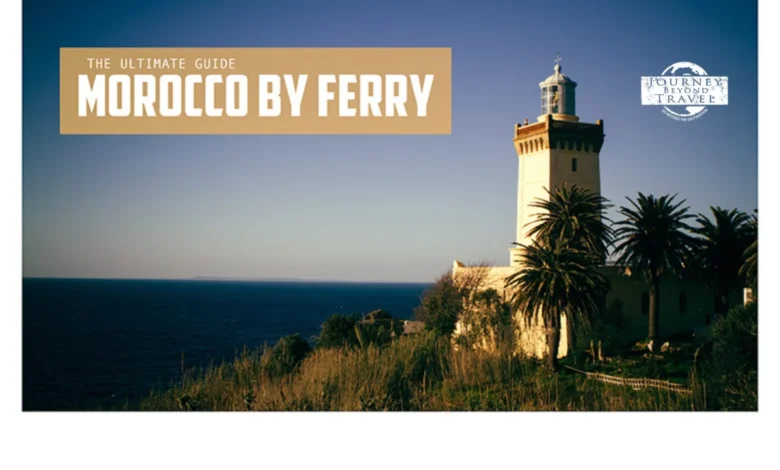
While the vast majority of international travelers opt for the speed and convenience of air travel to reach Morocco’s primary transit hubs, a growing segment of adventure-seekers and independent motorists is increasingly turning toward the maritime routes connecting Europe to North Africa. Navigating the Strait of Gibraltar or embarking on a multi-day Mediterranean crossing offers a distinct alternative to traditional aviation. This mode of transport not only bypasses the stringent baggage limitations and logistical constraints of modern commercial flights but also provides the logistical flexibility of personal vehicle transport, allowing travelers to explore Morocco’s diverse landscape at their own pace.
The maritime connection between Europe and Morocco serves as a critical artery for both tourism and trade. As the logistics of these routes have evolved—partly due to changing corporate ownership and shifting port demands—understanding the landscape of ferry travel has become essential for those planning an expedition into the Maghreb.
The Strategic Importance of North African Ports
Morocco’s northern coastline serves as the primary gateway for maritime arrivals. The ports of Tangier and the newer, industrial-grade Tangier Med facility dominate the influx of passenger and cargo vessels. Tangier Med, situated approximately 30 kilometers east of the city center, has transformed the logistics of regional travel by providing a high-capacity hub designed for modern roll-on/roll-off (RORO) shipping.
Beyond these primary hubs, the Spanish autonomous cities of Ceuta and Melilla on the North African coast function as essential secondary points of entry. While technically Spanish territory, they are intrinsically linked to the Moroccan transit network. Travelers arriving in Ceuta often find themselves within a short drive of Tetouan or the blue-hued mountain town of Chefchaouen, while those docking in Melilla generally utilize the port as a launchpad for travel into the eastern regions of Morocco, specifically Nador.
Chronology and Operational Shifts
The ferry industry serving Morocco has undergone significant transformation in recent years. Historically, the route between Tarifa and Tangier Ville was dominated by long-standing operators, but the landscape shifted in 2023 when the logistics giant DFDS acquired FRS, a move that prompted a restructuring of service routes. By May 2025, the cessation of specific long-running operations forced a recalibration of capacity.
Today, the market is primarily driven by a competitive mix of companies including Balearia, Africa Morocco Link (AML), and Naviera Armas. These operators have adapted to seasonal demand spikes, with high-frequency sailings during the summer months to accommodate the "Operation Marhaba," an annual event where millions of Moroccans living abroad return to their home country for the summer season. This massive influx of returning citizens dictates the operational tempo of the ports, with ferry schedules becoming significantly more robust between June and September.
Data-Driven Analysis of Major Routes
The efficiency of a ferry crossing is largely determined by the geographic proximity of the departure port in Europe. The following data outlines the current operational landscape for the primary routes:
| Route | Average Duration | Frequency (Peak) | Primary Operators |
|---|---|---|---|
| Tarifa to Tangier Ville | 1 Hour | 10–14 daily | Balearia, AML |
| Algeciras to Tangier Med | 1.5 Hours | 15+ daily | DFDS, Balearia, Naviera Armas |
| Algeciras to Ceuta | 1 Hour | 15–19 daily | Balearia, DFDS, Naviera Armas |
| Almeria to Nador | 6–9 Hours | 7–14 weekly | Balearia, Naviera Armas |
| Malaga to Melilla | 6 Hours | 7–10 weekly | Balearia |
| Barcelona to Tangier Med | 28–36 Hours | 2–5 weekly | Grandi Navi Veloci |
For travelers departing from further afield, the routes from France and Italy represent a significant commitment in both time and budget. The Sete-to-Tangier Med and Genoa-to-Tangier Med routes are designed for passengers seeking an "experience-based" transit. These journeys, often spanning 35 to 54 hours, require the reservation of cabin accommodations, effectively making the vessel a cruise-like experience rather than a mere transit shuttle.
Implications of Vehicle Transport
The most significant advantage of ferry travel remains the ability to transport a personal vehicle. This eliminates the necessity of securing a rental car upon arrival, which can be a complex and often expensive process in Morocco, particularly for travelers looking to venture into remote areas like the Atlas Mountains or the Sahara.
However, bringing a vehicle requires meticulous preparation. Travelers must possess valid international insurance, original vehicle registration, and a valid driver’s license. Furthermore, customs procedures at the port—known as the Admission Temporaire (AT)—are mandatory. Authorities issue a document that must be presented upon departure; failure to do so can result in significant legal and financial penalties, as the Moroccan government enforces strict regulations to prevent the illicit sale or abandonment of foreign-registered vehicles within the country.
Economic and Logistical Considerations
From an economic perspective, ferry travel is not necessarily a budget-saving measure compared to budget airline carriers, especially when accounting for fuel costs, toll roads in Europe, and the price of vehicle berths on the ferry. The primary value proposition is the convenience of personal mobility and the lack of weight restrictions on luggage.
Travelers must also consider the "last mile" logistics. Upon docking at Tangier Med, passengers without personal vehicles must rely on shuttle buses or taxis to reach the city center. Conversely, arriving at the Tangier Ville port offers immediate pedestrian access to the city’s historic Medina. The choice of arrival port should be dictated by the traveler’s ultimate destination and their tolerance for navigating large-scale industrial port environments.
Official Guidelines and Regulatory Context
Entry requirements for Morocco remain largely standardized. Most Western passport holders—including those from the United States, United Kingdom, and the European Union—are currently granted entry for stays of up to 90 days without a visa. This policy remains consistent regardless of the mode of entry.
Regulatory bodies and port authorities consistently advise travelers to arrive at the terminal at least two hours prior to the scheduled departure. During the peak summer season, or in periods of inclement weather which can affect the Strait of Gibraltar, this window is often expanded to three or four hours to manage the high volume of vehicle processing.
Broader Impact on Tourism Infrastructure
The sustained demand for ferry services has necessitated upgrades to port infrastructure. Recent investments in the Tangier Med port have allowed it to become one of the most efficient maritime hubs in the Mediterranean. This modernization has a ripple effect on the tourism sector, as it allows for a more seamless transition from the European road network to the Moroccan highway system, which has itself seen significant improvements in the last decade, particularly with the expansion of the national motorway network connecting Tangier to Casablanca, Rabat, and Marrakech.
For the modern traveler, the ferry represents a bridge between two continents that is as much about the journey as it is the destination. While air travel will continue to dominate the tourism sector in terms of pure volume, the maritime routes will remain a vital, resilient, and distinct pathway for those who view the transit process as an integral component of their North African adventure. As the industry continues to evolve, potential passengers are encouraged to monitor operator updates and port-specific regulations, as the dynamic nature of cross-strait traffic requires a flexible and well-informed approach to travel planning.