Navigating Sargassum Season in the Dominican Republic: A Comprehensive Regional and Seasonal Guide for Travelers

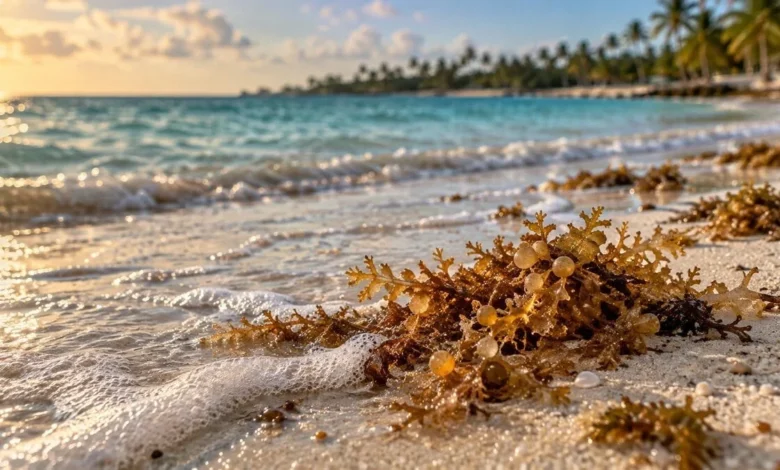
The seasonal influx of pelagic macroalgae across the wider Caribbean has increasingly forced international travelers to reconsider how and when they plan tropical beach vacations. Nowhere is this strategic planning more vital than in the Dominican Republic, where geography dictates an entirely disparate experience between the nation’s Atlantic-facing eastern shores and its sheltered Caribbean coastline. Arriving in Bávaro or Uvero Alto during the peak summer months often reveals thick brown windrows of sargassum pooling along the tide marks, while visiting the exact same resort region in January yields pristine, postcard-ready white sands and turquoise waters. Just an hour to the southwest, however, destinations like Bayahibe and La Romana maintain remarkably clear coastlines even during the height of the summer surge. Understanding this coastal dichotomy is no longer merely a travel tip; it has become the defining factor for a successful Dominican Republic holiday.
Understanding Sargassum and the 2026 Atlantic Surge
Sargassum is a free-floating brown macroalgae that, in its natural pelagic habitat out in the open ocean, serves as a critical ecological nursery, providing vital shelter and foraging grounds for juvenile fish, sea turtles, and migratory marine species. The operational crisis for coastal tourism does not stem from the existence of the seaweed itself, but rather from its unprecedented and accelerating scale. Since 2011 oceanographers have tracked the emergence of the Great Atlantic Sargassum Belt—a massive, continent-spanning bloom stretching from the Gulf of Mexico to the coast of Africa.
The year 2026 has officially established itself as one of the most intense periods on record for sargassum accumulation across the broader Atlantic basin. Ocean warming trends, nutrient runoff, and shifting marine currents have combined to propel unprecedented volumes of the brown biomass toward Caribbean landfalls. For the Dominican Republic, this has meant that municipal authorities and private hospitality consortiums must continually upgrade their mitigation infrastructures.
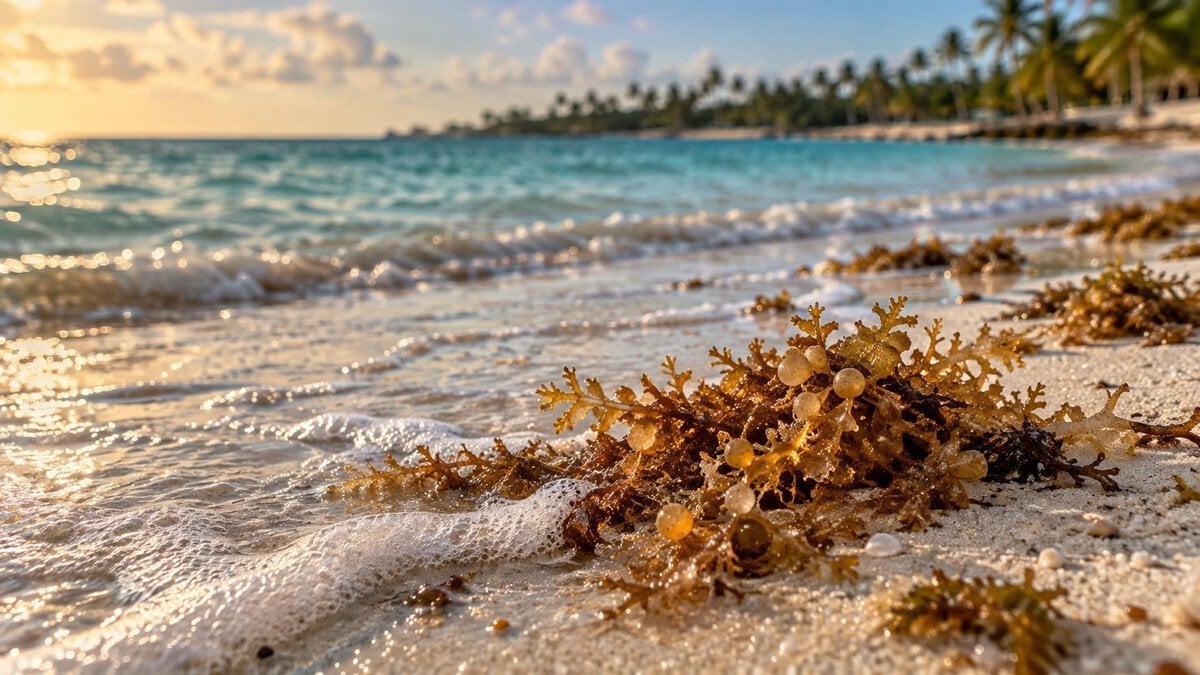
In response to the mounting ecological and economic pressures, regional stakeholders in tourism hubs like Punta Cana have deployed advanced defensive measures. These include the strategic deployment of offshore floating barrier nets designed to divert incoming biomass before it reaches shallow swimming zones, industrial-scale coastal pumping and collection systems, and round-the-clock mechanical removal crews operating heavy machinery at dawn. Furthermore, local municipalities have heavily invested in academic research focusing on the industrial reuse of harvested sargassum, transforming a waste management burden into agricultural compost and construction aggregate.
The effectiveness of these localized interventions was highlighted internationally when a formal governmental delegation from Grenada traveled to Punta Cana to study municipal sargassum management strategies. While these engineering marvels and logistical feats significantly improve the daily habitability of managed resort beaches, experts emphasize that mitigation cannot override natural coastal exposure. Open Atlantic-facing beaches will invariably intercept significantly higher volumes of drifting seaweed than sheltered coves protected by natural headlands and offshore barrier reefs.
A Month-by-Month Breakdown of East Coast Conditions
Predicting beach conditions on the Dominican Republic’s eastern seaboard requires analyzing historical environmental patterns, though climatologists note that anomalous years like 2026 can disrupt traditional timelines.
During the winter window spanning from December through February, travelers encounter the most reliable stretch of clear weather and minimal seaweed activity. The prevailing trade winds and oceanic current vectors during these months direct the majority of floating biomass away from the shoreline, making this period optimal for visitors prioritizing unblemished beach aesthetics along the Bávaro strip.
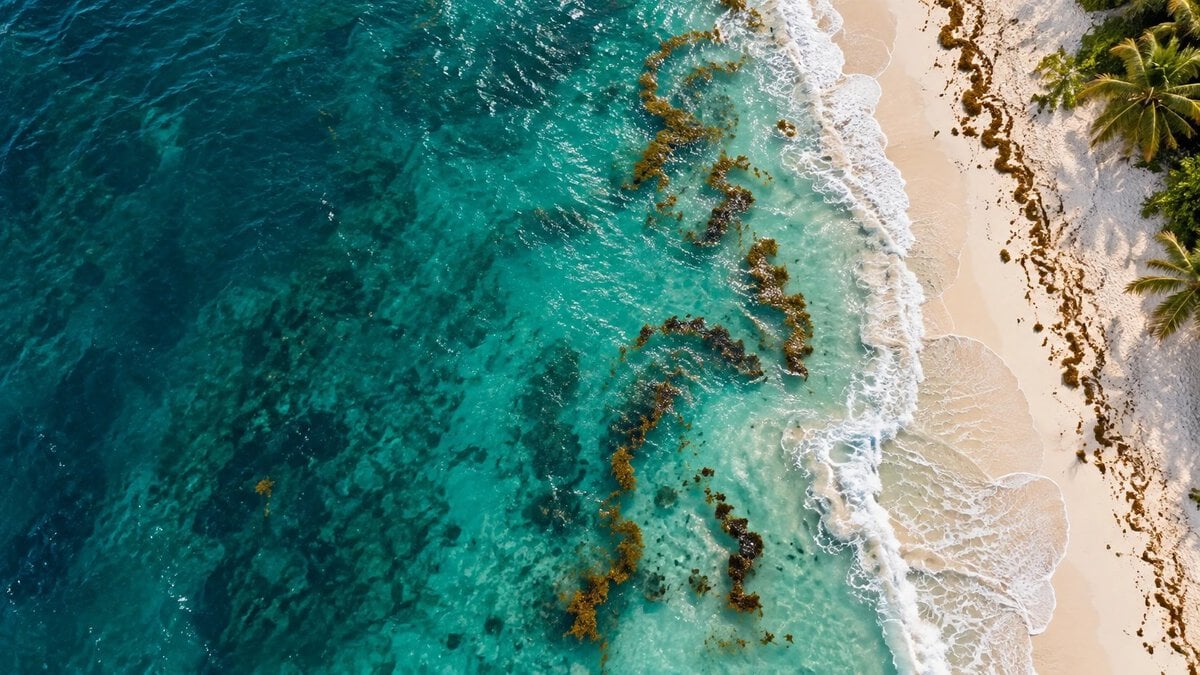
As the calendar transitions into March, conditions remain moderately stable, but April marks a distinct inflection point. As spring temperatures warm ocean waters, baseline sargassum levels elevate noticeably, requiring travelers to monitor specific shorelines dynamically.
The core of the seasonal influx spans from May through September, with June and July typically representing the annual zenith of accumulation, while August remains heavily impacted. Statistical tourism planning indices rate the Bávaro shoreline at near-maximum sargassum vulnerability during July, whereas sheltered Caribbean alternatives register a fraction of that exposure. Travelers booking trips during this mid-year window are strongly advised to adopt a flexible itinerary rather than expecting uninterrupted pristine sands.
By the time October arrives, accumulation levels begin a gradual descent. November serves as a transitional bridge month, experiencing moderate conditions as the eastern seaboard steadily pivots back toward the pristine winter equilibrium.
Geographic Vulnerability: Which Beaches Face the Highest Impact?
Coastal topography dictates that not all Dominican beaches experience sargassum equally. Micro-geography, shoreline orientation relative to prevailing winds, the presence of offshore coral reefs, and the frequency of resort cleaning operations create stark contrasts even between beaches situated only a few kilometers apart.

The eastern Atlantic-facing littoral zones—most notably Bávaro, Macao, and Uvero Alto—bear the brunt of the annual migrations. These wide, open, windward stretches present minimal natural deflection to incoming ocean currents, resulting in the highest statistical baselines for seaweed accumulation in the country. Conversely, Cap Cana benefits from a more protected geographical orientation and engineered pocket-beach designs. While Cap Cana is not entirely immune during peak oceanic surges, it routinely records significantly lower seaweed density than the adjacent Bávaro strip.
Alternative Horizons: The Clearer Waters of the Caribbean Coast
For travelers determined to secure a seaweed-free beach vacation during the summer months, industry experts consistently redirect attention toward the southern, Caribbean-facing coastlines.
Bayahibe and Dominicus Village present a vastly superior alternative for clear water enthusiasts. Situated along the protected waters of the Caribbean Sea rather than the open Atlantic, these coastal pockets experience only minor, manageable traces of seaweed even during the peak July surge.
Similarly, the upscale enclaves of Casa de Campo and La Romana offer sheltered maritime environments closely trailing Bayahibe in terms of year-round water clarity. For international visitors building custom itineraries around the historically heavy summer months, routing travel toward the southern coast effectively eliminates environmental uncertainties.
Strategic Logistics and Transportation Solutions
Managing a coastal trip during high sargassum season requires seamless logistical flexibility, particularly when pivoting between the island’s differing oceanic exposures. Private ground transportation providers, such as Transekur, have specialized in bridging this geographical gap by offering executive transfers between the major eastern resort hubs and the southern Caribbean coast.
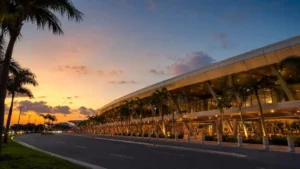
Operating across every major Dominican aviation hub—including Punta Cana International Airport (PUJ) and La Romana International Airport (LRM)—these private transfer services incorporate real-time flight tracking, complimentary waiting periods following aircraft arrivals, and onboard amenities designed to streamline multi-destination travel. For visitors staying in Bávaro who wake up to an unexpectedly impacted beach, engaging a private chauffeur for an impromptu day trip across the Autopista del Coral toll highway provides immediate access to the crystal-clear waters of Bayahibe within roughly an hour.
Actionable Mitigation Strategies for Travelers
Encountering an unexpectedly heavy beach day does not necessitate a ruined vacation, provided travelers implement proactive contingency planning.
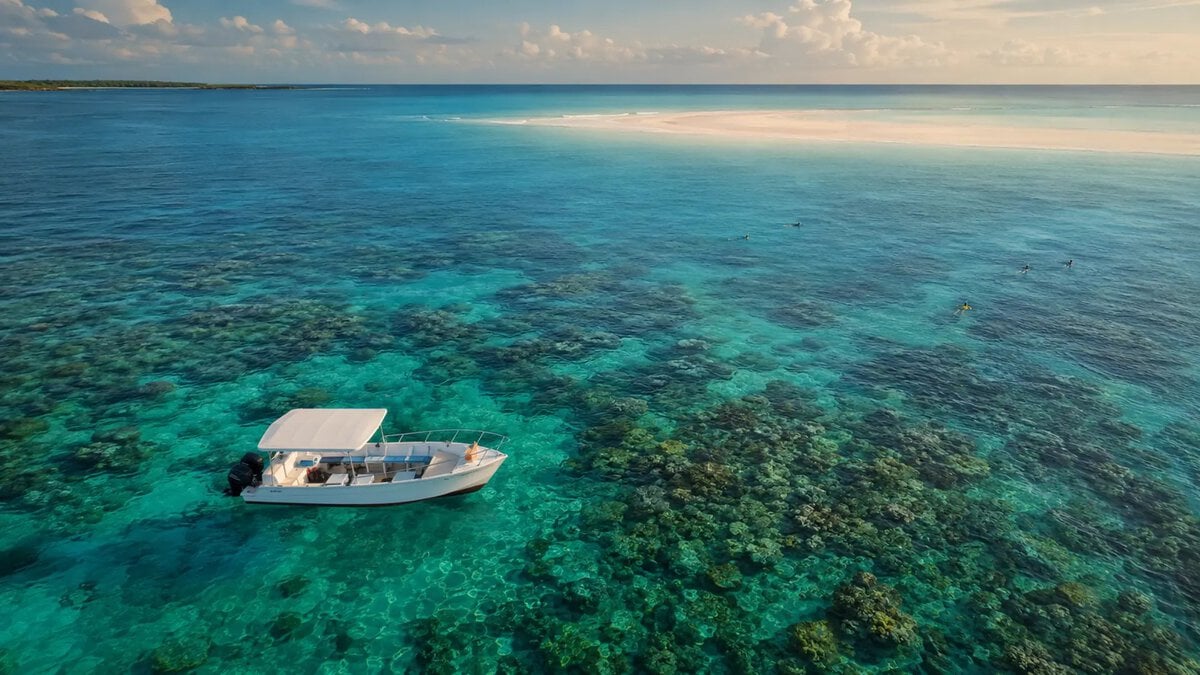
When large masses of sargassum wash ashore overnight and are left exposed to solar radiation, the decaying organic matter can produce a distinct hydrogen sulfide odor within 24 to 48 hours. However, local oceanic dynamics mean that seaweed masses are equally capable of clearing out overnight under shifting tidal currents, turning an 8:00 AM seaweed blanket into a pristine shoreline by late afternoon.
To insulate a vacation against environmental unpredictability, travelers can adopt several best practices:
- Select accommodations featuring high-quality resort pool infrastructure to ensure alternative aquatic recreation if immediate shoreline access is compromised.
- Avoid swimming through dense, decaying offshore mats, prioritizing areas where mechanical crews have cleared the immediate shoreline and deployed barriers.
- Keep daily itineraries flexible, utilizing private transport options to explore inland cultural attractions, eco-adventures, or alternative coastal zones like Bayahibe on short notice.
- Establish a multi-layered research protocol in the weeks leading up to departure, consulting real-time satellite tracking models, recent visitor documentation, and direct inquiries with resort management rather than relying on outdated promotional imagery.
Broader Economic and Environmental Implications
The ongoing management of sargassum represents a permanent structural shift for the Dominican Republic’s tourism economy. As academic institutions, municipal governments, and private hospitality networks continue to refine containment and valorization technologies, the nation is positioning itself as a regional leader in climate adaptation. For the international traveler, acknowledging these cyclical ecological patterns transforms potential frustration into an opportunity for dynamic exploration—proving that the Dominican Republic’s diverse geography holds a viable, sunlit escape for every month of the year.