How Establishing a Permanent Residence in Bulgaria Has Transformed Long-Term Travel Lifestyles and Personal Wellness

After fifteen years of continuous, nomadic travel—a journey that began in 2008 and spanned dozens of countries—the decision by veteran travel writers Dariece and Nick to establish a permanent home base in Bansko, Bulgaria, marks a significant shift in the modern digital nomad paradigm. This transition from a life of transit, characterized by temporary accommodations and fluctuating routines, to a fixed residential status in the Balkan nation provides a case study on the physiological and psychological impacts of settling down after years of hyper-mobility.

The chronology of this lifestyle change reveals a departure from the traditional digital nomad narrative. Having previously experimented with part-time residency in Grenada, the couple’s move to Bulgaria represents a long-term commitment to a specific geographical base. For full-time travelers, the transition often involves mitigating the cumulative fatigue of constant movement, including disrupted circadian rhythms, reliance on high-convenience food options, and the lack of a standardized health and fitness environment. By securing a home in the Razlog-Bansko region, they have moved to optimize their health markers through environmental stability.
The Physiology of Stability and Health Optimization
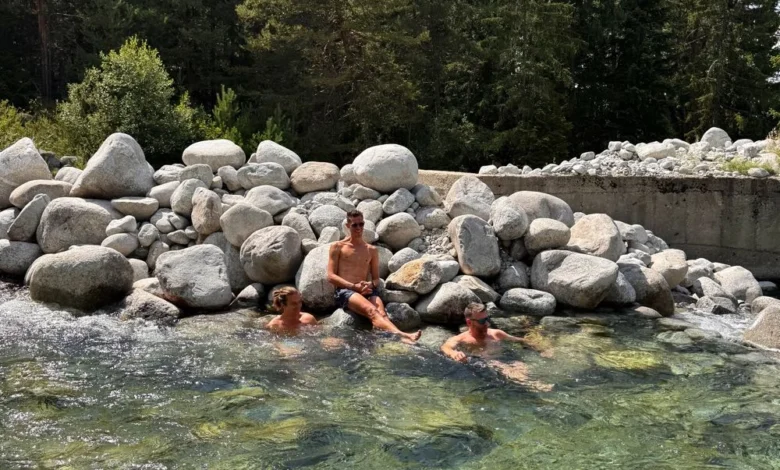
The transition to a permanent residence allows for the implementation of consistent health-focused protocols that are logistically impossible to maintain while transitioning between short-term rentals. Research from the Cleveland Clinic and other health institutions supports the integration of specific habits, such as regular thermal therapy, into a daily or weekly routine. In the context of their new Bulgarian residence, the couple has leveraged local infrastructure, specifically the proximity to mineral-rich thermal springs and sauna facilities, to enhance cardiovascular health and muscle recovery.

The physiological implications of this move extend to sleep hygiene. Travel-induced sleep deprivation—often caused by inconsistent mattress quality, ambient noise, and jet lag—is a well-documented challenge for long-term travelers. Data from sleep health organizations suggests that recovery is compromised without a stable, optimized sleeping environment. By investing in specific sleep technology, including sleep tracking via wearable devices such as the Oura Ring and Apple Watch, the couple has moved from passive sleep to data-driven recovery, allowing for precise adjustments to their environment based on quantified metrics.
Targeted Nutritional and Mineral Interventions
One of the more technical aspects of their health strategy involves the use of Hair Tissue Mineral Analysis (HTMA). This diagnostic approach, which monitors mineral levels and heavy metal concentrations over time, provides a baseline for biological optimization that is rarely achievable for those in constant transit. The move to a permanent residence allows for the rigorous, long-term adherence to a supplement and dietary protocol derived from these test results.

The shift toward home-based meal preparation also represents a significant public health correction. Frequent dining out, a standard behavior for mobile professionals, is often associated with higher sodium intake, caloric density, and a lack of control over food sourcing. By re-establishing a kitchen-centric routine, the couple has regained control over macronutrient and micronutrient intake, an essential step in maintaining physical health during the aging process, particularly as they navigate their 40s.
The Role of Geography in Fitness and Recovery
Bansko, situated at the base of the Pirin Mountains, offers a unique topographical advantage. The integration of high-altitude, outdoor physical activity—specifically hiking—into a daily routine provides a dual benefit: cardiovascular conditioning and psychological restoration. Environmental psychology literature consistently indicates that proximity to mountainous terrain and natural landscapes correlates with lower cortisol levels and improved mental clarity.

Furthermore, the practice of cold-water immersion, particularly in the natural mountain streams surrounding Bansko, has been adopted as a recovery tool. While scientific literature offers mixed conclusions regarding the universality of cold-water therapy for all demographics, proponents point to reduced systemic inflammation and improved immune response. For athletes and those engaging in high-frequency exercise, these natural plunge sites serve as accessible, zero-cost recovery centers that would be inaccessible in an urban or transient environment.
Community Integration and Psychological Well-being
The shift in residence has also addressed a critical gap in the digital nomad experience: the lack of a stable, real-life community. While digital nomad hubs provide temporary networking opportunities, they often lack the depth of connection found in long-term residential communities. The integration into the Bansko social fabric—comprising a mixture of long-term expatriates, local residents, and a growing community of remote workers—has provided a sense of belonging that is integral to long-term mental health.

Social connection is increasingly recognized by medical professionals as a pillar of longevity. By moving away from the isolated "work-from-home" bubble and participating in community-based events, the couple has shifted their social architecture. This move reflects a broader trend among long-term remote workers who are increasingly seeking "second-tier" cities that offer both the infrastructure for digital work and the social stability of a traditional town.
Economic and Lifestyle Implications
The decision to limit alcohol consumption—a common social lubricant in the transient travel circuit—is a calculated move toward long-term wellness. While the region is noted for its viticulture, the shift toward mindful, intentional consumption rather than social, habit-driven drinking is a marker of maturity in their lifestyle design. This reduction not only impacts physical health markers but also contributes to greater financial efficiency, as the costs associated with frequent bar-hopping and dining out are redirected toward long-term health investments.

Broader Impact and Future Outlook
The transition of Dariece and Nick from full-time nomadic travelers to Bulgarian residents serves as a template for a demographic that is currently entering a new phase of life. As the digital nomad population matures, the demand for "home base" living is expected to rise. The ability to integrate advanced wellness practices—such as HTMA testing, consistent thermal therapy, and structured physical training—while maintaining a location-independent income stream represents the "third wave" of the remote work revolution.
While the couple acknowledges that their life in Bulgaria is not devoid of challenges, the emphasis on consistency over convenience has yielded measurable improvements in their quality of life. The data-driven approach to their health, combined with the geographical advantages of the Pirin region, suggests that the "nomad" label is evolving into a more hybrid model. In this model, the freedom to travel remains, but it is anchored by a permanent, high-quality residential foundation that prioritizes longevity and physical resilience.

Ultimately, this case study underscores a fundamental shift in priorities: the realization that the benefits of travel are best enjoyed when supported by a baseline of consistent health, community, and routine. As more individuals adopt long-term remote work, the strategies employed by those settling in places like Bansko may become the standard for achieving a sustainable, healthy, and fulfilling career in a globalized economy. Whether or not this transition signals a permanent exit from the nomadic lifestyle remains to be seen, but the evidence suggests that the benefits of "putting down roots" are substantial, particularly for those seeking to maximize their health and well-being over the coming decades.