Navigating the Complexities of Machu Picchu Tourism: Essential Rules, Regulatory Changes, and Strategic Planning for Visitors

The global allure of Peru’s iconic Incan citadel has prompted sweeping regulatory adjustments designed to protect the fragile archaeological site while managing the millions of international travelers who make the pilgrimage each year. What many visitors initially perceive as a straightforward vacation booking—securing a standard tour package and purchasing an admission ticket—has evolved into a heavily regulated logistical undertaking. Modern tourism at Machu Picchu requires precise strategic planning, as minor errors in ticket selection, documentation, or transportation scheduling can result in denied entry or missed opportunities to experience specific sectors of the ancient wonder.

Evolving Visitor Caps and Strict Ticketing Protocols
To preserve the structural integrity of the stone ruins, which were constructed around 1450 under the Incan emperor Pachacuti and brought to international attention by Hiram Bingham in 1911, the Peruvian Ministry of Culture enforces strict daily visitor quotas. For the current tourism cycle, capacity is capped at 4,500 visitors per day, with temporary increases up to 5,600 visitors permitted during peak holiday periods.
The ticketing system itself operates on a rigid structural framework. The Ministry divides the archaeological complex into three distinct visitor circuits encompassing ten specific routes. Each entry ticket locks a traveler into a designated route and a precise entry hour between 6:00 a.m. and 3:00 p.m. Visitors cannot switch routes or re-enter the site once they exit, and standard tickets do not grant access to every viewpoint. For instance, routes 2-B and 1-D do not include the coveted upper-terrace viewpoint where the classic, postcard-style panoramic photograph is captured. Furthermore, high-demand extensions, such as the trek up Huayna Picchu, routinely sell out months in advance, necessitating reservations up to four months prior to arrival.

Official tickets must be purchased exclusively through the government-run portal, tuboleto.cultura.pe. Standard entry fees for foreign adults are set at S/163 (approximately $45 USD), which includes a sanctuary fee. Routes incorporating mountain climbs are priced at S/211 (approximately $58 USD). These credentials are strictly non-transferable, bound to an individual passport number, and rigorously checked at the security gates. Travel authorities and tour operators consistently advise securing the official site admission ticket before finalizing any auxiliary travel arrangements, such as train tickets or hotel accommodations, to avoid holding non-refundable transit reservations without valid entry authorization.
Chronology and Infrastructure Challenges in the Sacred Valley
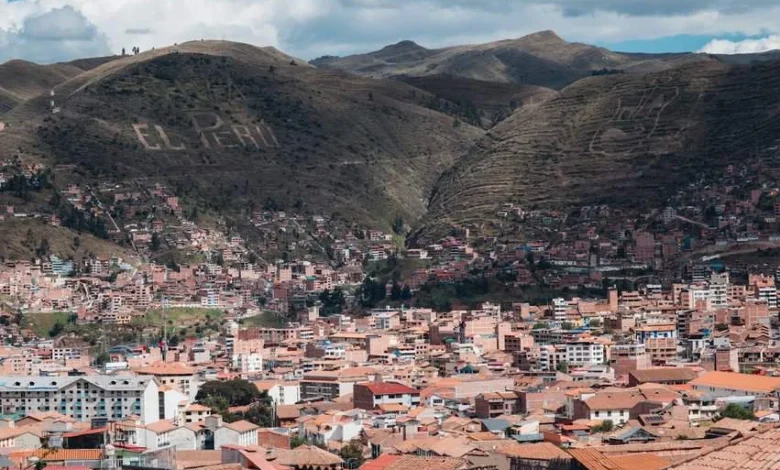
Reaching Machu Picchu remains a multi-stage journey complicated by geographical realities. Because the citadel features no direct road access and no commercial airport, travelers must fly into Alejandro Velasco Astete Airport in Cusco, typically connecting through the capital city of Lima.

While regional development plans initially slated the opening of the new Chinchero Airport in the Sacred Valley for 2026, project delays have pushed the projected operational window to late 2027 or 2028. Consequently, Cusco remains the sole aviation gateway for the region. Transportation from Cusco typically involves a bus or taxi descent to Ollantaytambo, followed by a 90-minute train journey operated by companies such as PeruRail or Inca Rail through the Sacred Valley to Machu Picchu Pueblo, commonly referred to as Aguas Calientes. From the town center, travelers board a 25-minute shuttle bus that navigates the steep switchbacks up the mountain to the main entrance gate.
Logistical experts strongly recommend spending the night prior to the scheduled tour in Aguas Calientes. This buffer mitigates the risks associated with same-day round-trip transits from Cusco—a grueling itinerary prone to weather or operational delays—and allows visitors to approach their designated entry hour with minimal stress, though it does not grant early admission outside of the assigned ticket window.

Administrative Requirements, Taxation, and Documentation
International travelers arriving in Peru must navigate specific legal and bureaucratic prerequisites. Foreign visitors from the United States and numerous other nations are granted entry authorization for up to 90 days upon arrival, eliminating the need for a traditional consular visa. However, immigration authorities and commercial airlines strictly enforce passport validity rules: a traveler’s passport must remain valid for at least six months beyond the scheduled date of arrival and contain a minimum of two blank pages. Arrival documentation processes are handled digitally via the TAM Virtual system.
Financial regulations offer notable incentives for international tourists. Foreign visitors staying in Peru for fewer than 59 days are exempt from the country’s 18% General Sales Tax (IGV) on hotel accommodations. Presenting a valid passport and international immigration entry stamp at hotel check-in automatically deducts this tax, yielding substantial savings over the duration of an extended itinerary.

Economic Implications of Tour Packaging and Industry Standards
The proliferation of online travel agencies offering packaged tours to Machu Picchu has created a competitive marketplace where headline pricing can be misleading. Industry analysts note that low-cost promotional packages frequently omit essential components, such as the official site admission ticket, localized shuttle bus transfers, or specific train segments.
Consumer advocacy groups and regional tourism boards urge prospective visitors to obtain written confirmation of all tour inclusions prior to financial commitment. A comprehensive itinerary should explicitly detail:

- The exact circuit and assigned entry hour for the ruins.
- Round-trip train tickets designating specific stations and carriers.
- Shuttle bus transfers between Aguas Calientes and the entrance gate.
- The language proficiency and maximum group size of the accompanying guide.
- Contingency protocols in the event of transportation delays or cancellations.
Purchasing incomplete packages often forces travelers to absorb unexpected out-of-pocket expenses, frequently surpassing the cost of a transparently priced, all-inclusive itinerary.
Health, Safety, and Site Preservation Regulations
Environmental preservation and public health considerations significantly influence visitor guidelines at the sanctuary. Cusco sits at an elevation of approximately 11,000 feet (3,350 meters), while Machu Picchu itself rests lower at roughly 7,972 feet (2,430 meters). The Centers for Disease Control and Prevention (CDC) advise travelers to allocate the first 48 hours following arrival in Cusco to acclimatize, warning that premature strenuous physical activity can induce acute mountain sickness.

Within the archaeological complex, strict conservation rules govern visitor conduct. Bags exceeding 40 by 35 by 20 centimeters are prohibited, and food items, single-use plastics, and camera tripods are banned within the citadel. Visitors must carry their original physical passport, as photocopies are invalid for gate entry. Furthermore, because the site contains no restrooms or re-entry privileges once a visitor exits, proper preparation before passing the initial checkpoint is essential.
Broader Economic and Conservation Impact
The delicate balance between promoting cultural tourism and safeguarding archaeological heritage remains a central policy challenge for the Peruvian government. As global travel demand rebounds and infrastructure projects like the Chinchero Airport approach completion, regional stakeholders anticipate further increases in visitor volume.

By enforcing stricter technological tracking, capped entry allocations, and rigid circuit parameters, cultural authorities aim to mitigate the physical degradation of the ancient dry-stone architecture. For the international traveler, navigating these administrative layers with precision ensures not only a compliant and seamless journey, but also the preservation of one of the world’s most significant historical treasures for future generations.