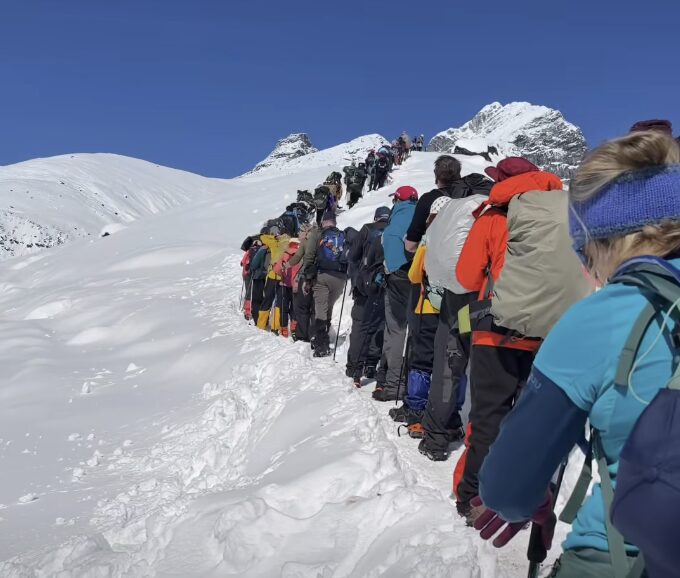
The trekking trails of the Khumbu region, typically characterized by the rhythmic pace of individual hikers and small groups, experienced an unprecedented logistical bottleneck this week. Following the dissipation of Cyclone Anwar, which blanketed the high-altitude landscape in heavy, unseasonal snow, hundreds of trekkers simultaneously resumed their ascent toward Everest Base Camp (EBC). The result was a rare and striking phenomenon: a continuous, human "conga line" snaking across the alpine terrain, echoing the imagery more commonly associated with the technical bottlenecks at the Hillary Step during the spring summit window.
Chronology of the Weather Event
The surge in foot traffic was not a result of a sudden spike in tourism demand, but rather a compressed release of human movement following a forced three-day hiatus. Cyclone Anwar, a powerful weather system that swept through Nepal over the previous weekend, brought intense precipitation to the Himalayas. While lower elevations saw heavy rain, the Khumbu region—specifically the areas surrounding Dingboche and Gorakshep—received significant, heavy snowfall.
From October 29 through October 31, the majority of trekking parties were effectively pinned down in Dingboche, a popular acclimatization stop situated at approximately 4,410 meters. With mountain trails rendered treacherous by whiteout conditions and high avalanche risks, local authorities and expedition leaders mandated a complete suspension of movement.
When meteorological conditions finally stabilized on November 1, a massive backlog of hundreds of independent trekkers, guides, and porters attempted to cover the same two-stage distance to Gorakshep simultaneously. The convergence of these groups created the viral congestion observed on the trail, as the narrow, snow-packed paths could not accommodate the volume of travelers who had been waiting for the weather window to open.
The Impact on High-Altitude Climbing
While the trekking routes experienced logistical congestion, the impact on climbing operations for regional peaks—often referred to as "trekking peaks"—was more severe. The heavy, unconsolidated snow created dangerous conditions for mountaineers attempting summits in the 6,000-meter range.
Satori Adventures, a prominent expedition operator, reported that their attempt on the 6,476-meter Mera Peak had to be aborted. Lead climber Furba Sherpa stated that the team encountered four to five feet of fresh, unstable snow above their high camp. The depth of the powder rendered the route physically impossible to navigate, forcing a retreat for safety reasons. Similarly, climber Ramesh Gurung confirmed the abandonment of a push toward the summit of the 6,119-meter Lobuche East, citing the same hazardous snowpack.
These developments highlight a critical trend in Himalayan mountaineering: the transition from "dry" autumn conditions to mid-winter intensity. As the sun’s angle decreases and temperatures drop, the fresh, heavy snow is expected to transform into a more stable but icy crust. However, until this stabilization process is complete, the risk of slab avalanches on the flanks of these peaks remains elevated, forcing many teams to wait for conditions to consolidate.
Resilience on Ama Dablam
In contrast to the retreats seen on Mera and Lobuche, the professional climbing community on Ama Dablam demonstrated the resilience of high-altitude logistics. Despite the heavy snowfall, Sherpa teams focused on reopening the critical route to Camp 1, which serves as the gateway to the mountain’s upper reaches.
By Tuesday, the route was confirmed as open. The upper sections of Ama Dablam, which consist largely of steep, mixed terrain and exposed ridges, did not accumulate the same volume of snow as the lower, flatter approaches. Several international teams are currently in the midst of their final summit rotations, with expectations that the first wave of successful summits for the post-cyclone window will occur within the next 48 to 72 hours.
Safety Advisory for the Gokyo Lakes Route
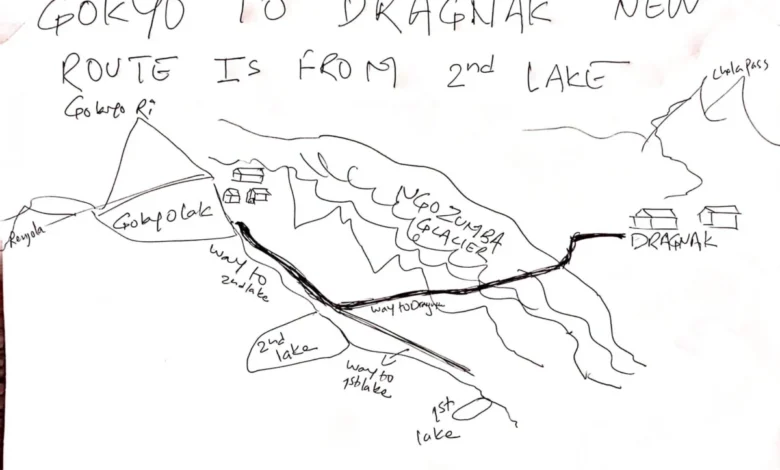
The regional authorities and local lodge associations have issued specific warnings for those traversing the Gokyo region, particularly the Ngozumpa Glacier. The glacier, the longest in the Himalayas, is subject to shifting topography, which is now exacerbated by the recent snow cover.
Tenzing Sherpa of the Gokyo Namaste Lodge has advised trekkers to avoid the traditional path between the first and second lakes (Longbanga Tso and Taujung Tso) due to the increased risk of hidden crevasses and unstable footing. Instead, he suggests following a marked alternative route used by local residents, which provides a more stable trajectory across the glacier’s moraine.
While the trail from Thame to Gokyo has been cleared by the Gokyo Lodge Association, the situation remains fluid. Trekkers are urged to consult with local lodge owners daily, as the high-altitude environment is susceptible to rapid changes in snow conditions and ice stability.
Implications of Climate and Tourism Trends
The "conga line" event serves as a case study for the increasing pressure on Nepal’s trekking infrastructure. As the popularity of the Everest region continues to grow, the ability of the trail system to absorb weather-related delays is being tested.
Historically, autumn in the Khumbu—following the monsoon season—was considered a period of stable, clear, and cold weather. However, the influence of late-season cyclones from the Bay of Bengal has become a more frequent occurrence in recent years. This unpredictability creates a "compression effect," where thousands of trekkers are forced into condensed timelines, increasing the burden on tea houses and local support services.
From a data perspective, the incident highlights the need for improved communication networks and real-time weather forecasting for independent trekkers. While organized expeditions often have satellite-based communication, individual trekkers often rely on visual cues and word-of-mouth. The recent event underscores the importance of the Gokyo Lodge Association’s efforts to proactively clear trails, which provides a necessary lifeline to maintain the flow of supplies and personnel in the region.
Future Outlook
As the Khumbu enters the heart of November, the focus shifts from "wait-and-see" to the execution of late-season goals. For the trekking community, the priority remains the safe navigation of snow-covered passes. For the climbing community, the upcoming window of clear, cold weather will determine the success of the remaining autumn expeditions.
The incident at the base of the mountain, while visually striking, was ultimately resolved without major incident. However, it serves as a potent reminder of the inherent volatility of the high-altitude environment. In the Himalayas, the mountains dictate the schedule; when weather systems like Cyclone Anwar intervene, the infrastructure of the entire region must adapt, often leading to the very congestion that, for a brief moment this week, captured the attention of the global climbing community.