Curator of the Coastline: Inside the United States’ First Dedicated Beachcombing Museum on Washington’s Olympic Peninsula


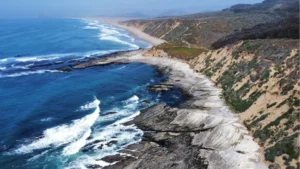
Along the rugged, wind-swept western edge of Washington State’s Olympic Peninsula, the Pacific Ocean meets the North American continent with relentless fury. Winter storms churn up massive ocean swells, driving maritime debris, historical artifacts, and modern plastic pollution onto the remote shores of Cape Flattery and the surrounding coastline. While this debris poses significant environmental challenges for coastal ecosystems, it represents a treasure trove for dedicated beachcombers. Among them stands John Anderson, a former plumber whose lifelong passion for coastal scavenging has culminated in the establishment of the United States’ first and only museum entirely dedicated to beachcombing.
Located in a converted commercial space that formerly operated as his plumbing workshop, John’s Beachcombing Museum offers visitors an extraordinary glimpse into the intersection of global shipping, oceanic currents, and local shorelines. What began as a personal collection amassed during decades of walking the tidelines has transformed into a formal repository of maritime history and modern flotsam. As global supply chains expand and maritime trade increases, the museum serves not only as a quirky roadside attraction but also as a physical archive of the Anthropocene, documenting the myriad ways human commerce interacts with the marine environment.
The Genesis of a Coastal Archive
The origins of John’s Beachcombing Museum trace back decades, rooted in the daily rhythms of coastal life in the Pacific Northwest. John Anderson spent years working as a plumber on the Olympic Peninsula, a region defined by its dense temperate rainforests, jagged cliffs, and miles of inaccessible, drift-log-strewn beaches. During his time off, Anderson frequented these isolated stretches of sand, driven by the enduring human impulse to see what the tide has left behind.
Over the years, Anderson’s finds accumulated faster than his home could accommodate. From 19th-century glass fishing floats originating in Japan to modern cargo container spillages, the sheer volume and historical variety of his collection demanded a larger venue. When his plumbing business wound down, Anderson made the pivotal decision to repurpose his former workshop. By transforming the utilitarian workspace into an exhibition hall, he created a permanent home for items that would otherwise have been buried under shifting sands, washed back out to sea, or hauled away to local landfills.
Visitors approaching the building are greeted by a charming, hand-painted sign that sets an unpretentious tone. However, stepping across the threshold reveals a meticulously organized labyrinth of marine history. The museum challenges conventional notions of curation, presenting items that range from the deeply mundane to the historically significant, all recovered from the same stretch of coastline.
The Mechanics of Ocean Currents and Cargo Spills
To understand the eclectic nature of the museum’s exhibits, one must examine the oceanographic forces governing the North Pacific. The region is heavily influenced by the North Pacific Current, a slow warm-water current that flows west-to-east across the ocean. When severe meteorological events occur—such as typhoons sweeping out of Okinawa or intense winter cyclonic storms—cargo vessels navigating the trans-Pacific shipping lanes frequently encounter treacherous conditions.
Containers are routinely lost overboard during these high-stress maritime events. According to data compiled by the World Shipping Council, an estimated average of over 1,500 containers are lost at sea each year, though catastrophic weather events can cause spikes that push that number significantly higher. When a container breaches during a storm, its contents are released into the pelagic zone. Over weeks, months, or even years, buoyant items travel thousands of miles, propelled by winds and surface currents, before making landfall on the Pacific Northwest coast.
This phenomenon has given rise to legendary cargo spills that are well-documented in oceanographic lore. In 1992, the container ship Ever Laurel lost a shipment of approximately 29,000 plastic bath toys, including yellow ducks, blue turtles, and red beavers, mid-ocean. Hundreds of these "Friendly Floatees" subsequently washed ashore along the Washington and Alaskan coasts, providing scientists with invaluable empirical data regarding ocean surface currents. Similarly, countless other incidents—involving shipments of tennis shoes, hockey gear, Lego bricks, and manufactured goods—have contributed to the floating debris load of the Pacific.
Anderson’s museum captures this hidden economy of maritime loss. Exhibits feature industrial materials, consumer electronics, commercial packaging, and children’s toys that trace a direct line from Asian manufacturing hubs to North American beaches. If a freighter steaming out of an Asian port takes a heavy typhoon swell starboard and sheds its cargo, Anderson’s collection demonstrates that there is a statistical probability some portion of that freight will eventually tangle in the rotting seagrass or wedge beneath the massive cedar drift logs of the Olympic Peninsula.
Chronology of Coastal Collecting: From Practical Salvage to Public Education
The evolution of beachcombing on the Olympic Peninsula reflects broader shifts in coastal culture over the past century.
Pre-1950s: The Era of Natural and Functional Flotsam
Historically, beachcombing in the Pacific Northwest was a matter of utility and survival rather than leisure. Indigenous communities utilized stranded cedar logs and marine mammals for shelter, tools, and sustenance. Later, homesteaders and early European settlers scavenged milled lumber, glass fishing floats from Japanese commercial fisheries, and usable cordage cast ashore by storms.
1950s–1990s: The Rise of Industrial Plastics and Global Trade
With the post-World War II boom in global manufacturing and containerized shipping, the nature of beach debris shifted fundamentally. Glass floats were largely replaced by durable plastics. This era saw the introduction of synthetic ropes, hardhats, industrial crates, and consumer goods into the marine debris stream. Local beachcombers began noticing branded items from distant nations appearing regularly on isolated Washington beaches.
2000s–Present: Institutionalization and Environmental Awareness
As the volume of marine debris escalated, public perception transformed. Beachcombing evolved from a solitary hobby into a recognized citizen-science endeavor. The establishment of John’s Beachcombing Museum during this period marked a transition from private accumulation to public education. Rather than simply hoarding curiosities, collectors began utilizing their finds to tell stories about global consumption, oceanic health, and maritime safety.
Inside the Exhibits: A Taxonomy of Marine Debris
The interior of John’s Beachcombing Museum is categorized not by traditional museum taxonomy, but by the thematic narratives of recovery. Visitors navigating the space encounter several distinct collections:
-
The Glass Float Archive
Long before plastic dominated the fishing industry, commercial fisheries in Japan, Norway, and other nations utilized hand-blown glass spheres to keep fishing nets afloat. These hollow glass balls, ranging from small fist-sized spheres to massive rolling-pin shapes, drifted across the Pacific for years, developing a weathered, frosted patina known as "sea glass" texture. Anderson’s collection features rare embossed marks and varying shades of green, amber, and clear glass, representing a bygone era of maritime technology. -
The Modern Cargo Spillage Sector
This section highlights the direct consequences of contemporary globalized trade. Shelves are stocked with sealed, factory-packaged goods that survived thousands of miles of open-ocean transit. Plastic toys, automotive parts, cleaning product bottles, and consumer electronics illustrate the durability of modern polymers and the vulnerability of maritime container transport. -
Historical and Ecological Detritus
Beyond manufactured goods, the museum houses items that reveal the organic and historical layers of the coastline. This includes 19th-century ship timbers fastened with hand-forged iron spikes, historical navigation equipment, and structural remnants from coastal lighthouses and abandoned canneries that once dotted the Olympic Peninsula.
Socio-Economic and Environmental Implications
While the aesthetic and historical appeal of John’s Beachcombing Museum is undeniable, the institution operates against a backdrop of serious environmental concerns. The presence of immense quantities of flotsam and jetsam on the Olympic Peninsula underscores the broader crisis of marine plastic pollution.
According to the National Oceanic and Atmospheric Administration (NOAA) Marine Debris Program, millions of metric tons of plastic enter the world’s oceans annually. Much of this material breaks down into microplastics, posing severe threats to marine fauna, seabirds, and benthic ecosystems. Organizations operating along the Pacific coastline, including the Olympic Coast National Marine Sanctuary, conduct regular beach cleanups, removing tons of derelict fishing gear, plastics, and industrial waste.
In this context, John’s Beachcombing Museum occupies a unique dual role. On one hand, it celebrates the romanticism and adventure of coastal discovery—the thrill of finding a rare artifact or an intact antique. On the other hand, it serves as an implicit, sobering educational facility regarding the permanence of human waste in the marine environment. Every piece of plastic container, every tangled net, and every synthetic toy on display is a physical testament to the durability of materials designed for temporary utility.
Local tourism boards and regional historians have lauded the museum for adding a distinct cultural dimension to the Olympic Peninsula. While the region is internationally renowned for its natural wonders—including Olympic National Park, Hoh Rain Forest, and dramatic coastal trails like the Ozette Loop—the museum provides visitors with a deeper understanding of the human stories intertwined with the wilderness. It bridges the gap between the natural grandeur of the Pacific Northwest and the gritty, globalized reality of modern international commerce.
Broader Impact and Future Outlook
As John’s Beachcombing Museum continues to welcome travelers, educators, and researchers from around the world, its long-term impact on coastal conservation discourse is becoming increasingly evident. The museum demonstrates that everyday citizens can act as informal archivists of industrial history, preserving data points that formal academic institutions might otherwise overlook.
Oceanographers and marine biologists have occasionally consulted independent beachcombers to track the drift patterns of specific cargo spills or to monitor changes in the types of debris washing ashore over decades. By maintaining an organized, physical record of these finds, Anderson has inadvertently created a baseline reference collection for the Pacific Northwest coastline.
Looking forward, the challenge for specialized institutions of this scale lies in preservation and curation continuity. As public interest in sustainable tourism and ecological awareness grows, venues like John’s Beachcombing Museum are well-positioned to lead conversations about responsible stewardship of public lands and oceans.
Ultimately, the museum stands as a tribute to persistence—both of the ocean currents that relentlessly sculpt the Olympic Peninsula and of the individuals who walk those shores, year after year, searching for the extraordinary among the ordinary. Whether a visitor comes seeking historical artifacts, scientific curiosity, or simply the rustic charm of a coastal workshop turned gallery, John’s Beachcombing Museum offers an unforgettable encounter with the vast, interconnected world beyond the horizon.