Motorcycle Travel in Turkey: A Comprehensive Guide to Touring the Eurasian Crossroads

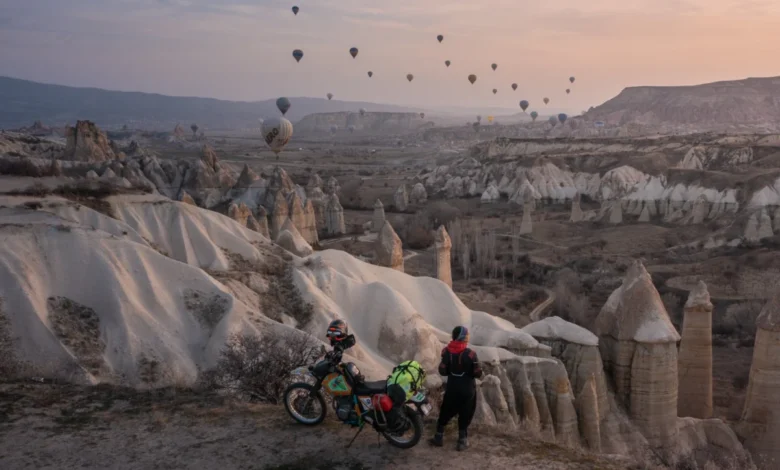
Turkey stands as a premier destination for motorcycle tourism, offering a diverse topography that spans from the rugged, snow-dusted peaks of the Eastern Anatolian mountains to the serene, aquamarine coastline of the Mediterranean. As the country bridges the gap between Europe and Asia, it provides a unique cultural and logistical landscape for long-distance riders. Recent infrastructure investments have transformed the nation’s transit network, creating a high-quality environment for two-wheeled exploration.
The Evolution of Turkish Road Infrastructure
Over the past two decades, the Turkish government has prioritized the development of its transport sector, resulting in a vast expansion of well-paved, multi-lane highways that connect the country’s major industrial hubs to its most remote rural provinces. Data from the Ministry of Transport and Infrastructure indicates that the total length of the divided road network has increased by several thousand kilometers since 2003, significantly reducing transit times and enhancing safety for intercity travel. For the motorcyclist, this means that major arteries are largely immune to the crumbling tarmac often found in neighboring regions, allowing for consistent daily mileage.
Regional Riding Profiles
The character of a motorcycle trip in Turkey is dictated by the chosen region. The Mediterranean coast, characterized by the D400 highway, offers a quintessential coastal ride where the Taurus Mountains plunge directly into the sea. This route is dotted with historical markers, including ancient Lycian and Roman ruins that are often accessible directly from the roadside.
In contrast, the Black Sea region, particularly the Rize and Artvin provinces, presents a verdant, high-altitude environment. The roads here are defined by tight switchbacks and significant elevation changes, requiring more technical riding skills. This region is a preferred summer destination for domestic tourists seeking respite from the intense heat of the central Anatolian plateau.
For those pursuing off-road or dual-sport experiences, the Trans Euro Trail (TET) Turkey segment offers an extensive network of dirt tracks and forest roads. Unlike in many European nations where off-road access is heavily restricted, Turkey maintains a more permissive stance on rural track usage, provided that riders remain respectful of agricultural land and livestock paths.
Regulatory Requirements and Border Logistics
For international riders planning to bring their own motorcycles into the country, Turkey operates under specific customs regulations. Foreign-registered vehicles are permitted for a temporary stay of up to 90 days. This period can be extended for residents with valid permits. Failure to comply with these temporal limits results in substantial financial penalties, which are enforced strictly at customs points upon exit.
Unlike some countries in the Middle East and Central Asia, Turkey does not require a Carnet de Passage en Douane (CPD) for foreign motorcycles. A valid motorcycle license from the rider’s home country is generally sufficient, provided it is supported by the motorcycle’s registration documents and proof of third-party liability insurance. While insurance can be purchased at most land border crossings, it is standard practice to verify the validity of one’s "Green Card" or international insurance policy beforehand to ensure coverage extends into the Asian portion of the country.
Safety and Traffic Dynamics
Traffic behavior in Turkey is distinct, characterized by a higher degree of spontaneity compared to Northern European standards. While the quality of the roads has improved, the culture of driving remains assertive. Riders are advised to adopt a defensive posture, particularly in urban centers like Istanbul, Ankara, and Izmir, where high-density traffic and lane-splitting are common.
Regarding personal safety for solo travelers, the consensus among touring motorcyclists is that Turkey remains a secure environment. The country has a long-standing culture of hospitality, and in rural areas, travelers are frequently invited for tea by locals. While some political tensions exist in specific border regions of the Southeast, these areas are closely monitored by security forces, and transit corridors are generally kept open and safe for civilian traffic.
Economic Factors for Touring
The economic landscape for tourism in Turkey has shifted in recent years. While the country was historically categorized as a low-cost destination, inflation has recalibrated the price point for fuel, accommodation, and dining. Fuel prices remain competitive when measured against the European average but are significantly higher than in neighboring nations to the east.
To mitigate costs, many touring motorcyclists utilize the country’s extensive network of campsites. Wild camping is widely permitted, and the abundance of natural water sources makes it a viable option for those on a budget. Furthermore, the ubiquity of small, local "lokantas" (traditional eateries) provides an affordable way to access authentic cuisine without the premium prices associated with tourist-centric restaurants.
Technical Support and Maintenance
The Turkish motorcycle market is dominated by major global manufacturers, ensuring that standard parts are available in most provincial capitals. For specialized adventure bikes, however, parts sourcing may require advanced planning. The prevalence of small-scale machine shops, or "sanayi" sites, is a notable feature of the Turkish automotive sector. These industrial zones host skilled metalworkers and mechanics capable of fabricating custom parts, such as sprockets or brackets, on short notice—a distinct advantage for riders experiencing mechanical failures in remote areas.
Legal and Administrative Compliance
Navigating toll roads in Turkey requires an HGS (Hızlı Geçiş Sistemi) electronic tag. These tags are affixed to the motorcycle and automatically deduct toll fees when passing through high-speed gantries. While the system is efficient, foreign riders occasionally find difficulty in sourcing these tags at smaller entry points. It is advisable to secure an HGS tag at a major PTT (post office) or a large fuel station upon entry to avoid the accrual of administrative fines.
Speed limits are categorized by vehicle type, with lower caps for motorcycles than for passenger cars. Despite this, enforcement on open highways is inconsistent. However, automated speed cameras are prevalent in urban areas and on major toll routes. Fines for speeding or toll violations are typically processed against the license plate and must be settled at the border during the departure process.
Conclusion
Turkey provides an expansive, structurally sound, and culturally rich environment for motorcycle tourism. Its ability to offer both high-speed, modern highway travel and technical, remote off-road exploration makes it a versatile destination. By observing local traffic customs, maintaining proper administrative documentation, and preparing for the regional variations in climate and terrain, motorcyclists can access one of the most rewarding touring circuits in the Eurasian region. As with any long-distance expedition, success in Turkey relies on thorough preparation and a flexible approach to the evolving realities of the road.