Beyond the Sensor: How Color Science, Raw Processing, and Monochrome Intent Shape Modern Photography

The debate surrounding digital color science has long served as a fundamental cornerstone of camera marketing, with manufacturers positioning proprietary color profiles as decisive reasons to invest in specific hardware ecosystems. For decades, companies such as Fujifilm have cultivated fiercely loyal consumer bases predicated almost entirely on the distinct aesthetic of their color reproduction. Yet, beneath the intense online discourse regarding camera brand color science lies a more technical reality: for photographers who shoot in raw formats, the ultimate look of an image is dictated less by hardware pedigree and more by software interpretation, processing profiles, and artistic intent.
The historical roots of brand-specific color loyalties trace back to the analog era, when photographic film stocks dictated the aesthetic boundaries of commercial and editorial imagery. During the height of 35mm and medium-format film photography, professional expectations were explicitly tied to specific chemical emulsions. Publications with rigorous visual standards often maintained strict preferences; for example, landscape photography shot on high-saturation stocks like Fujifilm Velvia was virtually a prerequisite for acceptance in certain nature and travel magazines. Conversely, portrait photographers frequently favored alternative stocks, such as various formulations from Kodak, due to their more natural and flattering skin tone renditions.
This analog divide shaped the early professional trajectories of many veteran image-makers, including editorial travel photographer Craig Roberts. Working extensively through the transition period from traditional film to digital capture, Roberts initially aligned with Fujifilm over competitors due to the dynamic, punchy color palette offered by its reversal films. As the industry digitized, his professional equipment evolved through various bodies manufactured by Canon and Olympus, before eventually settling on a current kit comprising Fujifilm and compact Ricoh cameras. Interestingly, despite operating modern Fujifilm hardware equipped with digital film simulations—including a dedicated Velvia mode that serves as a direct homage to his analog beginnings—Roberts remains largely indifferent to the modern industry obsession over proprietary color science. He attributes this detachment primarily to his specific photographic discipline, which centers on static landscapes and architectural scenes rather than human subjects, where color accuracy becomes drastically more scrutinized.
A Paradigm Shift in Color Theory
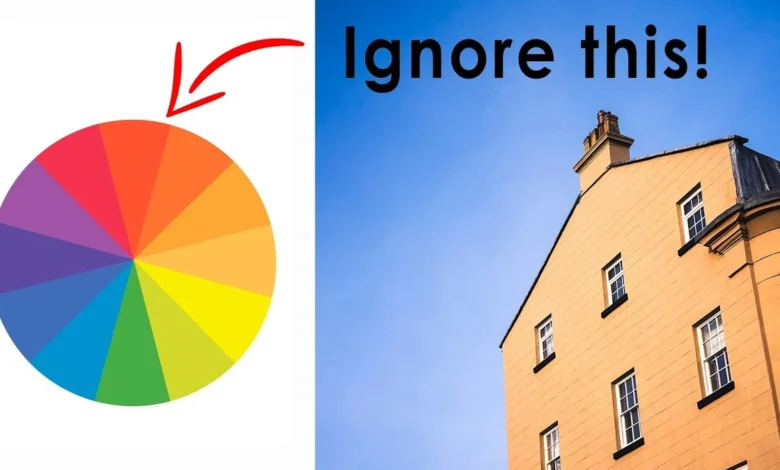
Rather than relying on complex chromatic wheels or academic color theory charts, Roberts approaches color relationships through practical field observation. Traditional color theory models, which map complementary and analogous hues across complex geometrical diagrams, can often prove overly convoluted during active field composition. Instead, Roberts reads environmental color interactions directly within the physical scene.
For instance, a composition featuring a natural blue sky hovering above green agricultural fields is inherently composed entirely of cool tones, allowing the two colors to coexist harmoniously without visual friction. However, introducing a focal point of warm color—such as a vibrant yellow wildflower or a red structure—immediately alters the visual energy of the frame. This introduction of warm hues pushing against cool backgrounds creates immediate tension and dynamism. By distilling color interaction down to a simple internal check of warm versus cool elements during framing, photographers can bypass memorized charts and rely on intuitive environmental reading.
The Mechanics of Raw Processing and Software Profiles
To understand why brand color science holds varying degrees of importance, one must examine how digital files are handled from capture to export. When a photographer shoots in raw format, the sensor records raw data rather than a finished image. Consequently, the initial color rendering visible upon importing files into editing suites is largely a product of the default profile applied by the software, rather than an immutable characteristic of the file itself.
Since 2018, industry-standard software such as Adobe Lightroom has defaulted to its proprietary Adobe Color profile for newly imported raw files. However, the software ecosystem also provides comprehensive Camera Matching profiles designed to emulate the manufacturer-specific in-camera rendering styles, including Fujifilm’s acclaimed film simulations, provided the camera model is supported. Alternative processing suites, such as Capture One, take a different approach by engineering independent, custom camera profiles for every supported sensor model. As a result, opening the exact same raw file in different editing environments can yield visibly divergent color interpretations. While camera sensors and manufacturer-specific demosaicing algorithms do influence how difficult hues—such as deep reds or complex foliage greens—are initially handled, third-party profiles and editing suites offer virtually limitless malleability. Experimenting with alternative software profiles incurs zero financial cost, whereas switching camera hardware ecosystems remains an expensive endeavor for working professionals.
In contemporary practice, Roberts’s post-processing workflow reflects a minimalist philosophy. Rather than pushing color saturation upward to recreate the hyper-vibrant aesthetic of historical slide films, he finds himself frequently desaturating digital files. Modern digital sensors capture such expansive color gamuts and dynamic ranges that Velvia-strength saturation often appears unnatural to his refined taste. Operating without camera-generated JPEGs or reliance on manufacturer presets, he manipulates the Saturation and Vibrance sliders concurrently to achieve a balanced mix. According to his professional workflow, a combined adjustment of approximately 25 points in either direction is generally more than sufficient for natural-looking enhancements. Because a raw capture begins at a baseline value of zero, every degree of color intensity is a deliberate, conscious addition by the artist.
The Evolution of Monochrome Intent
While color defined the early decades of Roberts’s commercial career, black-and-white photography eventually assumed a central role in his portfolio. During his film era, monochrome work was largely sidelined in favor of color because commercial markets demanded polychromatic imagery. The commercial viability of color dictated editorial assignments and publication standards.
The advent of advanced digital editing tools fundamentally altered this dynamic. Software plugins such as Nik Silver Efex Pro bridged the gap, providing sophisticated monochrome conversion results that previously demanded access to a professional chemical darkroom—facilities Roberts never personally maintained. Today, black-and-white imagery accounts for roughly half of his total creative output. Crucially, Roberts maintains a strict philosophical boundary regarding monochrome conversions: he converts images with deliberate intent from the initial conceptualization stage, strictly rejecting black-and-white processing as a corrective measure to salvage flat, gray days or failed color exposures.
Industry Implications and the Future of Color Science
The ongoing discourse surrounding color science highlights a broader economic and psychological phenomenon within the consumer photography market. Camera manufacturers understand that emotional attachment to color rendering is a powerful market differentiator. In an era where digital sensor technology has largely matured—resulting in universally high levels of sharpness, dynamic range, and low-light performance across major competing brands—color profiles and simulated film aesthetics serve as primary unique selling propositions.
Market analysts note that brand loyalty is frequently sustained by these intangible aesthetic qualities. Consumers invest heavily in specific ecosystems not solely for autofocus performance or lens catalogs, but for the out-of-camera color delivery that aligns with their personal vision. Yet, the experiences of veteran photographers like Roberts suggest a pragmatic divergence between consumer marketing and professional execution. For those who embrace raw workflows, the camera body functions primarily as a high-precision light-gathering tool, while the computer acts as the modern digital darkroom.
As digital imaging technology continues to advance, the boundary between in-camera processing and post-processing software grows increasingly porous. Advanced computational photography, sophisticated machine learning profiles, and customizable raw development tools give users unprecedented control over color science. Ultimately, whether a photographer chooses a system based on legendary analog color heritage or relies on modern software adjustments to shape raw data, the enduring lesson of professional photography remains unchanged: technology provides the medium, but artistic intent dictates the final image.