Rhodes, the largest of the Dodecanese islands, remains a cornerstone of Mediterranean tourism, attracting millions of international visitors annually through its sophisticated blend of ancient heritage and modern leisure infrastructure. Known historically as the "Island of the Sun," Rhodes serves as a critical economic hub for the South Aegean region, leveraging its strategic geographical position between the Greek mainland and the Turkish coast. As of 2024, the island continues to break records for passenger arrivals at Diagoras International Airport, reinforcing its status as a premier European destination that offers more than just conventional sun-and-sea holidays. From the meticulously preserved medieval streets of its capital to the rugged elevations of its interior villages, Rhodes presents a multifaceted case study in cultural preservation and tourism evolution.
Historical Chronology and the Evolution of Rhodes
The historical trajectory of Rhodes is marked by a series of transformative eras, each leaving an indelible mark on the island’s architectural and social fabric.
- Ancient Foundations (408 BCE): The city of Rhodes was designed by Hippodamus of Miletus, featuring a grid system that was revolutionary for its time. This era saw the construction of the Colossus of Rhodes, a bronze statue of the sun god Helios and one of the Seven Wonders of the Ancient World.
- The Byzantine Period (330–1306 CE): Following the decline of the Roman Empire, Rhodes became a significant naval base for the Byzantine Empire, leading to the construction of various early Christian basilicas.
- The Era of the Knights Hospitaller (1309–1522): The Order of the Knights of St. John transformed the city into a formidable medieval fortress. This period defined the "Old Town" as it is known today, characterized by Gothic architecture and massive defensive ramparts.
- Ottoman Rule (1522–1912): After a protracted siege by Suleiman the Magnificent, the island fell to the Ottoman Empire. This period introduced mosques, public baths (hammams), and oriental aesthetic influences to the medieval landscape.
- Italian Administration (1912–1947): The Italians undertook extensive restoration projects, including the reconstruction of the Palace of the Grand Master, and introduced Art Deco architecture in the "New Town."
- Modern Integration (1948–Present): Rhodes was officially incorporated into the Kingdom of Greece in 1948. In 1988, the Medieval City was designated a UNESCO World Heritage site, cementing its global cultural importance.
The UNESCO Medieval City: A Living Monument
The Old Town of Rhodes is widely considered one of the most significant and well-preserved walled cities in Europe. Spanning approximately 42 hectares, the area is enclosed by a four-kilometer defensive wall featuring bastions, moats, and ornate gates.
The Palace of the Grand Master
The pinnacle of the Knights’ Quarter is the Palace of the Grand Master. Originally a 7th-century Byzantine citadel, it was converted into a residence and administrative center for the Grand Master of the Knights of St. John in the 14th century. While much of the interior was damaged by an accidental explosion in 1856, the Italian reconstruction in the late 1930s restored its imposing presence. Today, it serves as a museum housing Hellenistic and Roman mosaics salvaged from the neighboring island of Kos, as well as exhibits detailing the medieval history of Rhodes.
The Street of the Knights
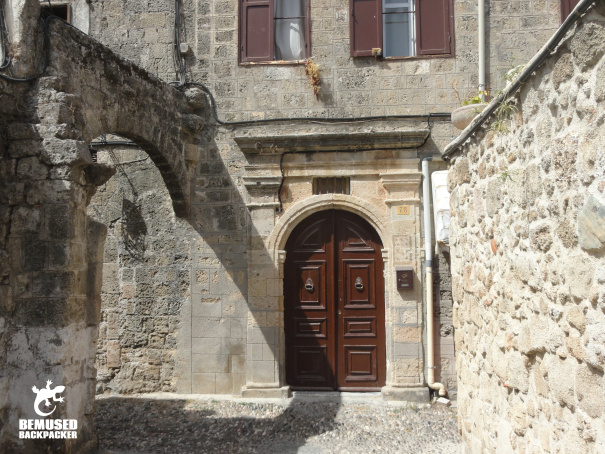
This 600-meter-long cobblestone thoroughfare remains one of the most intact medieval streets in the world. It was historically lined with the "Inns of the Tongues," which housed knights based on their linguistic and national origins (e.g., the Inn of France, the Inn of Italy). The street leads from the Palace down toward the Archaeological Museum, which is housed in the former Hospital of the Knights, a masterpiece of 15th-century Gothic design.
Maritime Heritage and Mandraki Harbour
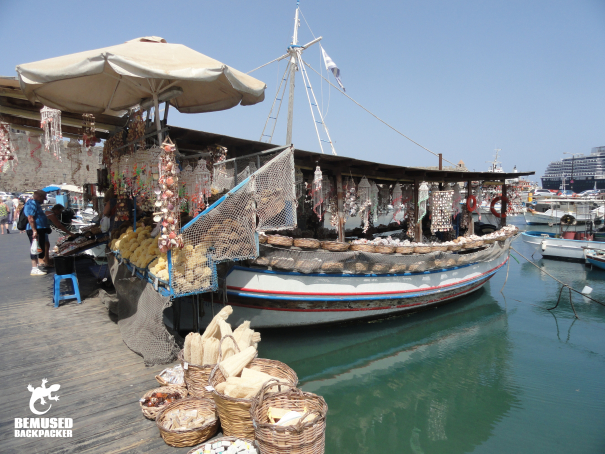
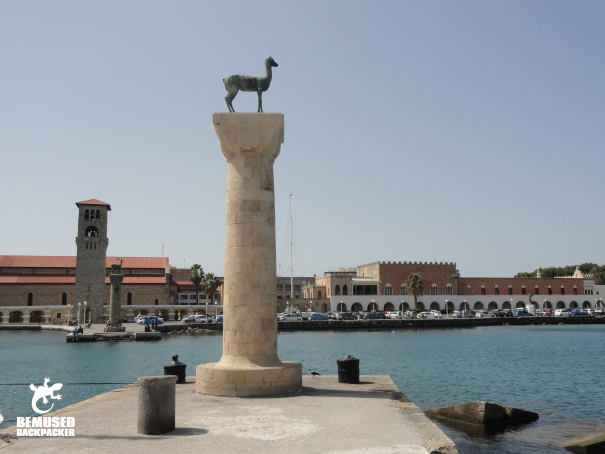
Mandraki Harbour serves as the contemporary face of Rhodes’ ancient maritime tradition. Historically the primary military port, it is now a bustling marina for luxury yachts and excursion boats.
The Site of the Colossus
While the exact location of the Colossus of Rhodes remains a subject of archaeological debate, local tradition and many scholars place it at the mouth of Mandraki Harbour. Today, two bronze statues of fallow deer—a buck named Elefos and a doe named Elafina—stand on stone columns where the feet of the Colossus were purportedly anchored. These deer have become the official symbols of the island.
The Fort of St. Nicholas and the Windmills
The harbor mole is home to three medieval windmills, once used to grind grain brought in by merchant ships. At the end of the pier stands the Fort of St. Nicholas, a 15th-century military tower that served as the primary guardian of the harbor entrance during the Ottoman sieges.
Archaeological Significance of Lindos
Located 55 kilometers south of Rhodes Town, the village of Lindos represents the island’s most significant archaeological site after the capital. The Lindos Acropolis is a natural citadel rising 116 meters above the sea, featuring a complex layering of fortifications.
The site is dominated by the Doric Temple of Athena Lindia, dating back to the 4th century BCE. Visitors can observe the Hellenistic stoa and the unique rock-cut relief of a Rhodian trireme (warship) at the base of the steps. Below the Acropolis, the village of Lindos is characterized by its "Captain’s Houses"—16th and 17th-century dwellings featuring ornate doorways and pebble-mosaic (hohlaki) courtyards.
Natural Assets and Specialized Tourism
Rhodes has diversified its tourism offerings by capitalizing on its unique geographical features, moving beyond traditional beach resorts into sports and wellness tourism.
Prassonissi and the Convergence of Seas
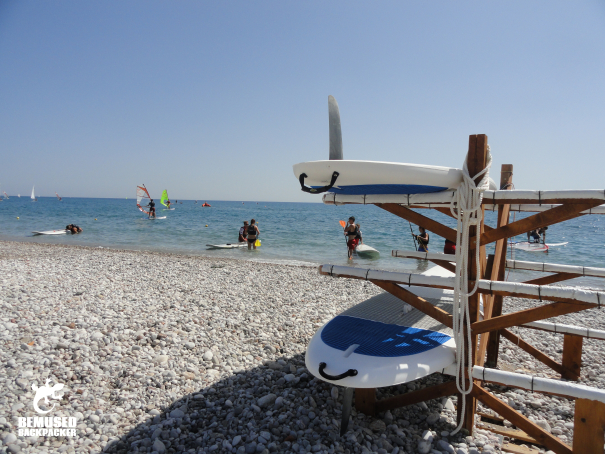
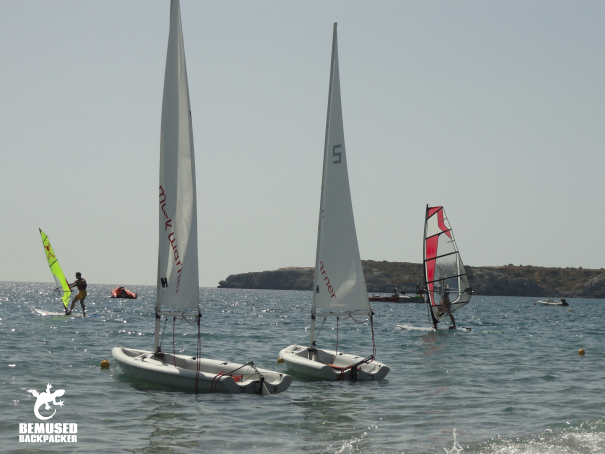
At the southernmost tip of the island lies Prassonissi, a peninsula connected to the mainland by a shifting sandbar. This location is unique for the "Kiss of the Two Seas," where the turbulent Aegean Sea meets the calmer Mediterranean. Due to the reliable meltemi winds, Prassonissi is recognized as one of the premier windsurfing and kitesurfing destinations in Europe.
Kallithea Springs
The Kallithea Springs, located just south of Rhodes Town, represent a successful restoration of a historic thermal spa. Originally celebrated in antiquity for their therapeutic properties, the springs were developed into a monumental complex by the Italians in 1928. Following a comprehensive renovation in 2007, the site now operates as a cultural center and swimming destination, featuring impressive rotunda architecture and intricate mosaic flooring.
The Interior and Viticulture
The mountainous interior of Rhodes provides a stark contrast to the coastal resorts. The village of Embonas, situated at the foot of Mount Attavyros, is the heart of the island’s wine industry. Rhodes was the first Greek island to produce sparkling wine and holds two Protected Designation of Origin (PDO) statuses for its wines, primarily utilizing the Athiri (white) and Mandilaria (red) grape varieties.
Socio-Economic Impact and Tourism Resilience
The tourism sector accounts for an estimated 75% of the island’s regional GDP. This reliance was tested during the summer of 2023 when wildfires impacted the southern regions. However, the island’s recovery has been noted by international travel organizations as a testament to local resilience.
In a statement following the 2023 season, representatives from the South Aegean Region noted, "The swift recovery of Rhodes demonstrates not only the strength of our infrastructure but the commitment of the local community to maintaining our status as a safe and welcoming global destination."
Industry data indicates a shift toward "Sustainable Rhodes," a government-backed initiative aimed at transforming the island into a global model for sustainable tourism by 2030. This includes investments in green energy, waste management, and the promotion of "slow travel" in the lesser-known northern and central villages.
Analysis of Broader Implications
The continued popularity of Rhodes provides a blueprint for balancing high-volume tourism with heritage conservation. The island’s ability to maintain a UNESCO-listed living city—where residents still live and work within medieval walls—while hosting millions of visitors suggests that cultural integrity and economic growth are not mutually exclusive.
Furthermore, the integration of Turkish influences in Rhodian cuisine and architecture highlights the island’s role as a cultural bridge in the Eastern Mediterranean. As travelers increasingly seek authentic experiences, the "Rhodian model" of combining archaeological depth with diverse natural landscapes (from the butterfly-filled valleys of Petaloudes to the rocky coves of Anthony Quinn Bay) serves as a competitive advantage in an crowded Mediterranean market.
The future of Rhodes lies in its ability to manage its popularity. By steering visitors toward the traditional honey-producing village of Siana or the ruins of ancient Kamiros, the island can mitigate the pressures of over-tourism in Rhodes Town and Lindos, ensuring that its "essential" attractions remain preserved for future generations.