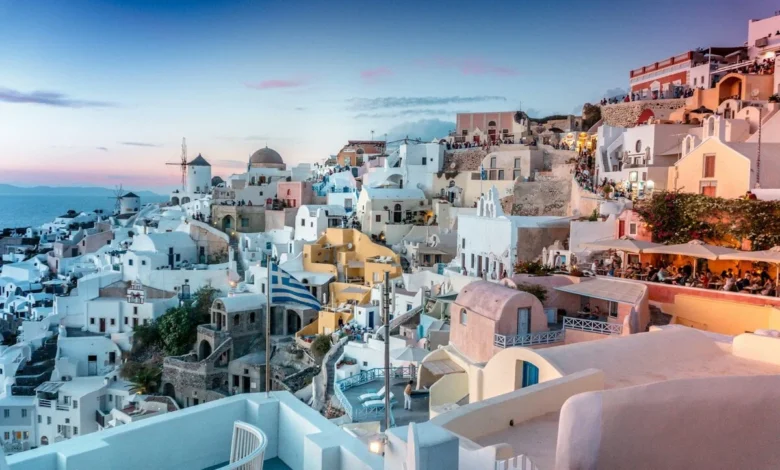
For thousands of cruise passengers arriving in the picturesque waters of Santorini, the journey ashore frequently begins with a frustrating bottleneck. The standard transit route requires visitors to take a tender boat from their cruise liner anchored in the caldera to the Old Port at the base of towering cliffs. From there, tourists face a stark choice: climb over 600 steps on foot, endure a traditional donkey ride—which has faced increasing animal welfare scrutiny—or queue for the island’s single cable car up to the capital of Fira. On peak days when multiple mega-cruise ships anchor simultaneously, this cable car queue can snake along the cliffside for an hour or more. For travelers working against the strict schedule of a six-hour port call, losing the first sixty minutes to a stagnant line drastically compresses an already brief sightseeing window.
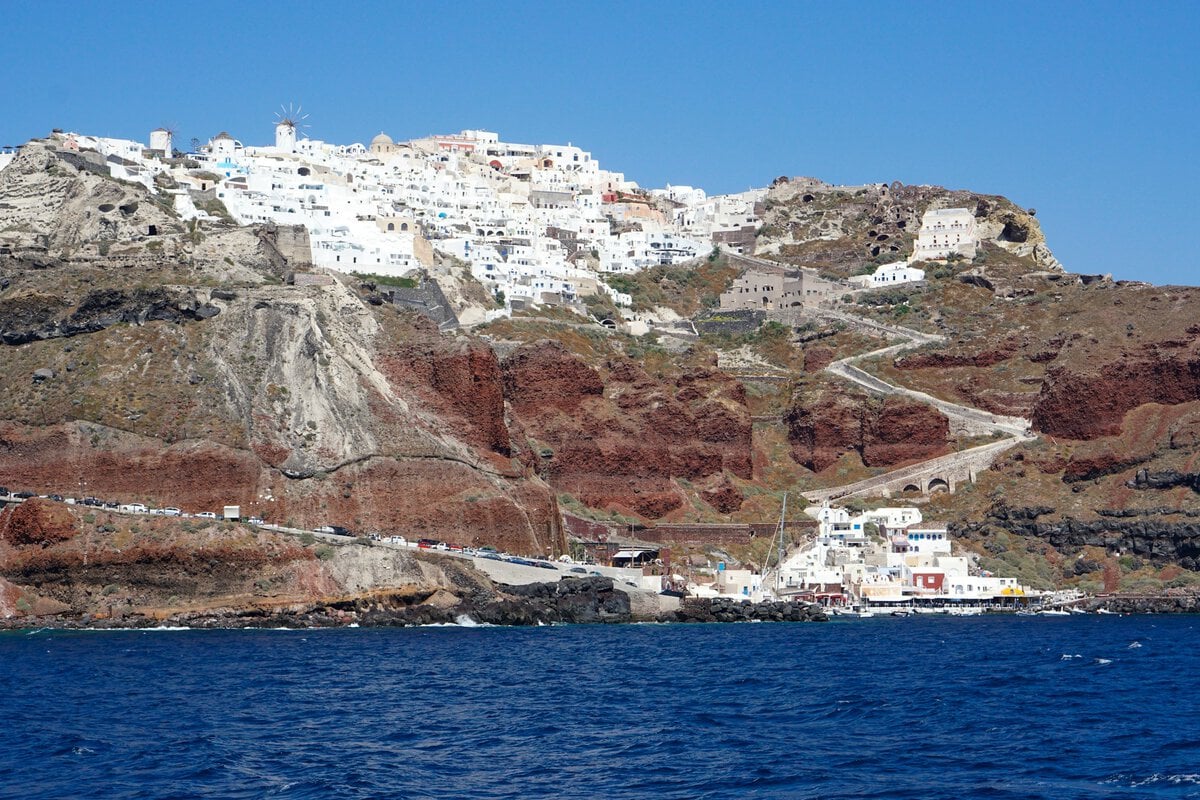
However, a rising alternative is changing how independent and private tour operators manage cruise arrivals on the island. Rather than funneling passengers upward into the Fira congestion, specialized services like iGoHellas now coordinate direct boat transfers from the Old Port across the caldera waters to Ammoudi Bay, the diminutive harbor resting directly beneath the iconic village of Oia. This maritime detour transforms what was once a tedious logistical hurdle into an immersive component of the excursion itself, offering sea-level vistas of volcanic strata before a customized, private vehicle tour even begins.
Understanding the Logistics of the Santorini Bottleneck
To comprehend why alternative arrival routes have gained traction, one must examine the unique geography of Santorini. Formed by one of the largest volcanic eruptions in recorded history—the Minoan eruption approximately 3,600 years ago—the island is defined by its dramatic, multicolored cliffs plunging steeply into the deep blue Aegean Sea. The Old Port (Skala), situated at sea level, has no direct vehicular road connecting it to the caldera rim towns perched hundreds of meters above.
The municipal cable car, constructed in 1982 through a donation by the Loula & Evangelos Nomikos Foundation, was originally designed to safely transport locals, cargo, and a modest number of visitors up the 220-meter vertical incline. Today, it struggles to absorb the sheer volume of modern mass tourism. According to regional port authority estimates, peak summer days can see upwards of 10,000 to 15,000 cruise passengers descending upon the island within a narrow morning window. When three or four cruise ships occupy the anchorage at the same time, the cable car operates at maximum capacity, resulting in wait times that can easily exceed 60 to 90 minutes during the morning rush.
For time-conscious travelers, this delay is more than an inconvenience; it threatens the viability of pre-booked shore excursions, museum visits, and dining reservations. Local tourism analysts note that cruise lines frequently warn passengers about the unpredictability of the tender-to-cable-car pipeline, advising them to allow ample buffer time for their return journey as well.
Redesigning the Shore Excursion: The Ammoudi Bay Alternative
Recognizing the economic and experiential costs of the Fira bottleneck, forward-thinking tour providers have reimagined the entry sequence. Under the alternative model, passengers complete the standard tender process from the ship to the Old Port, where a local representative greets them near the base of the cable car infrastructure. Instead of joining the winding queue, guests are escorted directly to a private charter vessel waiting at the pier.
The subsequent boat journey cuts northward across the caldera basin toward Ammoudi Bay. Geographically and visually, this approach presents a stark contrast to the traditional cable-car ascent. From the water, travelers gain an unobstructed, upward perspective of the sheer volcanic cliffs. The distinct geological layers—bands of black lava, red ash, and white pumice—reveal the violent volcanic history of the island on a grand scale. High above, the whitewashed settlements of Fira, Firostefani, and Imerovigli cling precariously to the precipice like snowdrifts against dark rock.
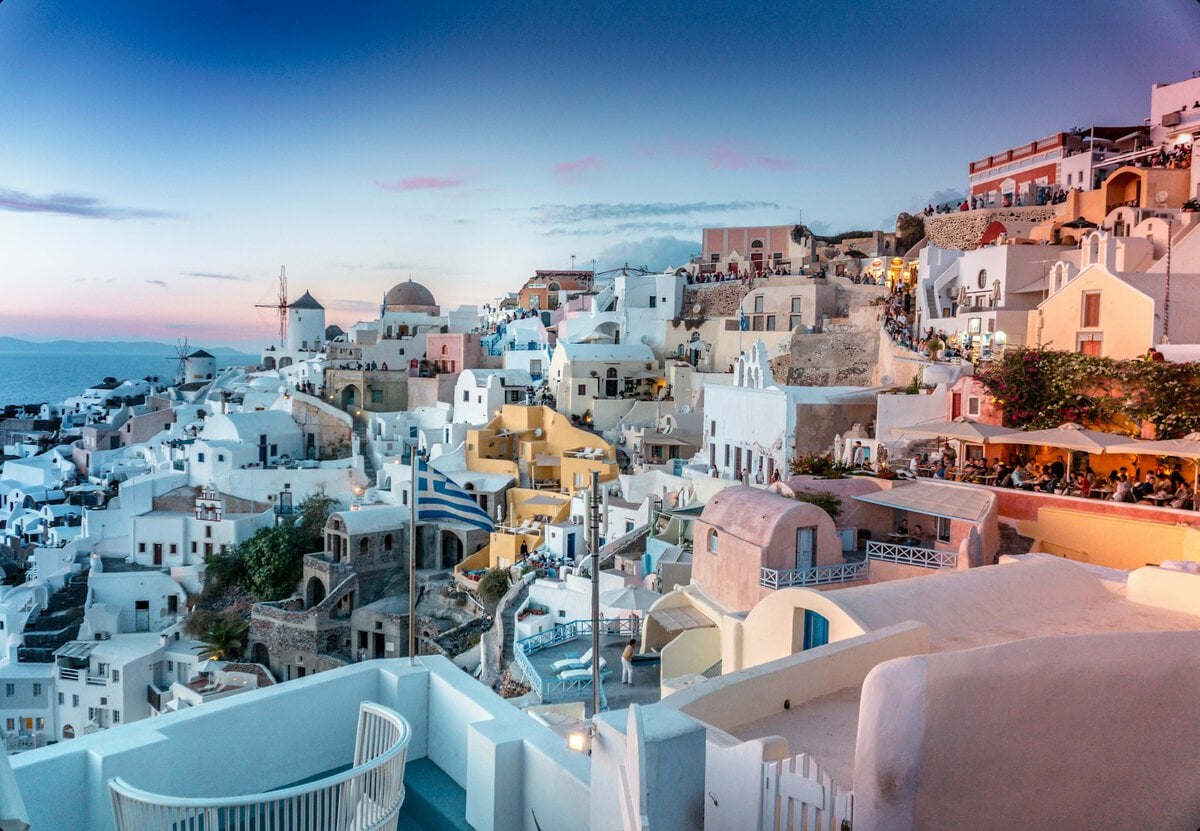
Arriving at Ammoudi Bay bypasses the need to drive across the spine of the island from south to north. Ammoudi serves as an ideal maritime gateway, placing visitors immediately beneath Oia, the island’s most photographed and globally recognized settlement.
Anatomy of a 6-Hour Private Santorini Sightseeing Tour
By eliminating the initial Fira queue, private itineraries can reclaim valuable hours, structuring the day around a seamless flow that avoids backtracking. A typical six-hour private sightseeing excursion demonstrates how efficient routing can maximize a short port stay.
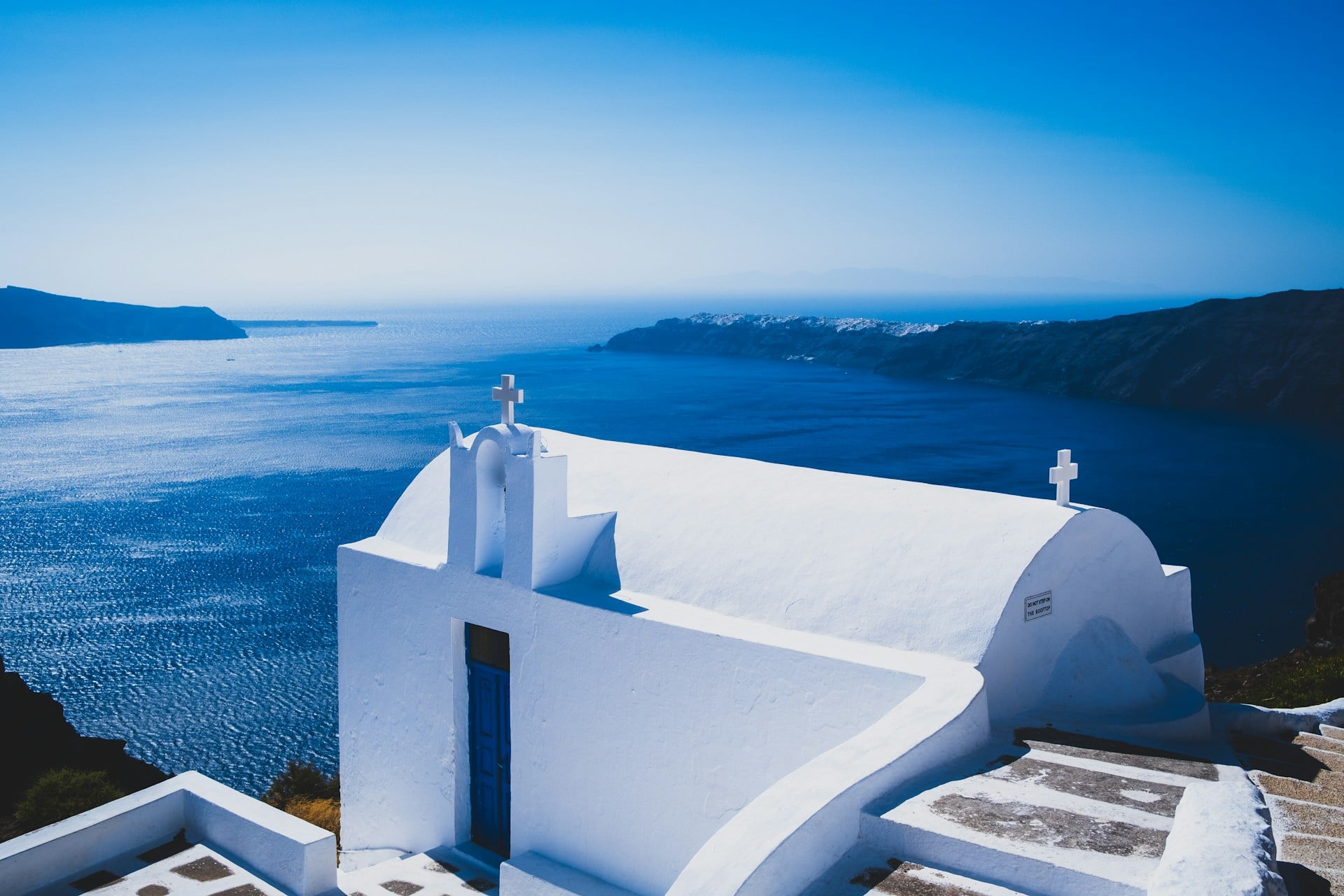
The journey generally begins immediately upon disembarking at Ammoudi Bay, where a private, air-conditioned vehicle and an English-speaking local guide await. Travelers ascend the winding road out of the harbor straight into Oia before the midday tour buses arrive from other parts of the island. Here, visitors can stroll the iconic marble-paved pedestrian lanes, admire the famous blue-domed churches of St. Spiridion and the Church of the Resurrection, and capture unobstructed photographs of the caldera edge.
From Oia, the customized route typically moves southward along the caldera rim, pausing briefly at Firostefani to view the historic Three Bells of Fira (the Church of the Assumption of the Virgin Mary), which offers one of the most classic post-card compositions on the island. Depending on the travelers’ specific preferences, the itinerary may include a stop at Imerovigli, known as the "Balconies to the Aegean," sitting at the highest point of the caldera rim.
Moving away from the precipice, the tour often ventures inland and upward to Mount Profitis Ilias, Santorini’s highest peak at 567 meters above sea level. From this summit, guests enjoy a panoramic, 360-degree view encompassing the entire island, the surrounding Cycladic archipelago, and the agricultural plains stretching eastward.
To inject local culture and culinary heritage into the day, many private operators incorporate a visit to the Art Space Winery in Exo Gonia. Housed in a 19th-century pumice-cave winery, this cultural venue combines contemporary Greek art galleries with traditional wine-making machinery, offering optional tastings of indigenous varietals like Assyrtiko, Aidani, and Nykteri.
The final leg of a comprehensive six-hour tour typically explores the preserved traditional settlements of Megalochori and Emporeio. These southern villages feature labyrinthine medieval alleys, neoclassical mansions, bell towers built directly over archways, and a distinct absence of mass-market commercialism. The excursion generally concludes at one of Santorini’s unique volcanic shores—such as the distinctive dark sands of Black Beach (Perissa or Perivolos)—before the private transport delivers guests back to Fira in comfortable alignment with their ship’s departure schedule.
Comparative Efficiency: Is the Sea Route Faster?
While tour operators market the boat transfer as a time-saving measure, logistics experts emphasize that the actual time saved depends heavily on port traffic on any given day.
On a heavy cruise day—defined as a morning when three or more vessels are discharging passengers—the boat transfer to Ammoudi Bay consistently outperforms the cable car system. Passengers bypass the physical queue entirely, stepping off their tender and onto a moving boat within minutes. Conversely, on a light cruise day with only one or two ships in port, the cable car line may be minimal, reducing the time advantage of the maritime route.
However, industry analysts point out that even when the time savings are marginal, the qualitative experience differs fundamentally. Trading a concrete, sun-exposed queue for a scenic open-water crossing alters the psychological tone of the excursion from a stressful commute into a memorable component of a Mediterranean holiday.
Target Audience and Operational Suitability
This alternative arrival and touring model is particularly advantageous for specific demographics within the cruise market:
- Time-sensitive travelers: Passengers with port calls restricted to five or six hours who cannot afford to lose an hour to stationary queues.
- Multi-generational families: Groups managing elderly relatives or young children who find standing in dense, slow-moving crowds exhausting and uncomfortable.
- Photography enthusiasts and couples: Individuals seeking unobstructed views, flexible itineraries, and personalized pacing that avoids the rigid constraints of large, 50-person motorcoach excursions.
Furthermore, because these excursions operate on a private basis, the itinerary remains entirely malleable. If travelers wish to linger longer in a boutique wine cellar or skip a beach visit in favor of shopping in Oia, the guide can instantly recalibrate the schedule without disrupting a group consensus.
The Crucial Return Journey and Safety Margins
While the morning arrival can be optimized through private boat transfers, the afternoon return to the cruise ship demands rigorous time management. Regardless of whether a tour utilizes private vehicles, buses, or the cable car, every cruise passenger must eventually return to the Old Port via the cable car or walk down the steps to catch the final tender back to the ship.
Because of this structural reality, reputable private tour operators build substantial time buffers into the final hour of every excursion. Missing a tender boat carries severe consequences; unlike independent land travel where a delayed passenger can catch up at the next destination, missing a cruise ship departure means arranging expensive, complicated emergency travel to the next port of call. Consequently, professional guides schedule the final drop-off in Fira well in advance of the ship’s final boarding call, ensuring guests maintain a safe margin for the descent to the tender pier.
Broader Economic and Infrastructural Implications for Santorini
The growing popularity of alternative arrival logistics highlights a broader challenge confronting local governance in Santorini. Overtourism has long been a contentious issue on the island, with municipal leaders and residents grappling with the ecological and infrastructural strain imposed by millions of annual visitors.
By decentralizing the flow of tourists—bringing some arrivals straight to Ammoudi Bay and distributing them across southern agricultural villages rather than concentrating every visitor immediately in Fira—these private tour models inadvertently assist in mitigating localized congestion points. While mass cruise tourism remains a vital pillar of the local economy, distributing foot traffic more evenly across the island’s geography helps alleviate pressure on vulnerable historical paths and municipal infrastructure.
As cruise lines continue to deploy increasingly massive vessels into the Mediterranean, innovative routing strategies like the caldera boat transfer represent a necessary adaptation for travelers determined to experience authentic island life without spending their vacation trapped in a queue.
Related posts: