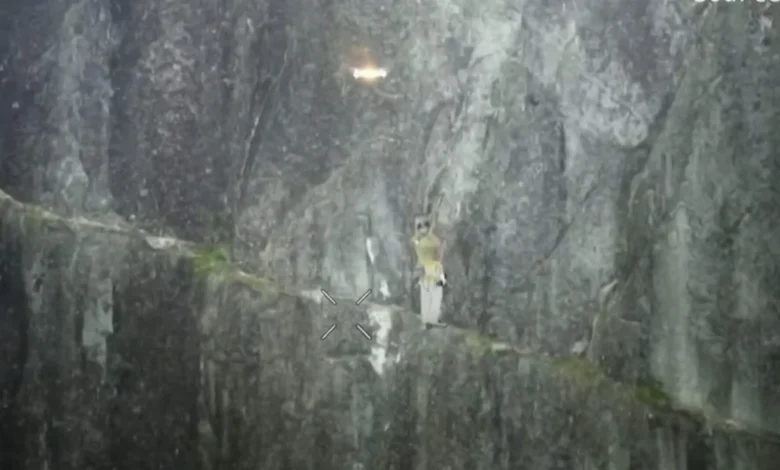
In a groundbreaking operation that signals a paradigm shift for high-angle emergency response, Squamish Search and Rescue (SAR) successfully deployed heavy-lift cargo drones to extract a stranded climber from the imposing granite faces of the Stawamus Chief in British Columbia. The incident, which occurred late Wednesday evening, saw a climber marooned 77 meters above the base of the "Alaska Highway" route, a demanding 5.11+ grade climb. Deprived of his rope following a mid-climb mishap, the individual was left clinging to an anchor on a vertical, overhanging wall in complete darkness. The subsequent deployment of specialized drone technology marked a historic milestone for the Squamish SAR drone team, representing their first high-stakes rescue mission conducted entirely through aerial remote intervention.
The Chronology of the Crisis
The distress call reached Squamish SAR dispatch on Wednesday night, initiating a rapid mobilization of specialized teams. The stranded climber was positioned on the Alaska Highway, a 176-meter multi-pitch route renowned for its strenuous, overhanging chimneys and technical cracks. Preliminary reports indicate the climber was not engaged in a solo ascent; rather, he had become separated from his climbing partner during the transition between pitches, leaving him anchored to the wall with no means of descent.
As night fell over the Squamish Valley, the risk profile for a conventional ground-based rescue escalated significantly. The Chief is notorious for its loose rock and complex vertical terrain, which poses an inherent danger to rescue personnel attempting to navigate the wall in low-light conditions. Recognizing the hazards of a traditional "go" mission—where rescuers would have to climb to the individual’s position—the SAR command decided to leverage their specialized drone division.
At approximately midnight, the drone team initiated the flight sequence. Two distinct aircraft were utilized for the operation. The first drone, equipped with high-intensity floodlighting and an onboard camera, functioned as an aerial scout, illuminating the vertical face and providing real-time high-definition telemetry to the command center. This allowed rescuers to maintain constant visual contact with the stranded climber and guide his movements. A second, heavier-lift drone was deployed to deliver critical supplies, including a warm jacket to combat the onset of hypothermia and a lightweight messenger line. Upon receiving the messenger line, the climber was able to pull up a full-length climbing rope from the base of the route, ultimately enabling him to execute a self-rappel to safety.
Technological Advancements in SAR
The integration of unmanned aerial systems (UAS) into search and rescue protocols is a rapidly evolving field, yet the Squamish incident demonstrates a sophisticated application of the technology. Traditionally, technical rescues on large granite faces have required teams to fix ropes or perform complex haul-systems, activities that consume time and put multiple rescuers in the "fall zone."
The drones utilized in this operation are capable of lifting significant payloads, a necessity for delivering climbing hardware, medical supplies, and communications gear to isolated individuals. The ability of the drone team to hover in proximity to a vertical wall, while navigating turbulent wind currents and shadows, speaks to the high level of technical training the Squamish SAR team has undergone over the past several years. Dustin Wales, a key drone operator with the team, noted in subsequent interviews that the mission was the culmination of extensive training designed specifically for this "high-risk, low-access" environment.
The Stawamus Chief: A High-Stakes Environment
To understand the gravity of the rescue, one must look at the geography of the Stawamus Chief. Often referred to as "The Chief," this massive granite monolith rises 700 meters above the Sea-to-Sky Highway. It is the centerpiece of the Squamish climbing community and one of the most popular climbing destinations in North America.
The Alaska Highway route, where the incident occurred, is categorized as a 5.11+ difficulty, indicating that the climbing is physically strenuous and requires a high level of technical proficiency. The route is characterized by overhanging sections and technical crack systems, which, while aesthetically pleasing to elite climbers, create a dangerous environment for a stranded individual. The vertical nature of the wall means that any mistake—or, in this case, the loss of essential gear—results in immediate, life-threatening isolation. Because the wall is largely vertical or overhanging, a person cannot simply "walk off" the route; they are entirely dependent on their equipment for a safe descent.
Analysis of the Operational Success
From an emergency management perspective, the use of drones in this operation provided three critical advantages:
- Risk Mitigation: By keeping human rescuers on the ground, the SAR team eliminated the risk of rockfall or climbing accidents during the approach.
- Temporal Efficiency: A drone can reach a position on the wall in minutes, whereas a climbing rescue team would require hours to establish a belay and ascend the technical pitches in the dark.
- Communication and Morale: The arrival of the drone, accompanied by its bright floodlights, provided the stranded climber with immediate confirmation that help had arrived. This psychological impact is significant in preventing panic, which often leads to poor decision-making in survival situations.
However, experts caution that drone rescue is not a panacea. The technology remains sensitive to extreme weather, particularly the strong winds that often funnel through the corridors of the Squamish valley. Furthermore, the reliance on battery life and the line-of-sight requirements for operators mean that drone-assisted rescues are still highly dependent on environmental variables and operator skill.
Broader Implications for Mountain Rescue
The success of the Squamish SAR operation is likely to serve as a blueprint for other mountain rescue organizations globally. As drone technology continues to miniaturize while increasing in lift capacity, the capability to perform "remote delivery" of medical supplies, satellite phones, and specialized ropes will become a standard tool in the SAR kit.
This shift also raises questions regarding the responsibility of the climbing community. While the technology is available to assist, the primary safety net for any climber remains their own preparation, equipment management, and communication with partners. The "mishap" mentioned by SAR officials, which left the climber without a rope, highlights the importance of redundancy in climbing systems. Regardless of the sophistication of rescue services, the inherent nature of mountaineering requires self-reliance as the first line of defense.
Moving forward, the incident on the Alaska Highway will likely spur further investment in drone capabilities for the Squamish SAR team. As they look to expand their fleet and refine their operational tactics, the intersection of robotics and traditional mountaineering appears to be the future of wilderness rescue. The ability to "bridge the gap" when human rescuers cannot safely approach a subject is a significant leap forward, potentially saving countless lives in the coming years.
For now, the climber involved in the Wednesday night ordeal is safe, and the Squamish SAR team has returned to their training, analyzing the data from this successful deployment to improve their response times for the next call. The Chief remains an imposing and beautiful destination for thousands of climbers, but the shadow of the monolith is now watched over by a new kind of guardian—the silent, hovering eyes of the drone fleet. As technology advances, the line between an impossible rescue and a successful extraction is being redrawn, one flight at a time.