Curaçao: A Comprehensive Guide to the Island’s Cultural Evolution and Historical Landmarks

By Elise Hofer Shaw
While Curaçao is often recognized globally for its turquoise waters and the iconic, postcard-perfect Dutch colonial architecture of Willemstad, the island’s true essence is found within its layered historical narrative. Stretching across 171 square miles, this constituent country of the Kingdom of the Netherlands serves as a living laboratory of Caribbean history. Its development, from a strategic colonial trading hub to a modern, multicultural society, is reflected in a collection of cultural institutions and districts that offer visitors an educational journey through centuries of social and economic transformation.
The Historical Foundation of a Caribbean Trade Hub
Curaçao’s strategic location in the Southern Caribbean, roughly 40 miles off the coast of Venezuela, defined its destiny from the moment of European contact. The island’s natural deep-water harbor, St. Anna Bay, is one of the most protected in the region, which prompted the Dutch West India Company to capture the island from the Spanish in 1634.
This acquisition transformed Curaçao into a central node for the Atlantic slave trade and, later, a thriving maritime economy. The economic trajectory of the island is not merely a matter of colonial record; it is the backbone of its current cultural identity. The maritime history of the island is meticulously preserved at the Curaçao Maritime Museum, housed in a restored 17th-century building in the Scharloo district. This institution serves as the primary repository for the island’s 500-year maritime chronicle.
The museum’s permanent exhibition provides a chronological lens through which to view the island’s development. It begins with the arrival of the Caquetio people, the indigenous Arawak group who navigated the Caribbean in canoes, and moves through the eras of Spanish exploration and the eventual Dutch colonization. Among the primary artifacts are original 17th-century nautical charts, intricate ship models, and early navigational instruments that were essential to the success of the Dutch West India Company. By analyzing these records, historians can trace the economic transition from agricultural plantation systems to the industrial focus on oil refining and international shipping that characterized the 20th century.
Social Evolution and the Plantation Legacy
The social history of Curaçao is inextricably linked to the plantation system. The Savonet Museum, situated at the entrance of Christoffel National Park, provides a critical educational experience regarding this era. The site itself is a former plantation house constructed in 1662, making it one of the oldest standing structures on the island.
The museum’s narrative arc is intentionally comprehensive, detailing the lives of the island’s first inhabitants, the plantation owners, and the enslaved populations that provided the labor force for the island’s agricultural exports, such as divi-divi pods and salt. Following the abolition of slavery in the Dutch colonies in 1863, the island underwent a profound demographic and social shift. The Savonet Museum utilizes audio and guided tours to walk visitors through the post-emancipation era, explaining how the descendants of enslaved people shaped the current linguistic, musical, and culinary customs of Curaçao. This site is essential for understanding the transition from a colonial agricultural society to a modern, democratic Caribbean nation.
The Urban Renaissance of Otrobanda
While museums provide the chronological framework of Curaçao’s past, the district of Otrobanda—meaning "the other side"—offers a view of its vibrant present. Historically, Otrobanda served as a working-class residential area that grew organically across the harbor from the commercial hub of Punda. Today, it stands as the center of a grassroots cultural revival.
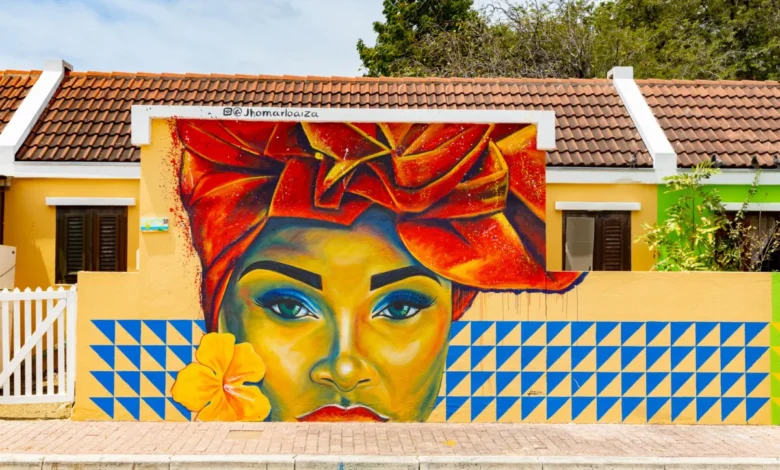
In recent years, the district has become a canvas for local artists, effectively bridging the gap between historical heritage and contemporary expression. The rainbow-painted steps at Van Lennepstraat, created by artist Avantia Damberg, have become a symbol of this aesthetic transformation. The murals stretching between Quintastraat and Cornelis Dirksweg represent a shift in the district’s identity, attracting international attention and tourism.
This movement is largely supported by local stakeholders like the Bario Hotel + Bar, which facilitates walking tours that contextualize the art within the neighborhood’s socio-economic history. Furthermore, the Kaya Kaya Street Party, held in August and December, has become a pivotal cultural event. By revitalizing the streets with music, food, and art, organizers have successfully stimulated local economic activity while fostering community pride. Analysis of these street festivals suggests that the "artification" of neighborhoods like Otrobanda is a calculated strategy to encourage urban renewal without displacing long-term residents, providing a sustainable model for Caribbean urban development.
Artistic Landscapes: The Blue Bay Sculpture Garden
Curaçao’s commitment to the arts extends beyond the urban landscape to the intersection of nature and design. The Blue Bay Sculpture Garden, located at the Blue Bay Golf & Beach Resort in Boca Samí, represents a significant investment in the island’s contemporary art scene. The garden serves as an open-air exhibition that traces the path from the resort’s entrance to its historic manor house.
Since the installation of a ceramic totem by artist Ellen Spijkstra in 2017, the collection has grown to include over 40 sculptures created by 29 local artists. These works, featuring contributions from creators such as Giovanni Abath, Eddy Baetens, Babs de Brabander Sr., Hortence Brouwn, and Yubi Kirindongo, are predominantly fashioned from local materials. This reliance on indigenous resources—such as limestone and driftwood—serves as a commentary on the relationship between Curaçao’s geography and its creative output. By curating a trail that ends at a 19th-century plantation house, the garden creates a physical dialogue between the island’s colonial history and its modern artistic trajectory.
Broader Implications and Future Outlook
The cultural infrastructure of Curaçao serves a dual purpose: it acts as a primary educational resource for both residents and international visitors, and it functions as a pillar of the island’s tourism strategy. By prioritizing the preservation of its maritime, colonial, and artistic history, Curaçao has positioned itself as more than a standard "sun and sand" destination.
From an economic perspective, the integration of art into the urban fabric—as seen in Otrobanda—has clear implications for local business development. By creating destination-worthy cultural districts, the island can distribute tourism revenue more equitably beyond the central shopping areas of Punda. Furthermore, the institutional commitment to history, evidenced by the curation of the Maritime and Savonet museums, ensures that the complex narrative of the island’s colonial past is not sanitized, but rather critically examined.
As Curaçao looks toward the future, these institutions remain essential for maintaining a sense of national identity in an increasingly globalized Caribbean. The ongoing efforts by local artists, historians, and entrepreneurs suggest that the island’s heritage is not a static object to be stored in a museum, but a fluid, living practice that continues to evolve. Whether through the lens of a 17th-century ship model or the vibrant paint of a modern street mural, the story of Curaçao is one of resilience, adaptation, and a persistent drive toward cultural self-definition. For those traveling to the island, engaging with these sites is not merely a sightseeing opportunity; it is a vital step in understanding the complex forces that have shaped the Caribbean into the region it is today.