Beyond Sustainable Tourism: Inside the Regenerative Travel Asia Symposium and the Movement to Heal Destinations

For decades, the mainstream paradigm of sustainable tourism has championed a philosophy of mitigation.
Travellers and industry operators alike have been urged to minimise environmental harm, reduce single-use plastics, lower carbon footprints, respect local customs, and protect fragile ecosystems from the heavy tread of global mobility. Yet, as the compounding pressures of overtourism, biodiversity loss, and climate change converge upon the planet, a growing faction of industry leaders argues that mere harm reduction is no longer sufficient.
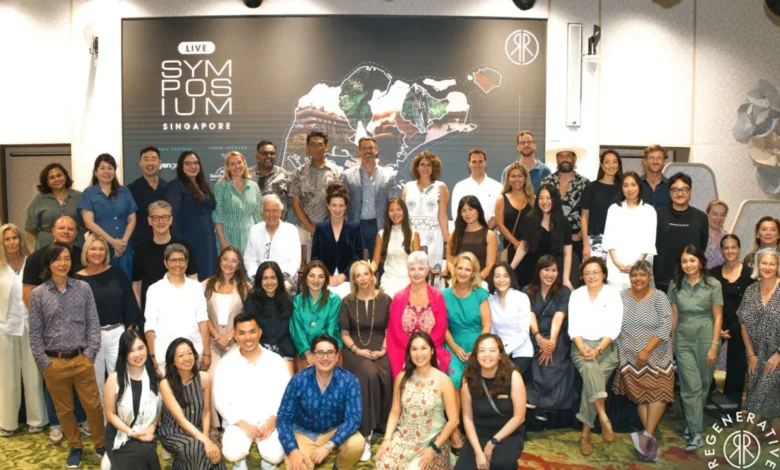
This pressing critique formed the analytical core of the recent Regenerative Travel Asia Symposium held in Singapore. Gathering at the forefront of this movement, delegates, conservationists, hospitality executives, and researchers convened to confront a fundamental question: What if the global tourism and travel industry shifted from a model of extraction to one that actively restores ecosystems, strengthens local communities, and rebuilds humanity’s fractured relationship with the natural world?
The Paradigm Shift: From Consumption to Connection
The symposium, attended by representatives from Ethical Traveler and numerous international organizations, sought to dismantle the deeply ingrained consumerist framework that has historically governed leisure and business travel. For generations, destinations have frequently been marketed as commodities to be consumed, photographed, and left behind. Regeneration challenges this transactional dynamic, demanding a total reimagining of how humans relate to the physical spaces, cultural landscapes, and living ecosystems they encounter.
Setting the foundational tone for the multi-day event, Amanda Ho, co-founder and CEO of Regenerative Travel, articulated this transition as a profound psychological and operational pivot. Ho described regenerative tourism as a movement moving from the "head to the heart," transitioning from a mindset of scarcity to one of abundance, and shifting the focus from individual gratification to collective welfare. She challenged participants to conceptualize tourism not merely as a commercial industry, but as an active, reciprocal relationship between people, places, and the natural environment.
This sentiment was further amplified by keynote speaker Juliet Kinsman. In an era increasingly dominated by digital saturation and artificial intelligence, Kinsman reminded attendees of an immutable biological truth: humanity is not separate from biodiversity, but rather an intrinsic component of an interconnected living system. Consequently, she argued that "regenerating humanity" must run parallel to ecological restoration—a process achieved by rebuilding deep, tangible connections with the planet and with one another.
Consumer Intentions Versus Behavioral Realities
While the philosophical framework of regeneration resonates deeply within academic and boutique circles, translating these ideals into mainstream consumer behavior presents a complex challenge. Market data presented during the symposium underscored a powerful paradox within the contemporary travel market.
Jeremy Tran of Sustainable Travel Asia shared compelling research compiled by Booking.com, revealing a high level of consumer eco-consciousness: approximately 85% of surveyed travellers express a desire for more sustainable travel options, and 69% explicitly state a wish to leave destination communities better than they found them.
However, wanting to travel ethically and possessing the operational knowledge or structural access to do so are starkly different realities. Tran pointed directly to the pervasive influence of social media in distorting modern travel patterns. In an ecosystem where a hidden beach, an indigenous village, or an isolated mountain hamlet can transform into a global tourism trend overnight, travellers face a critical ethical dilemma. The core question confronting contemporary tourists is whether their destination choices are driven by deliberate intention or passive conformity to viral algorithms. Moving beyond these destructive trends requires travellers to interrogate their primary motivations for embarking on journeys and to evaluate how they engage with host communities upon arrival.
The Wellness Economy and Relational Tourism
Another prominent vector of discussion at the symposium was the explosive growth of wellness tourism and its uneasy intersection with ecological and social regeneration. Historically, the wellness travel sector has focused inward, promising restoration, healing, and rejuvenation for the individual traveller through the consumption of local healing practices, traditional medicines, and holistic retreats.
Regenerative travel broadens this narrow aperture by asking a more demanding question: Can a tourism model simultaneously restore the wellbeing of the individuals visiting and the health of the communities and ecosystems that make those wellness experiences possible in the first place?
Symposium participants emphasized that regeneration is fundamentally relational rather than merely environmental. Communities cannot continue to be treated as passive backdrops or transactional hosts for wellness seekers. Instead, they must be recognized as vibrant centers of ancestral knowledge and living culture. The prevailing consensus called for an urgent transition away from extractive tourism—where cultural practices are commercialized without mutual benefit—toward a model anchored in genuine cultural exchange.
The Imperative of Community Sovereignty
For tourism initiatives to claim true regenerative status, local populations must transcend the role of passive beneficiaries and become active architects of policy and destination management. Maitri Fischer, a leader in sustainable design at Eco-Mantra, addressed the severe structural tensions that emerge when unbridled tourism growth occurs in the absence of robust local governance.
Fischer pointed to the well-documented plight of Bali as a cautionary case study. The rapid, unmanaged overdevelopment of the Indonesian island has triggered compounding environmental and infrastructural crises, ranging from severe municipal waste management failures to critical depletions of local water tables and land resources. Without decentralized planning and community-led decision-making, Fischer noted, tourism growth inevitably cannibalizes the very assets that attracted visitors initially.
Industry in Action: Case Studies of Corporate Responsibility
While structural reform requires systemic policy changes, numerous hospitality groups and tourism operators are already pioneering regenerative frameworks on the ground. Throughout the Singapore symposium, industry leaders—including representatives from the Banyan Group, The Datai Langkawi, and Potato Head Bali—showcased operational models that internalize environmental restoration and community enrichment.
A frequently cited benchmark of this approach is Song Saa Private Island in Cambodia. Developed on a heavily degraded marine and terrestrial landscape, the resort was founded with an explicit mandate to heal rather than merely exploit the local environment. Through the establishment of the Song Saa Foundation, the initiative successfully helped create Cambodia’s first officially recognized Marine Protected Area. Furthermore, the resort operationalizes local sovereignty by employing approximately 75% of its workforce from surrounding villages.
Complementing these socio-economic measures are rigorous on-site infrastructural practices, including comprehensive waste management systems, food waste reduction programs, and advanced rainwater harvesting facilities. Crucially, Song Saa integrates guests directly into its conservation mandate. Visitors are invited to participate in active coral reef restoration, scientific monitoring, and community outreach programs, effectively transforming them from passive consumers into committed contributors to the local ecosystem’s recovery.
The Threat of Greenwashing and the Demand for Transparency
Despite these encouraging milestones, industry analysts at the symposium issued stark warnings regarding the commercial commodification of the term "regeneration." As consumer demand for ethical travel surges, the travel industry faces a profound risk of greenwashing. There is growing concern that "regenerative travel" risks being degraded into little more than a marketing buzzword or a luxury branding exercise devoid of measurable substance.
Experts cautioned that unless the movement is underpinned by radical transparency, genuine community participation, and independently audited, long-term ecological impact metrics, it will fail to achieve its systemic goals. Both commercial operators and individual travellers share the burden of holding the industry accountable, ensuring that regeneration remains an operational commitment rather than a hollow public relations promise.
Personal Connection as a Catalyst for Change
As the global climate crisis accelerates and international travel volumes return to or exceed pre-pandemic highs, the imperative for regenerative models grows ever more urgent. Nick Hardman, a marine biologist and Head of Sustainability at the Banyan Group, underscored the unique psychological leverage possessed by the tourism sector during his address to the symposium.
"Tourism has a huge power to be part of the healing process," Hardman asserted. However, he noted that mobilizing public support for conservation requires emotional proximity. "You have to make it personal," he explained. Whether through hands-on participation in coral restoration dives or engaging in profound, respectful cultural exchanges with Indigenous populations, human beings are psychologically predisposed to protect what they feel a personal connection to.
Democratizing Regeneration: Accessibility Beyond Luxury
A critical subtext of the Singapore symposium was the issue of socio-economic accessibility. If regeneration is framed as a collective global necessity, its practices cannot remain exclusively partitioned within the luxury travel sector.
High-end eco-resorts often command price points that place regenerative travel out of reach for the average global citizen. Symposium participants debated the structural changes required to democratize ethical travel, emphasizing that regenerative principles must scale across all economic tiers of the tourism industry—from budget accommodations and public transport networks to independent local operators and mass-market tourism providers.
Conclusion: A Call to Intentional Action
Ultimately, the Regenerative Travel Asia Symposium concluded with a pragmatic consensus: regenerative travel is not an achievable destination of absolute perfection, but an ongoing practice of disciplined intention. It challenges travellers and industry stakeholders alike to evolve through a clear trajectory: moving away from consumption, toward deep connection, and finally arriving at meaningful contribution.
For the modern traveller, this philosophical evolution translates into daily decisions. By actively seeking transparency, prioritizing community-led experiences, patronizing enterprises that invest directly in local resilience, and asking critical questions about where financial proceeds ultimately flow, individuals can help steer the global tourism apparatus toward a sustainable future defined by mutual benefit. At its finest, travel possesses the rare capacity to do more than simply alter the perspective of the individual; it can actively fortify and heal the people, cultures, and landscapes that open their doors to the world.