Bay Area Activists and Artists Launch Burma Spring Benefit Film Festival to Support Resistance Against Military Junta

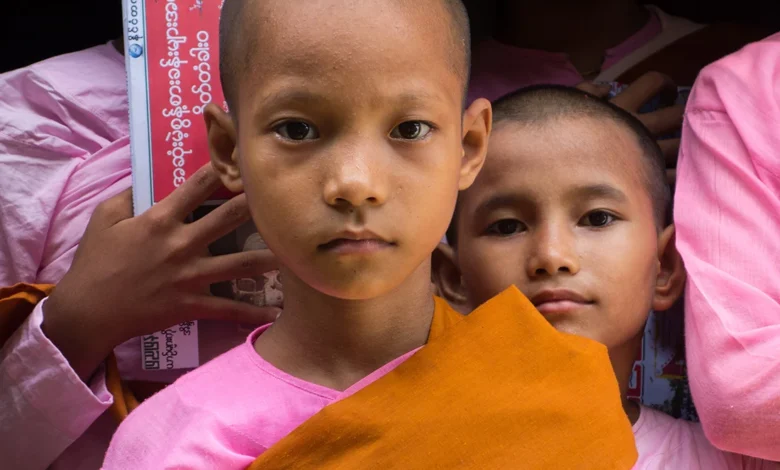
The San Francisco Bay Area has emerged as a vital hub of international solidarity in response to the profound humanitarian and civil rights crisis unfolding in Myanmar. Sparked by the military coup of February 1, 2021, a dedicated collective of local activists, filmmakers, and academics has organized the Burma Spring Benefit Film Festival. Running virtually from June 3 through June 20, the festival features a meticulously curated selection of over thirty films alongside daily panel discussions with prominent human rights defenders, artists, and regional observers.
The event is designed to generate financial support for grassroots humanitarian organizations operating on the ground in Myanmar, directly aiding the peaceful pro-democracy movement. While donations are encouraged to sustain these critical relief efforts, viewing the festival’s content is accessible without a mandatory financial contribution. By showcasing documentaries, dramas, and short films that span complex themes—including ethnic minority struggles, environmental degradation, religious diversity, LGBTQ rights, and gender equality—the festival seeks to honor the resilience of ordinary citizens working nonviolently to reclaim their nation’s democratic future.
The Genesis and Leadership of the Festival
The realization of the Burma Spring Benefit Film Festival is the result of tireless volunteer efforts by a distinguished steering committee deeply connected to Southeast Asian culture and human rights advocacy. The organizing team includes Kenneth Wong, a Burmese-American author, translator, and language instructor at the University of California, Berkeley; Gaetano Kazuo Maida, executive director of the Buddhist Film Foundation; and Ellen Bruno, an award-winning documentary filmmaker.
The leadership team also features Jeanne Marie Hallacy, a filmmaker and director of digital storytelling projects focused on refugees and migrant youth; Hozan Alan Senauke, abbot of the Berkeley Zen Center; and Gregg Butensky, operations director of Kirana Productions, co-founder of Ethical Traveler, and principal at Code Refactory.
Reflecting on his motivation for joining the initiative, Gaetano Kazuo Maida noted that his initial connection to the country stemmed from its profound Buddhist heritage and the architectural marvels of the Bagan valley. However, Maida emphasized that the recent, nationwide mobilization against military rule revealed a deeper, multifaceted society. The burgeoning resistance movement has exposed him to the rich mosaic of ethnic communities, diverse religions, distinct languages, and vibrant creative expressions that define modern Myanmar—elements that the film festival explicitly celebrates as it rallies global awareness and material support.
A Cinematic Exploration of Resistance, Culture, and Persecution
The festival’s programming bridges decades of civil unrest, offering audiences a rare, multifaceted look at the structural forces shaping Myanmar society. Among the featured works is Burma Spring 21, a collaborative short film capturing the immediate aftermath of the coup and the birth of the sweeping Civil Disobedience Movement (CDM).
Kenneth Wong highlights the profound educational value of pairing contemporary digital-age storytelling with historical retrospectives. He suggests that viewing Burma Spring 21 alongside Burma VJ—a celebrated documentary chronicling the clandestine work of video journalists during the 2007 Saffron Revolution—allows audiences to draw critical comparisons between distinct generations of resistance fighters separated by decades of oppression.
Other vital selections address targeted persecution and structural violence. I Am Rohingya: A Genocide in Four Acts brings viewers face-to-face with the harrowing realities of ethnic cleansing through the lived experiences of fourteen young refugees who re-enact the systematic destruction of Burmese Muslim communities. Meanwhile, The Black Zone follows a covert medical network traversing dense jungles to deliver emergency healthcare to populations trapped in active conflict zones. Additionally, A Peaceful Land documents the rural population’s resistance against aggressive state agricultural policies that have historically led to widespread land confiscations, economic displacement, and forced labor practices.
Dialogue, Diaspora, and the Search for Justice
Beyond the cinematic screenings, the festival features rigorous daily panel discussions addressing the geopolitical and humanitarian dimensions of the crisis. Key forums include Myanmar Diaspora and the Milk Tea Alliance, which explores transnational youth-led solidarity networks across Asia; Refugees and the Humanitarian Crisis, examining the plight of displaced populations; and specialized sessions featuring members of the National Unity Government (NUG), an administration formed by ousted lawmakers to challenge the legitimacy of the military junta.
Kenneth Wong underscores the profound significance of sessions such as Ethnic Nationalities and the Rohingya: A Search for Justice and Peace. He points out that as the urban majority has directly experienced the lethal brutality of the military regime, a historic paradigm shift has occurred. Populations that previously enjoyed relative insulation in major cities are now forging deeper empathy and solidarity with ethnic minority groups who have endured systemic state violence in border regions for decades.
Chronology of the Crisis: The February 2021 Coup and Its Aftermath
The political upheaval currently consuming Myanmar began in the predawn hours of February 1, 2021. The country’s military, known formally as the Tatmadaw and led by Senior General Min Aung Hlaing, executed a sudden takeover of the civilian government. The junta seized power by detaining state counselor Aung San Suu Kyi, President Win Myint, and numerous other senior figures of the governing National League for Democracy (NLD).
The military justified the overthrow by alleging widespread voter fraud in the November 2020 general elections—an electoral contest in which the NLD secured a decisive landslide victory, retaining a commanding majority in parliament. Independent domestic and international election observers widely discredited the military’s claims of systemic fraud.
Lee Morgenbesser, an expert in authoritarian politics at the School of Government and International Relations at Australia’s Griffith University, observed that the intervention abruptly terminated Myanmar’s decade-long, albeit fragile and heavily constrained, democratic transition.
The subsequent weeks witnessed the sweeping detention of civil society leaders, journalists, human rights defenders, and cultural icons. Among those initially targeted were Min Htin Ko Gyi, founder of the Human Rights Human Dignity Film Festival. The crackdown rapidly expanded to encompass popular artists, including comedian Zarganar, actor Min Lu—who was subsequently imprisoned in the notorious Insein Prison—and high-profile model Paing Takhon.
Furthermore, the Tatmadaw systematically targeted the nation’s creative community. Dozens of poets, authors, and more than one hundred film professionals were placed on arrest warrants or forced into hiding. According to comprehensive tracking data compiled by the Assistance Association for Political Prisoners (AAPP), the military’s violent suppression of nationwide demonstrations has resulted in the deaths of well over 800 protesters and the arbitrary arrest, charging, or sentencing of nearly 12,000 individuals.
The Rise of the Spring Revolution and Cultural Frontline
Despite the lethal force employed by security forces, public dissent coalesced by May into a coordinated, nationwide resistance movement known as the Spring Revolution. Embracing the rallying cry to "shake the world with the voice of Myanmar people’s unity," citizens from all walks of life mobilized against military rule.
Kenneth Wong notes that artists, filmmakers, and performers have occupied the vanguard of this resistance, transitioning from passive supporters of democratic reform to active participants on the frontlines. The personal and professional toll exacted upon these cultural figures has been immense, yet their resolve highlights a deeper societal grievance. Analysts note that while the coup served as the immediate catalyst for the current uprising, decades of unaddressed socioeconomic inequalities, unresolved ethnic conflicts, and systemic impunity created fertile ground for revolutionary upheaval.
In alignment with these demonstrators, the Bay Area artistic community established the Burma Spring Benefit Film Festival not only to channel material aid to victims of state violence, but also to ensure that the international community maintains its focus on the ongoing struggle for self-determination.
Broader Implications and the Vision of a Post-Junta Future
While the primary objective of the Burma Spring Benefit Film Festival is to provide immediate humanitarian relief and political analysis, organizers harbor a broader long-term vision. Kenneth Wong expresses hope that the festival will reframe international perceptions of Myanmar, ensuring the country is recognized for more than its current cycle of military dictatorship, isolation, and bloodshed.
Wong evokes a richer cultural legacy, describing Myanmar as the historical muse that inspired George Orwell’s anti-colonial novel Burmese Days, a land where vibrant traditions, lively teashop political discourse, and complex indigenous spiritual practices form the fabric of daily life. The ultimate aspiration of the festival’s organizers and participants is that when the military yields power, the international audiences introduced to the nation through cinema will eventually have the opportunity to experience the true, enduring spirit of Myanmar beyond the tragic headlines of the present era.