Beyond Sustainable Tourism: How Asia’s Industry Leaders Are Pushing the Boundaries of Regeneration

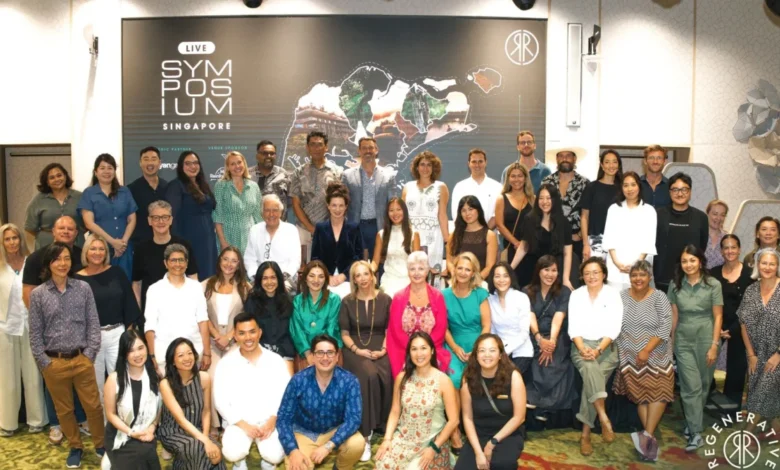
For decades, the global tourism industry operated under a framework of sustainable mitigation—a paradigm focused on minimizing ecological footprints, reducing single-use plastics, lowering carbon emissions, and urging visitors to respect local cultures. However, as the compounding pressures of overtourism and global climate change strain delicate ecosystems worldwide, industry stakeholders are increasingly recognizing that simply doing "less harm" is no longer enough. This critical evolution took center stage at the recent Regenerative Travel Asia Symposium held in Singapore, where international delegates, conservationists, hospitality leaders, and policymakers gathered to address a foundational question: What if the travel and tourism sector could actively restore ecosystems, strengthen local communities, and fundamentally rebuild humanity’s relationship with the natural world?
The Paradigm Shift: From Consumption to Regeneration
The symposium marked a decisive philosophical break from decades of tourism models built predominantly around consumption. For generations, travel has been marketed as a transactional experience—a one-way extraction of scenic beauty, cultural novelty, and leisure from host destinations. Regenerative travel challenges this extractive foundation by reframing tourism as an interconnected relationship between people, places, and nature.
Setting the foundational tone for the multi-day event, Amanda Ho, co-founder and CEO of Regenerative Travel, articulated this transition as a profound psychological and systemic shift. Ho described the movement as a transition from head to heart, from scarcity to abundance, and from an individualistic mindset to a collective responsibility. She urged participants and industry practitioners to view tourism not merely as a commercial industry, but as a dynamic reciprocal relationship.
This sentiment was further amplified by keynote speaker Juliet Kinsman, who reminded attendees that human beings are not separate from planetary biodiversity, but are instead integral components of a wider, living system. In an era increasingly dominated by rapid technological acceleration, artificial intelligence, and digital detachment, Kinsman emphasized the urgent necessity of "regenerating humanity" by deliberately rebuilding tangible connections with the natural world and local host communities.
Consumer Demand Versus Implementation
While the theoretical framework of regeneration has gained substantial intellectual traction, the transition from aspiration to execution remains one of the industry’s greatest hurdles. During a panel discussion exploring consumer psychology, Jeremy Tran of Sustainable Travel Asia presented compelling data sourced from recent Booking.com market research. The statistics revealed a significant public appetite for reform: an overwhelming 85% of surveyed travellers expressed a desire for more sustainable travel options, while 69% explicitly stated their ambition to leave destinations better than they found them.
Despite this clear mandate from the global consumer base, Tran highlighted a pervasive disconnect between intention and action. Wanting to travel responsibly and knowing how to execute responsible travel successfully are two entirely different challenges.
Tran pointed to the disruptive influence of social media in shaping contemporary travel patterns. In an environment where viral digital trends can elevate off-the-beaten-path locations into global hotspots overnight, travellers are frequently nudged toward mass consumption rather than intentional exploration. This modern dynamic forces a reckoning over how itineraries are selected. Moving beyond algorithmic trends requires travellers to interrogate their primary motivations for journeying and to evaluate the depth of their engagement upon arrival. Industry experts suggest that consumers must deliberately assess three core pillars: intentionality in destination selection, active support for localized economies, and direct participation in ecological preservation.
Wellness, Culture, and the Dangers of Overdevelopment
The intersection of wellness tourism and ecological regeneration emerged as another central theme of the symposium. Traditionally, wellness travel has focused narrowly on restoring the individual—utilizing local healing traditions, indigenous knowledge, and holistic practices for personal rejuvenation. Regenerative travel expands this scope exponentially, posing a vital question: Can personal restoration occur simultaneously with the active restoration of the communities and ecosystems that make those experiences possible? Because true regeneration is inherently relational rather than purely environmental, individual wellness cannot ethically be separated from community wellbeing.
Local communities are frequently treated as passive backdrops or service providers for tourism experiences, rather than recognized as the rightful custodians of cultural wisdom and territorial governance. For tourism to achieve genuine regeneration, host communities must transition from being mere recipients of economic trickle-down benefits to active decision-makers shaping the trajectory of their local land, culture, and economic future.
This tension between rapid economic expansion and local capacity was underscored by Maitri Fischer from Eco-Mantra, a prominent leader in environmentally sustainable design. Fischer utilized the island of Bali as a cautionary case study, detailing the acute ecological pressures caused by unchecked overdevelopment. From severe municipal waste management crises to extreme depletion of freshwater tables and overstressed infrastructure, Bali’s trajectory illustrates the perils of scaling tourism without proportional environmental safeguards and community consent.
Case Studies in Regeneration: Industry Leaders in Action
While systemic regulatory changes remain essential, private sector pioneers are already demonstrating what regenerative tourism looks like in practice. Throughout the Singapore symposium, prominent hospitality groups—including the Banyan Group, The Datai Langkawi, Potato Head Bali, and Song Saa Private Island—showcased operational models designed to leave destinations healthier than before.
Song Saa Private Island in Cambodia stands out as a pioneering benchmark in the sector. Developed deliberately on degraded land rather than pristine virgin territory, the resort was founded with an explicit mandate for ecological restoration. Through the establishment of the Song Saa Foundation, the property played a foundational role in creating Cambodia’s inaugural Marine Protected Area, safeguarding local marine life and coral reef networks. Furthermore, the resort operates on an inclusive local employment model, with approximately 75% of its workforce hired directly from surrounding villages.
Complementing these social initiatives, Song Saa integrates comprehensive on-site infrastructure designed to minimize its operational footprint. These measures include rigorous food waste reduction protocols, advanced greywater recycling, and extensive rainwater harvesting systems. Crucially, the guest experience is intentionally intertwined with these conservation efforts. Visitors are routinely invited to participate directly in marine conservation programs, coral monitoring dives, and community outreach initiatives. By transforming guests from passive consumers into active contributors, the resort redefines the hospitality experience.
The Threat of Greenwashing and the Call for Transparency
As regenerative travel gains mainstream momentum, industry analysts warn of an emerging commercial risk: the dilution of the term through greenwashing. Without standardized metrics, strict regulatory oversight, and genuine accountability, "regeneration" risks deteriorating into little more than a sophisticated marketing buzzword used to justify premium pricing.
To maintain credibility, industry leaders agree that regenerative initiatives must be anchored in radical transparency, measurable long-term ecological impact, and verifiable community empowerment. Both commercial operators and individual travellers share the responsibility of ensuring that the promise of regeneration translates into tangible, verifiable outcomes.
Nick Hardman, a marine biologist and Head of Sustainability at the Banyan Group, underscored the profound potential of the sector during his address to the symposium delegates. "Tourism has a huge power to be part of the healing process," Hardman stated, emphasizing that large-scale ecological rehabilitation is well within the industry’s operational capacity.
However, addressing the complex challenge of consumer apathy requires emotional resonance. According to Hardman, the catalyst for behavioural change is personal connection: "You have to make it personal." Whether a traveller engages in hands-on coral reef restoration or participates in a respectful cultural exchange with an Indigenous community, psychological investment directly correlates with long-term environmental stewardship.
Democratizing Regeneration: Accessibility Beyond Luxury
A critical subtext running through the Singapore symposium was the issue of industry-wide accessibility. If the principles of regenerative travel are to effect genuine global change, they cannot remain the exclusive domain of high-end, luxury eco-resorts.
For the vast majority of the global travelling public, financial accessibility remains a primary determinant in trip planning. Consequently, experts at the conference stressed that regenerative practices must be scalable and adaptable across all economic tiers of the tourism ecosystem—from budget accommodations and independent tour operators to massive international transit networks. Democratizing regeneration is vital to ensure that sustainable, restorative travel is not perceived as an elite privilege, but as an accessible standard for all travellers.
The Road Ahead for Global Tourism
As the global climate crisis intensifies and international travel volumes continue their post-pandemic surge, the imperative to pivot toward regenerative models becomes increasingly urgent.
For the everyday traveller, contributing to this evolving movement begins with deliberate decision-making. By actively seeking out business transparency, prioritizing community-led tourism ventures, supporting enterprises that reinvest locally, and critically evaluating the socio-economic distribution of their travel expenditures, consumers can help steer the global tourism market toward a future defined by mutual benefit.
Ultimately, regenerative travel does not demand perfection from the consumer or the operator; rather, it demands intentionality. It invites a definitive departure from the extractive consumption models of the past, encouraging a continuous loop of connection, contribution, and mutual support. At its highest expression, modern travel ceases to be a mechanism that merely alters the individual; instead, it becomes a powerful vehicle capable of strengthening, healing, and sustaining the communities and ecosystems that open their doors to the world.