The Quiet Vanishing of Split’s Midnight Bakeries and Street-Corner Grills Threatens Dalmatian Urban Culture

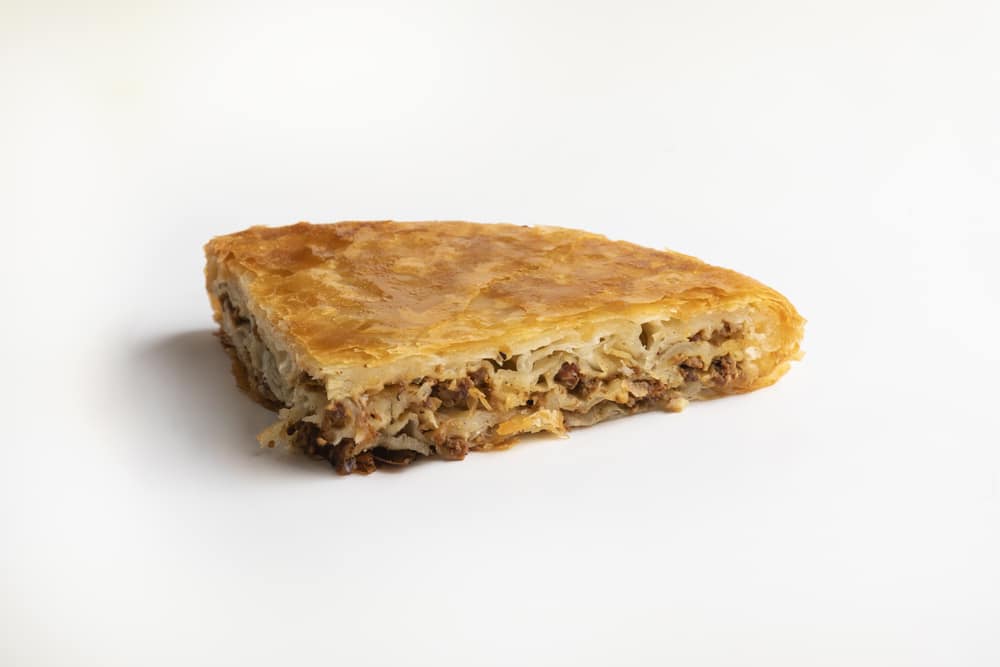
For generations, the culinary identity of Split, Croatia, has been defined not by the slow-cooked perfection of pašticada or the fresh catch of grilled Adriatic fish served in the stone taverns of Varoš, but by the hurried, unpretentious sustenance consumed on street corners in the dead of night. This is the realm of the 3 a.m. burek picked up from an all-night bakery near the Pazar Green Market, the paper bag of warm chocolate-filled krafne purchased at 10 p.m., the foot-long toasted sandwich customized with a dozen toppings on the sidewalk, and the grilled ćevapi ordered from walk-up windows that have operated in residential neighborhoods for decades.
Yet, this deeply ingrained facet of daily urban life in Croatia’s second-largest city is facing a quiet, structural transformation. Driven by shifting consumer habits, the proliferation of global fast-food franchises, the rise of food delivery applications, and the gentrification of urban eating spaces, the traditional neighborhood fast-food joint and midnight bakery are slowly disappearing. While tourists crowd the restaurant terraces tucked inside Diocletian’s Palace and along the Riva promenade, locals are witnessing the gradual erosion of the culinary infrastructure that has long sustained students, shift workers, beachgoers, and nocturnal revelers.

The Anatomy of Split’s Street-Food Culture
To understand Split’s informal food culture, one must first recognize that it defies standard international categorization. It does not fit the corporate mold of American fast-food chains like McDonald’s, Burger King, or KFC, nor does it mirror the mobile food truck and cart culture seen in many Western capitals. Instead, it exists in two distinct formats: the pekara (bakery) and the neighborhood fast food shop.
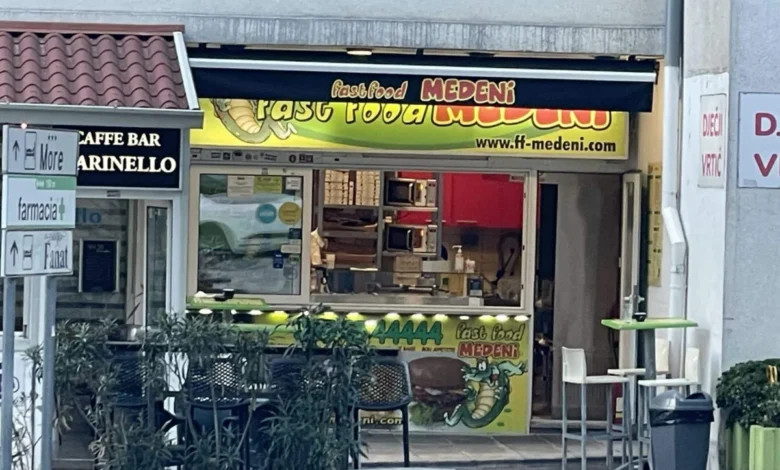
A typical pekara features a glass-fronted counter displaying trays of sweet and savory baked goods, operated with swift efficiency by counter staff facing a steady queue. Meanwhile, a local fast-food establishment is often an architectural micro-unit—sometimes no larger than three by two meters—consisting of little more than an ordering window, a high-heat grill, a industrial toaster, and occasionally a pizza oven. Tucked deep into residential concrete neighborhoods like Split 3 rather than being confined to the tourist-heavy historic center, these micro-shops serve as vital community anchors.
The menu items are standardized yet infinitely customizable. The topli sendviči (toasted sandwiches) start with a base of a bread roll, ham, and melted cheese, which is pressed until hot before the customer dictates a barrage of cold toppings: mayonnaise, ketchup, lettuce, sweet corn, pickled cucumbers, tomatoes, hard-boiled egg slices, and onions. Similarly, piletina u tijestu—grilled chicken pieces wrapped tightly in pizza dough and baked—offers a heavy, portable meal designed to sustain laborers and students between rigorous commitments.

A Chronology of Resilience and Neighborhood Legacy
Despite the pressures of the modern economy, several of Split’s street-food institutions have achieved legendary status through sheer longevity, embedding themselves so deeply into the city’s cultural fabric that they are routinely referenced in local contemporary music and literature.
The timeline of these establishments charts the post-World War II and late-20th-century urbanization of Split:
- 1967: Kantun Paulina opens its doors, establishing a steadfast tradition of serving authentic, hand-grilled ćevapi in flatbread (somun or lepinja) to patrons eating entirely while standing on the street. Nearly six decades later, it remains a pillar of late-night urban life.
- 1989: Popaj, a family-run fast-food operation, launches its first location in Split. Expanding to multiple sites over the decades, Popaj has become such a permanent fixture of local consciousness that it is explicitly referenced in lyrics by regional hip-hop acts like Dječaci and pop artists like Domenica.
- 2001: Fast Food Medeni opens its doors, eventually expanding its footprint to four locations distributed across Split and the neighboring town of Kaštela, proving that neighborhood-scale fast food could successfully scale without losing its local character.
These businesses survived the collapse of Yugoslavia, the economic turbulence of the Croatian War of Independence in the 1990s, and shifting municipal regulations. However, the pressures of the post-COVID-19 economic landscape present an entirely unprecedented challenge.
The Shift Toward Convenience, Delivery, and Franchises
Urban sociologists and local culinary historians note that the threat to Split’s street-food culture is not a decrease in appetite, but a fundamental change in how food is accessed and consumed.
In recent years, major international fast-food conglomerates have aggressively expanded their presence in the Dalmatian region, frequently opening outlets inside suburban shopping malls that offer air-conditioned seating, predictable standardized menus, and expansive free parking. Consumers increasingly bypass neighborhood walk-up windows to drive to distant franchise locations for the sake of comfort and convenience.
Simultaneously, the widespread adoption of third-party delivery platforms such as Wolt and Glovo—accelerated by the COVID-19 pandemic—has altered the geography of hunger. While delivery services allow patrons to order a late-night burek or a toasted sandwich directly to their apartments, they undermine the social ecosystem of the street corner. The traditional midnight queue outside a bakery is not merely a transaction; it is a shared civic ritual where taxi drivers, police officers, and returning clubgoers briefly occupy the same physical space in silence or quiet camaraderie.

When physical foot traffic declines due to app-based isolation, small businesses face compressed operating hours, reduced staffing, and, eventually, permanent closure.
The Gentrification of Traditional Dishes
Compounding the loss of informal street-food venues is the parallel phenomenon of culinary gentrification. Items that were historically consumed cheaply and on the move are increasingly being elevated into high-end restaurant environments at inflated prices.
Ćevapi, the quintessential Balkan minced-meat delicacy, provides a prime example. Traditionally ordered in portions of five or ten pieces wrapped in flatbread with raw onions and ajvar (red pepper relish) to be eaten standing up, the dish is undergoing a significant market repositioning. Numerous newly opened dining establishments across Split and its periphery now serve ćevapi exclusively at sit-down tables with plated presentations, accompanied by craft beverages and premium pricing. While the recipe remains identical, the economic barrier to entry rises, transforming a working-class staple into a curated dining experience for tourists and affluent locals.

Broader Economic and Cultural Implications
The potential disappearance of Split’s independent fast-food shops and all-night bakeries carries broader implications for urban authenticity. City planners and cultural heritage experts frequently warn that tourist-heavy historic centers risk becoming "open-air museums" devoid of genuine local life. When residential neighborhoods lose their micro-economies—the corner bakeries, the family-run grill shacks, and the neon-lit ordering windows—they lose the sensory and social markers that differentiate a living city from a resort destination.
While Split’s iconic late-night spots remain open for now, serving thousands of meals daily, the macro-economic trend favors homogenization. Every consumer choice redirected toward a corporate drive-thru or an isolated smartphone delivery order represents a incremental vote against the chaotic, vibrant street culture that defined urban growing pains for generations of Dalmatians.
If these unassuming institutions vanish, Split will not starve, but it will lose an irreplaceable layer of its modern heritage—the spontaneous, grease-stained, midnight community of the sidewalk.
Related posts: