Curacao: A Comprehensive Guide to the Southern Caribbean’s Premier Cultural and Coastal Destination

The island of Curaçao, a constituent country of the Kingdom of the Netherlands, has emerged as a focal point for tourism in the Southern Caribbean. Situated roughly 40 miles north of the Venezuelan coast, this 171-square-mile territory provides a distinct blend of European colonial history and tropical biodiversity. As travelers increasingly seek destinations that balance environmental preservation with cultural immersion, Curaçao has positioned itself as a sophisticated alternative to more commercialized Caribbean hubs. This report examines the island’s infrastructure, its strategic tourism initiatives, and the logistical realities of navigating one of the region’s most dynamic landscapes.
Historical Context and Urban Development
Curaçao’s capital, Willemstad, is a UNESCO World Heritage site, recognized for its historic harbor and unique architectural profile. The city’s core—comprising the districts of Punda, Otrobanda, Scharloo, and Pietermaai—represents a timeline of 17th and 18th-century Dutch colonial planning. The vibrant, multi-colored facades of the waterfront buildings are not merely aesthetic; they are historically attributed to an 1817 decree by Governor-General Albert Kikkert, who reportedly mandated that buildings be painted colors other than white to alleviate the glare of the tropical sun.
In recent years, local tourism authorities have promoted low-impact urban exploration to preserve the structural integrity of these historic zones. The integration of cycling initiatives, such as those facilitated through local hospitality hubs like Van Gogh Specialty Coffee, allows visitors to navigate the narrow, high-density streets of the historic districts without the congestion associated with motor vehicles. This shift toward sustainable urban mobility is part of a broader island-wide effort to reduce the carbon footprint of tourism in delicate coastal environments.
The Geography of Curaçao’s Coastal Assets
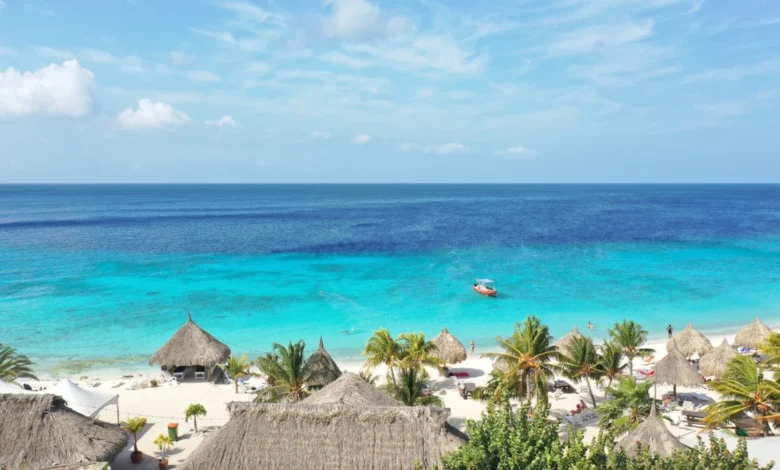
The island’s topography is characterized by a stark contrast between its arid, cactus-strewn interior and its limestone-fringed coast. Geologically, the island’s northern side is rugged and battered by Atlantic currents, while the southern leeward coast offers sheltered, calm waters.
Data from the Curaçao Tourist Board indicates that the concentration of leisure activity remains highest on the southern coast. Among the primary sites, Mambo Beach and Jan Thiel have undergone significant commercial development, offering comprehensive amenities such as restaurants, beach clubs, and water sports centers. These areas cater to a high-volume demographic, serving as the primary engines for the island’s service-based economy.
However, the western region of the island, known as Bandabou, hosts the most ecologically significant coastal areas. Sites such as Kenepa Beach (Knip Beach) and Grote Knip are protected under local zoning regulations that limit intensive commercial construction. These beaches, characterized by soft, white coral sand and dramatic limestone cliff formations, represent a critical component of the island’s "natural capital." Playa Porto Mari, another vital location on the west coast, is noted by marine biologists for its double reef system. This formation is a subject of ongoing conservation research, as it provides a resilient habitat for various coral species in the face of warming ocean temperatures.
Ecological Stewardship and Marine Conservation
The management of marine environments remains a top priority for the Curaçao government. The Curaçao Underwater Marine Park, which encompasses much of the southern coastline, serves as a regulatory framework for diving and snorkeling activities. Research conducted by local marine institutes suggests that the double reef at Playa Porto Mari acts as a nursery for juvenile fish populations, which are essential for maintaining the ecological balance of the broader Caribbean basin.
For tourists, this translates into a highly regulated set of activities. Visitors are encouraged to utilize established entry points and adhere to guidelines regarding the non-disturbance of coral structures. The implications for the local economy are significant; by maintaining the health of these reefs, Curaçao ensures the longevity of its primary tourism draw, avoiding the degradation seen in other Caribbean nations that prioritized rapid, unregulated expansion.
Logistics and Infrastructure: The Case of Klein Curaçao
Located approximately 15 miles off the southeastern tip of the main island, the uninhabited islet of Klein (Little) Curaçao represents a unique case study in remote destination management. Measuring roughly 1.7 square kilometers, the islet is a protected nature reserve. Historically, it served as a quarantine station and a base for guano mining, the remnants of which—including an abandoned lighthouse—are now significant cultural landmarks.
Access to Klein Curaçao is strictly managed through a limited number of licensed maritime charter companies. By restricting the number of operators with permanent infrastructure on the island to just two primary entities—Mermaid Boat Trips and Miss Ann Boat Trips—the government maintains control over waste management and environmental impact. This policy serves as a model for "managed tourism," ensuring that the delicate ecosystem of the islet is not overwhelmed by the surge of daily visitors. Reports from the Curaçao Ministry of Economic Development indicate that this structured approach has successfully preserved the island’s biodiversity while sustaining a lucrative niche for the local maritime sector.
Economic Impact and Tourism Trends
The tourism sector accounts for a substantial percentage of Curaçao’s Gross Domestic Product (GDP). Following the global economic contraction caused by the COVID-19 pandemic, the island’s tourism industry has seen a robust recovery, driven largely by increased flight connectivity from North American and European hubs.
The shift in tourist behavior toward "slow travel"—longer stays, lower environmental impact, and deeper local engagement—has influenced the development of new hospitality models. The emphasis on bicycle-friendly city tours and the protection of remote beaches reflect a strategic pivot away from mass-market tourism. Analysts from the Caribbean Tourism Organization (CTO) suggest that Curaçao’s focus on its unique cultural heritage—specifically its Papiamentu language, Afro-Caribbean culinary traditions, and Dutch colonial architecture—provides a competitive advantage in a region often saturated with homogenized resort experiences.
Challenges and Future Implications
Despite its successes, the island faces persistent challenges. Climate change remains the most significant threat, with rising sea levels and ocean acidification posing risks to the very reefs that drive the tourism industry. Furthermore, the reliance on tourism necessitates a delicate balancing act between economic growth and the preservation of the island’s social fabric.
Local community leaders and urban planners have recently initiated discussions regarding the "carrying capacity" of Willemstad’s historic districts. As pedestrian and cycling traffic increases, the infrastructure must be adapted to ensure that the influx of visitors does not impede the quality of life for local residents. The consensus among policymakers is that future development must be decentralized, encouraging visitors to explore the lesser-known eastern and western reaches of the island to mitigate the pressure on the capital’s central infrastructure.
In conclusion, Curaçao offers a distinctive model for Caribbean tourism. By leveraging its unique geology, historical depth, and a commitment to managed environmental stewardship, the island has solidified its status as a premier destination. For the discerning traveler, the experience in Curaçao is defined by the intersection of these factors: the ability to cycle through a living museum in Willemstad in the morning and snorkel over a pristine, protected reef in the afternoon. As the island continues to refine its tourism strategy, the focus remains on sustaining these assets for both the economic benefit of its citizens and the long-term preservation of its environmental legacy. The data-driven approach to destination management, combined with a clear appreciation for its own cultural narrative, ensures that Curaçao remains an essential waypoint for those traversing the Southern Caribbean.
Related posts: