The Best Sedona Hikes with Kids: A Comprehensive Guide to Family-Friendly Trails in the Red Rock Country

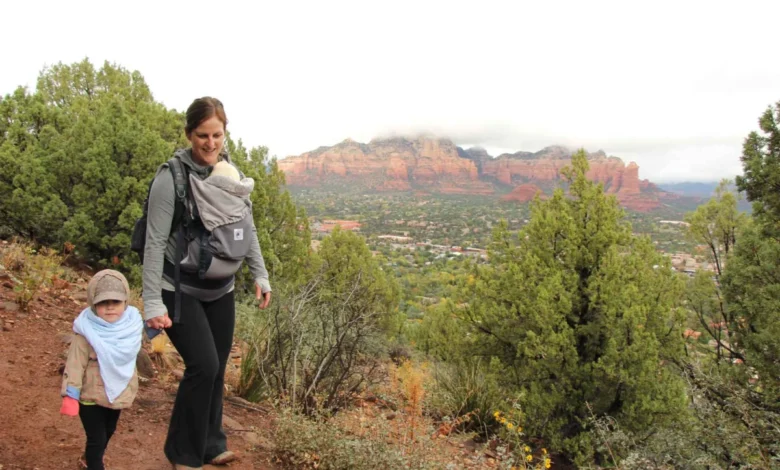
Sedona, Arizona, has established itself as a premier destination for families seeking an immersive outdoor experience within the Coconino National Forest. Renowned for its towering sandstone formations and vibrant crimson landscapes, the region offers a diverse array of hiking trails specifically suited for those traveling with infants, toddlers, and young children. While the city’s reputation often centers on its spiritual "vortexes" and luxury resorts, the accessibility of its natural terrain remains the primary draw for domestic and international tourists. According to data from the Sedona Chamber of Commerce and Tourism Bureau, the area attracts approximately 3 million visitors annually, a significant portion of whom are families prioritizing nature-based recreation.

The geological history of Sedona provides the backdrop for these excursions. The iconic red rocks are composed primarily of the Schnebly Hill Formation, a thick layer of red-orange sandstone deposited during the Permian period. This unique terrain, characterized by flat mesas and deep canyons, allows for a variety of trail gradients. For parents, this means the ability to select routes that are manageable for those using strollers or baby carriers without sacrificing the dramatic vistas typically associated with more strenuous backcountry treks.

Logistical Framework and Regional Access
Navigating Sedona’s trail system requires an understanding of the regional permitting and transportation infrastructure. Most trailheads within the Coconino National Forest require a Red Rock Pass for parking. As of recent park service updates, daily passes are priced at $5, with weekly options available for $15. Additionally, the city of Sedona has implemented the Sedona Shuttle—a free transit service operating Thursday through Sunday—to mitigate traffic congestion at high-demand trailheads such as Cathedral Rock and Devil’s Bridge.

Safety remains a paramount concern for officials and visitors alike. The Arizona Department of Health Services frequently issues advisories regarding heat-related illnesses, noting that temperatures in the red rock canyons can often exceed those in the town center due to heat radiation from the sandstone. Successful family hiking in this environment is predicated on early departures, rigorous hydration, and an understanding of trail-specific conditions.

Top-Tier Family Hikes: Accessibility and Features
1. Bell Rock Pathway Trail
The Bell Rock Pathway serves as a primary example of a high-reward, low-effort trail. Stretching approximately 3.6 miles in its entirety, the most popular segment for families is a 1-mile out-and-back portion starting from the southern trailhead.

- Terrain and Accessibility: The path is largely composed of crushed red shale and gravel. It is considered one of the few "stroller-friendly" options in the region, provided the equipment is a jogging stroller with large, all-terrain wheels.
- Visual Landmarks: Hikers are treated to unobstructed views of Bell Rock and Courthouse Butte. The minimal elevation gain ensures that toddlers can walk portions of the trail independently.
- Parental Consideration: The trail offers very little shade. Mid-day excursions during the summer months are discouraged by local guides due to the high sun exposure.
2. West Fork Trail
Often cited as one of the most scenic trails in the United States, the West Fork of Oak Creek offers a distinct environment compared to the arid mesas of southern Sedona. This trail meanders through a lush riparian canyon, providing cooler temperatures and significant tree cover.

- Terrain and Accessibility: This is not a stroller-accessible trail. It requires thirteen distinct creek crossings using stepping stones. A baby carrier is essential for those with non-ambulatory children.
- Environmental Context: The trail features 1,000-foot canyon walls and a diverse array of flora, including Gambel oaks and ponderosa pines.
- Logistics: Parking at the Call of the Canyon day-use area is limited and often fills by 8:00 AM. There is a $12 vehicle entry fee, which is separate from the standard Red Rock Pass.
3. Baldwin Trail
Located near the Village of Oak Creek, the Baldwin Trail provides a 2.7-mile loop that is frequently utilized by families seeking a sunset vantage point of Cathedral Rock.

- Trail Characteristics: The path is rocky and uneven, featuring natural stone steps that necessitate the use of a baby carrier.
- Added Value: The trail offers access to the banks of Oak Creek, allowing families to stop for water-based recreation, which is a significant draw during the warmer months.
4. Fay Canyon Trail
For families looking to experience the intimacy of a box canyon without the crowds of West Fork, Fay Canyon is the recommended alternative. Located in the northwestern quadrant of the Sedona area, this 2.2-mile round-trip hike is categorized as easy to moderate.
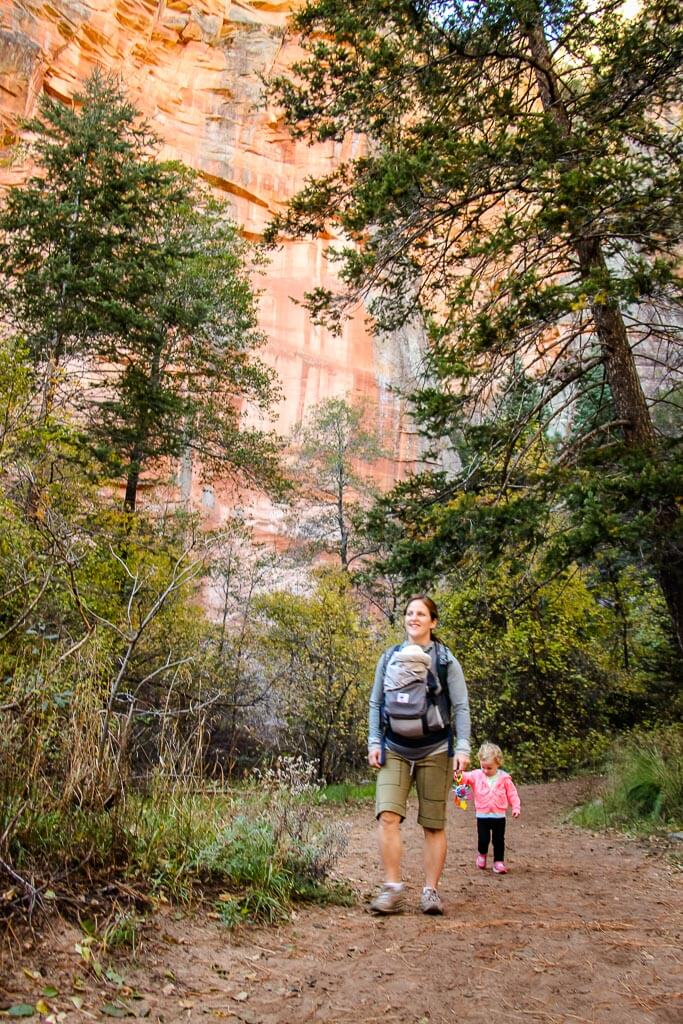
- Key Features: The trail leads to a natural stone arch, though the path to the arch itself is an unmarked, steep side-trail that may be difficult for very young children. The main trail remains flat and well-shaded by canyon walls and thick forest.
- Infrastructure: The trailhead includes a paved parking lot and vault toilets, making it a convenient "quick" hike for families with tight schedules.
5. Huckaby Trail
The Huckaby Trail offers a moderate challenge with significant elevation changes that provide panoramic views of the Sedona skyline and the surrounding peaks.

- Logistics: The trail is 2.6 miles one-way, but families often opt for a shorter out-and-back segment. It is too rugged for strollers and requires a high-quality hiking carrier for infants.
- Atmosphere: The trail provides a mix of open-ridge walking and shaded segments near the creek, offering a balanced desert hiking experience.
6. Sedona Airport View Trail
Situated on Airport Mesa, this trail is perhaps the most accessible for those staying within the city limits. It begins near the airport parking lot and offers immediate views of the town and the northern "Mogollon Rim."

- Terrain: The path is narrow and bordered by cacti, requiring parents to keep a close watch on wandering toddlers. While short, the rocky nature of the path favors carriers over strollers.
Advanced Option: Devil’s Bridge Trail
Devil’s Bridge is the largest natural sandstone arch in the Sedona area and is a high-priority destination for many travelers. However, from a journalistic and safety perspective, it is important to note that this trail is significantly more demanding than the aforementioned routes.

The hike involves a steep natural staircase near the summit. While manageable for families with older children or parents accustomed to carrying weight on inclines, it requires a higher level of fitness and caution. The "bridge" itself is a narrow ledge with significant drops on either side; while wide enough for safety, it may be nerve-wracking for parents of active children.

Chronology of Sedona’s Outdoor Development
The rise of Sedona as a family hiking hub is a relatively recent phenomenon in the context of Arizona’s history. In the early 20th century, the area was primarily used for ranching and as a backdrop for Hollywood Westerns. It wasn’t until the 1980s and 90s that the United States Forest Service (USFS) began formalizing the trail system to accommodate the growing interest in eco-tourism.

In 2022 and 2023, the USFS and the City of Sedona launched the "Sedona Sustainable Tourism Plan" in response to the environmental impact of increased foot traffic. This plan has led to improved trail markings, the aforementioned shuttle system, and a renewed focus on "Leave No Trace" education. For families, this development means that trails are now better maintained and more clearly signed than they were a decade ago.

Environmental Stewardship and Implications
The continued popularity of these trails has broader implications for the region’s ecology. The Coconino National Forest is home to several sensitive species, and the "social trails" (unauthorized paths created by hikers) can lead to soil erosion and the destruction of cryptobiotic soil crusts—a vital living soil component that prevents desert erosion.

Officials from the National Forest Service have frequently stated that the cooperation of visiting families is essential for the preservation of the red rock country. Statements from local park rangers emphasize that staying on marked trails and properly disposing of waste are not merely suggestions but requirements for maintaining the area’s beauty.

Conclusion: The Strategic Value of Family Hiking
From a socio-economic perspective, the emphasis on family-friendly hiking in Sedona serves as a stabilizing force for the local economy. By catering to a demographic that values multi-generational travel, Sedona ensures a consistent stream of tourism revenue that is less volatile than the luxury or niche spiritual markets.

For the families themselves, these excursions offer a tangible connection to the natural world. The manageable distances and dramatic scenery of trails like Bell Rock and West Fork provide an entry point for children to develop a lifelong interest in conservation and outdoor recreation. As long as the infrastructure continues to evolve to meet the needs of both the environment and the visitors, Sedona will likely remain a hallmark of American family travel.