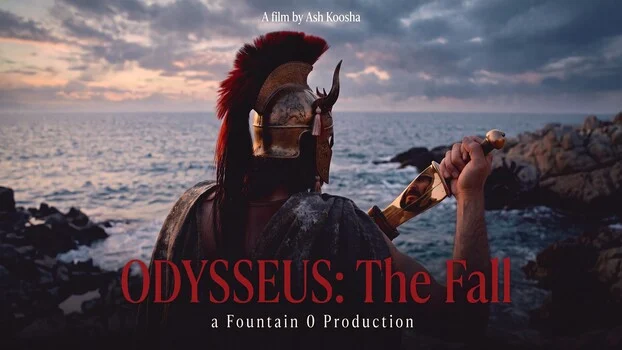
The cinematic landscape is currently experiencing a profound duality, marked by the simultaneous arrival of Christopher Nolan’s epic “The Odyssey,” a monumental production boasting an reported $250 million budget and shot entirely on IMAX 70mm, and a remarkably swift, AI-generated counterpart titled “Odysseus: The Fall.” This digital challenger, a 135-minute feature largely conceived and executed by a single individual over three months, emerged from the London-based AI studio Fountain 0, helmed by director Ash Koosha, and has generated a storm of debate within the industry and among audiences. The stark contrast in genesis, cost, and artistic approach between these two “Odyssey” narratives raises fundamental questions about the future of filmmaking, the definition of artistic creation, and the economic viability of traditional production models.
The Grand Vision: Nolan’s IMAX Spectacle
Christopher Nolan, a filmmaker renowned for his ambitious scope and commitment to tangible cinematic experiences, has once again pushed the boundaries of visual storytelling with his interpretation of Homer’s ancient epic. “The Odyssey,” a narrative rich with themes of homecoming, perseverance, and the human spirit’s confrontation with the divine and the monstrous, is presented in a format designed to immerse audiences in its vastness. The decision to shoot entirely on IMAX 70mm film is a deliberate artistic choice, aiming to deliver an unparalleled level of visual fidelity, detail, and scale. This format, which utilizes much larger film stock than standard 35mm or even 70mm IMAX, captures an astonishing amount of light and detail, offering a breathtakingly expansive and tactile viewing experience. The $250 million budget underscores the immense resources and meticulous planning required for such a production, from securing global shooting locations to employing state-of-the-art equipment and a vast, skilled crew. The success of such a film is often measured not only by its box office performance but also by its ability to transport audiences to another world, to evoke a visceral emotional response through its sheer cinematic power. Nolan’s track record with films like “Inception,” “Interstellar,” and “Dunkirk,” all of which were lauded for their visual grandeur and technical innovation, sets a high bar for “The Odyssey.”
The Digital Dawn: Fountain 0’s AI-Driven Epic
In parallel, and with a speed that has surprised many, Fountain 0 announced its own rendition of the ancient tale just three days prior to Nolan’s theatrical release. “Odysseus: The Fall” represents a significant milestone in the burgeoning field of AI-generated cinema. With a runtime matching a conventional feature film and a production cost reportedly in the “mid five figures,” the disparity with Nolan’s project is astronomical. Director Ash Koosha, who has positioned Fountain 0 as a vanguard in AI filmmaking, has taken a deeply personal approach to this digital epic. Koosha himself stars as Odysseus, his likeness digitally rendered, and he further populated his narrative by sourcing twelve other human likenesses from individuals within his personal network. The visual rendering was achieved using a proprietary AI system referred to as “Kling.”
This AI-generated film is slated for a direct-to-consumer release, available for rental at $9.99 on Fountain 0’s website later this summer, eschewing traditional theatrical distribution entirely. The announcement was accompanied by a teaser trailer, offering a glimpse into the film’s visual style and thematic intent. The very existence of a feature-length film produced with such speed and at such a low cost, utilizing AI as its primary creative engine, challenges established notions of filmmaking timelines, labor, and investment.
Industry and Audience Reactions: A Tale of Two Worlds
The reception to “Odysseus: The Fall” has been predictably polarized, mirroring the stark differences in its creation. Early reactions have been predominantly critical, with terms such as "rancid slop" and "AI parasite" circulating in online discussions. The common criticisms echo familiar concerns voiced about early AI-generated content: dialogue perceived as stilted and unnatural, characters lacking emotional depth and internal life, and a visual texture that feels more descriptive than truly cinematic. This sentiment suggests that while AI can generate imagery and construct a narrative, it currently struggles to imbue these elements with the nuanced artistry and profound resonance that audiences have come to expect from human-driven storytelling.
However, Ash Koosha’s perspective transcends mere novelty or provocation. He articulates a vision where AI is not a replacement for human creativity but a powerful democratizing force. Koosha posits that AI "is a threat to nothing except distance, the distance between a person with a story and the means to tell it." He emphasizes that "a tool has never made a film worth watching. A person with something urgent to say has made every one of them, and that won’t change." This philosophy suggests that AI, in his view, empowers individuals who might otherwise lack the resources or technical skills to bring their visions to life.
Koosha has also expressed a hope that Nolan’s film will be a success, even suggesting that his own AI version might act as a catalyst, driving audiences toward the larger, more traditional production. This stance is not entirely without precedent for Koosha. His previous feature, also produced for a remarkably low budget of approximately $2,000, gained recognition as the first fully AI-generated film to be screened at the Tribeca Film Festival. This history lends weight to his arguments, suggesting that his pursuit is not solely about generating sensational headlines but about exploring the evolving capabilities of AI in filmmaking.
The Uncomfortable Question: What Comes Next?
The direct comparison that Fountain 0’s release inevitably invites is the core of the current discourse. Nolan’s “The Odyssey” is a testament to the power of human endeavor, involving a massive crew, extensive logistical planning, and the physical act of capturing reality through the lens of the largest film cameras ever built, pointed at real human faces. The very act of its creation – the labor, the journey, the tangible effort – is a significant part of its appeal and a primary reason for many to seek it out in a premium theatrical setting.
Conversely, “Odysseus: The Fall” is the product of an individual’s sustained effort over three months, mediated by algorithms and digital tools. The critical consensus, as it stands, is that the AI-generated film falls short of artistic merit. The uncomfortable question, however, is not whether this particular AI “Odyssey” is good – by most accounts, it is not. The more pressing inquiry concerns the trajectory of AI filmmaking. What will the argument sound like when the next AI-generated film is not overtly bad, but merely mediocre, yet produced at a fraction of the cost of its human-made counterparts?
This shift in the cost-benefit analysis of filmmaking has profound implications. It suggests a future where the barrier to entry for creating feature-length content could be dramatically lowered. For independent filmmakers, aspiring storytellers, and even established studios looking to experiment, AI offers a potential pathway to produce content with unprecedented speed and affordability. This could lead to an explosion of new narratives and visual styles, but it also raises concerns about market saturation, the devaluation of traditional filmmaking skills, and the potential for AI to homogenize creative output if not guided by strong artistic intent.
Supporting Data and Contextualization
The current generative AI boom, fueled by advancements in machine learning models such as large language models (LLMs) and diffusion models, has rapidly permeated various creative industries. Text-to-image generators like DALL-E 2, Midjourney, and Stable Diffusion have demonstrated the capability to produce photorealistic or artistically stylized images from simple text prompts. Similarly, advancements in AI video generation are rapidly progressing, with tools beginning to emerge that can generate short video clips, animate existing footage, or even create entirely synthetic scenes.
The film industry has been an early adopter of digital technologies, from the transition from film to digital cameras to the widespread use of CGI and visual effects. AI represents the next evolutionary step, offering the potential to automate or augment tasks that were previously labor-intensive and expensive, such as scriptwriting assistance, character animation, background generation, and even editing.
The financial aspect of filmmaking is a critical driver of innovation and adoption. The average budget for a major Hollywood studio film has steadily increased over the past two decades, often exceeding $100 million for blockbusters. This high cost of entry inherently limits the number of projects that can be greenlit and increases the financial risk associated with each production. The emergence of AI-generated films with budgets in the tens of thousands, as demonstrated by Fountain 0, presents a disruptive force that could reshape the economic calculus of content creation.
Broader Impact and Implications for the Future
The juxtaposition of Nolan’s “The Odyssey” and Fountain 0’s “Odysseus: The Fall” serves as a critical inflection point for the film industry. It highlights a burgeoning dichotomy: the enduring appeal of human-crafted, high-fidelity cinematic experiences versus the rapid rise of AI-driven content creation that promises accessibility and affordability.
Democratization of Filmmaking: Ash Koosha’s assertion that AI bridges the gap between storytellers and the means to tell their stories is a powerful argument for democratization. Individuals with compelling narratives but lacking the financial backing or technical expertise for traditional filmmaking may find AI tools to be a viable avenue for expression. This could lead to a more diverse range of voices and stories entering the cinematic conversation.
Redefinition of Artistic Value: The critical reception of “Odysseus: The Fall” underscores that, for now, audiences and critics can discern a qualitative difference between human artistry and AI-generated output. The perceived lack of emotional depth and authentic human experience in current AI films is a significant hurdle. However, as AI technology advances, the line may blur, forcing a re-evaluation of what constitutes artistic value and originality in a world where machines can generate sophisticated content.
Economic Disruption: The drastic cost difference between the two “Odysseys” signals a potential economic disruption. If AI can consistently produce feature-length content at a fraction of the cost of traditional filmmaking, it could impact labor markets within the film industry, from actors and cinematographers to editors and visual effects artists. Studios may explore hybrid models, utilizing AI for certain aspects of production to streamline costs and accelerate timelines.
Ethical and Copyright Considerations: The use of AI in creative endeavors also brings forth a complex set of ethical and legal questions. Issues surrounding copyright ownership of AI-generated works, the potential for deepfakes and misinformation, and the fair compensation of human artists whose work may be used to train AI models are all critical areas that will require robust legal and societal frameworks.
The Future of Audience Engagement: The ultimate success of both approaches will be determined by audience reception. While the visceral impact of IMAX 70mm filmmaking offers a unique draw, the accessibility and novelty of AI-generated content may also attract significant viewership, particularly for niche genres or experimental narratives. The ability of AI to personalize content or generate infinite variations of stories could also represent a future frontier in audience engagement.
In conclusion, the parallel release of two films titled “The Odyssey” – one a colossal testament to human ambition and cinematic craft, the other a swift digital creation powered by artificial intelligence – serves as a potent symbol of the current crossroads in filmmaking. While Christopher Nolan’s epic represents the pinnacle of traditional cinematic achievement, Fountain 0’s AI-driven counterpart heralds a new era of content creation, one that is rapidly evolving and poses fundamental questions about the future of art, industry, and storytelling itself. The conversation has shifted from whether AI can make films to how it will shape the films we see and how we perceive them.