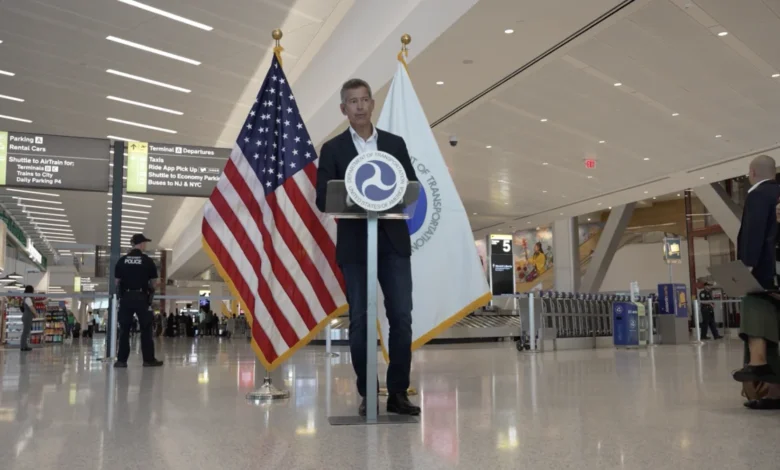
Transportation Secretary Sean Duffy on Saturday appeared to dismiss the immediate necessity for government bailouts for other budget carriers, hours after Spirit Airlines confirmed it would begin winding down operations. Speaking to reporters at Newark Liberty International Airport, Secretary Duffy emphasized that while the U.S. government could, in extraordinary circumstances, act as a "lender of last resort," budget airlines should primarily seek financial solutions from private markets. His comments came amidst growing concerns across the aviation industry following Spirit’s sudden announcement, which sent ripples through the sector and left thousands of employees and passengers facing uncertainty.
The abrupt decision by Spirit Airlines, a prominent player in the ultra-low-cost carrier (ULCC) segment, to initiate liquidation proceedings, highlighted the precarious financial position of many budget airlines. Spirit, known for its no-frills approach and highly competitive fares, had been grappling with a confluence of adverse factors, including persistently high fuel costs, intense price competition, and significant debt burdens exacerbated by an aggressive expansion strategy that outpaced its operational capabilities. The airline’s board reportedly concluded late Friday that continued operations were no longer viable, making it the largest U.S. airline to cease operations since Trans World Airlines (TWA) in 2001.
The Genesis of a Crisis: Spirit Airlines’ Downfall
Spirit Airlines, which commenced operations as a charter service in 1983 and transitioned to scheduled passenger service in the early 1990s, had cultivated a niche by offering extremely low base fares, offset by charges for nearly all ancillary services, including baggage, seat selection, and even printing boarding passes. This model, while popular with price-sensitive travelers, also left the airline highly vulnerable to external economic shocks and operational inefficiencies.
For the past several quarters, Spirit had been reporting significant losses, struggling to pass on rising operational costs, particularly jet fuel, to its passengers without eroding its core competitive advantage: low fares. Analysts had pointed to a combination of factors leading to its terminal decline. Firstly, the post-pandemic travel rebound saw a surge in demand, but also a significant increase in fuel prices, which for ULCCs can constitute up to 40% of their operating expenses, compared to 25-30% for full-service carriers. Secondly, an aggressive capacity expansion, including numerous new routes and aircraft deliveries, placed immense strain on its operational infrastructure, leading to frequent delays and cancellations that damaged its brand reputation and increased compensation costs. Lastly, the highly competitive domestic market, with other ULCCs like Frontier and Allegiant, alongside mainline carriers expanding into leisure markets, meant Spirit faced unrelenting pressure on its pricing power. Despite efforts to restructure debt and optimize routes, the airline’s liquidity position deteriorated rapidly, leading to the ultimate decision to liquidate.
Industry’s Plea for Intervention: The AVA’s $2.5 Billion Proposal
The struggles of Spirit Airlines were not isolated. The broader budget airline sector, represented by the industry trade group, the Association of Value Airlines (AVA), had been actively lobbying the government for financial assistance for months. In April, the AVA formally pitched the Trump administration for a $2.5 billion bailout package specifically earmarked to offset rising fuel costs. The proposal outlined a mechanism where funds would be distributed to qualifying budget carriers to stabilize their operations and prevent widespread job losses and service disruptions.
The AVA argued that a healthy, competitive budget airline sector was crucial for the overall health of the U.S. economy, providing affordable travel options for millions of Americans and driving regional economic activity. They pointed to the precedent of government intervention during previous crises, such as the substantial aid provided to airlines after the September 11th attacks and the comprehensive support extended during the COVID-19 pandemic under the CARES Act. These past interventions, they contended, were vital in preserving the industry and its workforce. The $2.5 billion figure was reportedly calculated based on projected fuel cost increases and the collective operational scale of AVA member airlines, designed to provide a critical buffer against market volatility without directly subsidizing operational inefficiencies.
Secretary Duffy’s Stance: Prioritizing Private Market Solutions
Secretary Duffy’s comments at Newark Airport on Saturday firmly pushed back against the immediate need for such a broad government bailout. "I would say that at this point I don’t think it’s necessary," Duffy stated. "They do have access to cash if they want to come to the U.S. government, we would be a lender of last resort. If they can find dollars in the private markets, I think that’s better for them."
This position reflects a broader economic philosophy prioritizing market-driven solutions and limiting government intervention to situations of systemic failure or national emergency. By labeling the government a "lender of last resort," Duffy indicated that any federal assistance would come with stringent conditions, likely at above-market interest rates, and only after all private financing avenues had been exhausted. This approach stands in contrast to the more expansive bailout programs seen during the pandemic, which were designed to prevent wholesale collapse of industries and mass unemployment during an unprecedented global crisis. The administration’s current view appears to differentiate between a sector-wide existential threat and the specific financial difficulties of individual companies or sub-sectors, even if those difficulties are shared by several players.
Reactions Across the Industry and Beyond
The Secretary’s remarks, coupled with Spirit’s liquidation, triggered a cascade of reactions from various stakeholders:
- Association of Value Airlines (AVA): A spokesperson for the AVA, speaking anonymously due to the sensitivity of ongoing discussions, expressed "deep disappointment" with Secretary Duffy’s stance. "While we understand the administration’s preference for private market solutions, the unique pressures facing budget carriers, particularly the unprecedented surge in fuel costs, warrant a different approach," the spokesperson said. "The loss of Spirit Airlines is a direct consequence of these pressures, and without a lifeline, other carriers face similar fates, leading to reduced competition and higher fares for consumers." The AVA indicated it would continue to advocate for targeted support.
- Other Budget Carriers: Public statements from other ULCCs like Frontier Airlines and Allegiant Air emphasized their strong financial positions and operational resilience. However, behind closed doors, industry executives reportedly harbored concerns about the precedent set by Spirit’s demise and the government’s apparent unwillingness to intervene. "It sends a clear message that you’re on your own," commented a CEO of a regional budget carrier, who requested anonymity. "While we are confident in our model, the market is unforgiving, and a little stability would go a long way in preserving jobs and consumer choice."
- Financial Analysts: Wall Street analysts largely viewed Duffy’s comments as a signal of fiscal conservatism, which could be positive for the broader market by reducing moral hazard. However, they also noted the potential for increased consolidation within the airline industry. "Spirit’s exit clears some capacity, which might benefit remaining carriers in the short term, but it reduces overall competition," stated Sarah Chen, a senior aviation analyst at Global Insights Group. "Investors will be watching closely to see if other budget airlines can strengthen their balance sheets or if further shake-ups are on the horizon."
- Labor Unions: Unions representing Spirit Airlines employees, including pilots, flight attendants, and ground staff, expressed outrage and despair. The Air Line Pilots Association (ALPA) issued a statement calling for immediate government intervention to assist the estimated 10,000 Spirit employees facing job losses. "These are hardworking Americans caught in a perfect storm not of their making," an ALPA representative stated. "The government has a responsibility to protect these jobs and ensure a just transition for these families, regardless of whether a full bailout is issued." They called for expanded unemployment benefits, retraining programs, and assistance in finding new employment within the aviation sector.
- Consumer Advocacy Groups: Consumer groups voiced concerns over potential fare increases and reduced travel options, particularly for budget-conscious travelers. "Spirit Airlines, for all its flaws, provided an important low-cost option," said Maria Rodriguez of Travelers’ Rights Alliance. "Its disappearance could lead to less competition on key routes, potentially driving up prices across the board. The government needs to consider the impact on consumers when deciding on industry support."
Broader Implications and Market Restructuring
The liquidation of Spirit Airlines and the government’s current hands-off approach carry significant implications for the U.S. airline industry and consumers.
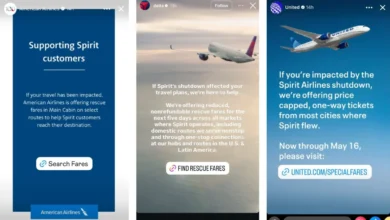
- Market Consolidation: The most immediate effect will likely be a degree of market consolidation. Spirit’s routes, airport slots, and potentially some of its fleet (once repossession processes conclude) will become available. Larger legacy carriers (like American, Delta, United) and even other budget carriers (like Frontier or JetBlue) may seek to acquire these assets, leading to a realignment of market share. This could, in the long term, reduce the number of independent operators and potentially lead to less aggressive price competition on routes where Spirit previously operated.
- Impact on Competition and Fares: While some capacity might be absorbed, the reduction of a major ULCC player inevitably shrinks the competitive landscape. This could empower remaining carriers to raise fares, particularly in leisure-focused markets where Spirit had a strong presence. The unique "unbundled" pricing model of ULCCs also puts pressure on full-service carriers to offer competitive basic economy fares; Spirit’s absence might alleviate some of that pressure, potentially leading to fewer ultra-low-cost options for consumers.
- Future of the Ultra-Low-Cost Model: Spirit’s demise forces a critical examination of the long-term viability and resilience of the ULCC business model, especially in the face of sustained high operating costs and economic volatility. Airlines operating on razor-thin margins are inherently more vulnerable to external shocks. This event may prompt other budget carriers to reassess their debt structures, hedging strategies for fuel, and capacity expansion plans, potentially leading to a more cautious approach to growth.
- Government Policy Precedent: Secretary Duffy’s firm stance signals a potential shift in the government’s approach to industry support. While previous administrations have often intervened to prevent major airline failures, this decision suggests a higher bar for federal assistance, particularly when private capital markets are deemed capable of providing solutions. This could set a precedent for future industry crises, indicating that the government will be less inclined to bail out companies struggling with what are perceived as fundamental business challenges rather than systemic, unforeseen catastrophes.
- Economic Ripple Effects: Beyond the immediate job losses at Spirit, the liquidation will have ripple effects across the aviation supply chain, including aircraft lessors, maintenance providers, and airport service companies. It also impacts the local economies of cities where Spirit had significant operational bases, leading to a contraction in related employment and economic activity.
As the dust settles from Spirit Airlines’ winding down, the aviation industry stands at a crossroads. Secretary Duffy’s rejection of an immediate bailout underscores a commitment to market principles, but it also leaves other budget carriers navigating turbulent skies largely on their own. The coming months will reveal how the remaining players adapt to this new landscape and what long-term consequences this pivotal decision will have on air travel affordability and competition across the United States.