Learning to Travel Again: A New Perspective on Global Exploration After Life-Altering Illness

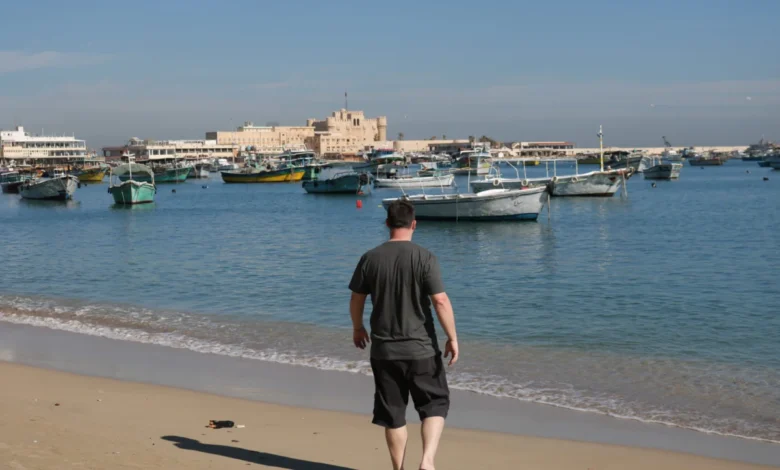
For nearly thirty years, Michael Huxley, the renowned travel writer and founder of the digital platform Bemused Backpacker, championed a philosophy of urgent, border-crossing exploration. As a former emergency nurse with professional expertise in tropical and travel medicine, Huxley built a career advocating for the benefits of independent travel, often urging his audience to prioritize global experience over the deferral of dreams. However, a recent, severe medical crisis has forced a fundamental shift in his approach, transitioning from the high-intensity, content-driven travel of the past two decades to a philosophy of "slow travel" and deliberate engagement.
This transition marks a departure from the traditional industry model of travel writing, which often emphasizes speed, distance, and the accumulation of photographic "content." Huxley’s recent return to the road, following an extensive recovery period, serves as a case study for the evolving nature of long-term travel in an era increasingly dominated by digital performance.
A Chronology of a Shifted Perspective
Huxley’s career in travel began in his late teens, spanning over 150 countries and more than two and a half decades of independent, often rugged exploration. His professional life as a travel content creator began approximately 16 years ago, a period during which he meticulously documented his journeys.

The timeline of this transition is anchored by an unforeseen health event that halted his established routine. In the months following this recovery, Huxley attempted to return to his former methods of exploration—characterized by physical endurance and frequent movement. Upon realizing that his physical capacity and personal motivations had permanently altered, he began to document a more contemplative, decelerated form of travel. By mid-2026, this shift had solidified, leading to a public re-evaluation of his work and the underlying principles of the "backpacker" lifestyle.
The Professionalization of Travel: A Data-Driven Analysis
The broader travel industry has seen a massive surge in "content-first" travel, where the value of a trip is frequently measured by its potential for social media engagement, SEO-optimized articles, and visual storytelling. According to recent industry reports on the creator economy, travel influencers now contribute to a significant portion of destination marketing. However, this shift often creates a "performance pressure" that can diminish the quality of the traveler’s own experience.
Huxley’s experience reflects a growing trend among veteran travelers: the burnout associated with the commodification of personal experience. When travel becomes a source of revenue, the traveler often functions as an analyst, constantly evaluating local culture through the lens of potential output. This phenomenon, often referred to as "algorithmic travel," can lead to a detachment from the immediate environment. Huxley’s pivot suggests that the future of travel journalism may lie in a move back toward subjective, unmediated experience rather than curated, performance-based narratives.
The Medical and Psychological Implications of "Slow Travel"
Huxley’s background in nursing provides a unique vantage point on the intersection of mortality and leisure. As a former healthcare professional, he frequently observed the "regret cycle" in patients—a phenomenon where individuals face the end of their lives lamenting the journeys they never undertook. His own near-death experience served as a catalyst for this psychological transition.

From a clinical perspective, the transition to "slow travel" has documented benefits for recovery and mental well-being. By prioritizing presence over velocity, travelers reduce the physiological stress associated with constant movement and information processing. Recent psychological studies on "mindful travel" suggest that individuals who engage in sustained, slow-paced interaction with a foreign environment exhibit lower cortisol levels and higher levels of cognitive satisfaction compared to those on "high-impact", short-duration itineraries.
Industry and Peer Response
While Huxley is known primarily for his independent work, his public reflection on this transition has resonated within the broader community of travel writers and long-term backpackers. Industry experts note that the "slow travel" movement is gaining traction as a direct response to the saturation of travel content.
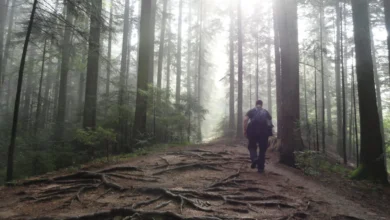
"The shift from ‘conquering’ a destination to ‘occupying’ it is a significant evolution for veteran travelers," noted one independent travel consultant. "When someone who has spent 25 years on the road—especially someone with a medical background—admits that they no longer prioritize the ‘summit’ or the ‘jungle trail,’ it forces the rest of the industry to acknowledge that travel is not a test of endurance, but a practice of awareness."
Broader Impact: The Future of Independent Exploration
The implications of Huxley’s pivot are twofold. First, for the individual traveler, it represents an acknowledgment that physical capacity is finite and that the value of travel lies in the quality of the moment, not the number of stamps in a passport. Second, for the digital creator, it marks a potential retreat from the "content treadmill."

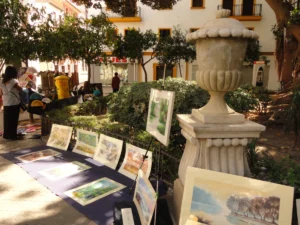
Huxley’s current approach involves engaging with local cultures in a way that is intentionally disconnected from the desire to "produce" or "publish." For instance, his recent observations in cities like Seville, Spain, and various locations in Greece, emphasize the importance of non-transactional social interactions—sitting in cafes, observing local customs, and engaging in conversations without the pressure of note-taking.
This, he argues, is the "ordinary magic" of travel. By removing the objective of creating content, the traveler is allowed to simply inhabit the space. This shift is not merely a lifestyle choice but a deliberate methodology that prioritizes psychological health and authentic cultural exchange over the demands of the digital attention economy.
Conclusion: Redefining the Traveler’s Goal
The narrative of Michael Huxley’s return to travel is an essential read for those who find themselves caught in the cycle of constant productivity. His experience underscores a critical truth: that the ultimate purpose of travel is not to collect evidence of one’s presence in the world, but to be fully present in the world while the opportunity exists.
As the global travel sector continues to expand, the move toward slower, more meaningful engagement acts as a necessary counterweight to the frantic pace of modern life. Whether driven by health necessity or a desire for deeper connection, the transition to "slow travel" represents a maturation of the global exploration movement. It is a reminder that the most significant journey is not the one that covers the most miles, but the one that allows the traveler to witness the world with clarity and intention. Huxley’s ongoing project serves as a testament to this evolution—a deliberate step back from the lens, and a step forward into the reality of the destination.