Navigating the logistical labyrinth of Peru’s most iconic archaeological wonder requires far more than simply purchasing a vacation package online. Travelers arriving at the gates of Machu Picchu often discover that two individuals standing side-by-side in the same morning queue may experience entirely different sectors of the ancient Incan citadel, dictated strictly by the specific alphanumeric string printed on their entry tickets. Recent regulatory overhauls implemented by Peru’s Ministry of Culture have transformed booking into a precise, highly regulated administrative procedure. Understanding these intricate statutory frameworks is no longer optional for tourists; it is a fundamental prerequisite for accessing the UNESCO World Heritage site without encountering prohibitive administrative or financial hurdles.

Strategic Route Selection and Circuit Architecture
The Ministry of Culture divides the sprawling 15-century sanctuary into three distinct circuits encompassing ten discrete routes. A traveler’s entry ticket permanently locks them into one specific path with zero flexibility for internal rerouting or backtracking once past the turnstiles. Circuit 1 generally remains along the elevated terraces, offering panoramic vistas of the complex. Circuit 2 guides visitors through the classic architectural core, including the principal temples and ceremonial plazas—widely regarded as the mandatory itinerary for a first-time visitor. Circuit 3 delves into the lower agricultural and royal sectors, while also serving as the gateway for those attempting the rigorous vertical ascent of Huayna Picchu.
A critical administrative trap awaits unwary tourists booking generic packages. Routes such as 2-B and 1-D completely bypass the coveted upper-terrace viewpoint. Travelers purchasing these options under the assumption they will secure the quintessential postcard panorama will leave disappointed. Furthermore, permits for the Huayna Picchu mountain climb face unprecedented demand and routinely sell out up to four months in advance. Consequently, travel industry analysts strongly advise consumers to explicitly demand exact circuit and route numbers from tour operators before executing financial transactions, as vague descriptions promising merely "Machu Picchu included" offer zero operational guarantees.

Ticketing Protocols, Quotas, and Financial Frameworks
Chronologically, securing the official site entry ticket must always precede securing rail transportation or hotel accommodations. Visitor caps enforce strict daily limits, capping general admission at 4,500 daily visitors, with allowances expanding to 5,600 during peak seasonal surges. Each ticket is strictly non-transferable, assigned to a single named individual, and stamped with a specific entry hour ranging from 6:00 a.m. to 3:00 p.m. Passport numbers are rigorously vetted against physical identification documents at the security gates, and exit policies prohibit re-entry.
The sole authorized primary distributor for official passes remains the Peruvian government’s designated portal. Standard route pricing for foreign adults requires a base tariff of S/163 (approximately $45 USD), which incorporates a mandatory S/11 sanctuary preservation fee introduced to combat environmental degradation. Options incorporating demanding mountain ascents command S/211 (roughly $58 USD). Industry experts emphasize that third-party operators offering preliminary "reservations" or "requests" provide no legal guarantee of entry until an official, government-authenticated site ticket is officially secured and digitally delivered to the traveler.

Documentation Requirements and Tax Exemptions
International travelers entering Peru must navigate strict federal border control mandates. While passport holders from the United States, Canada, and the European Union are exempt from pre-arrival tourist visa requirements for stays under 90 days, federal authorities enforce strict validity timelines. Passports must remain valid for a minimum of six months beyond the scheduled date of entry and contain at least two completely blank pages—a requirement actively enforced by commercial airlines during departure check-in counters. Border entry documentation is fully digitized via the mandatory TAM Virtual system.
A significant financial consideration for international visitors involves Peru’s national value-added tax. Foreign tourists staying within the country for fewer than 59 consecutive days are legally exempt from the standard 18% hotel tax. Travelers can deduct this substantial charge from their lodging expenses simply by presenting their original passport and official immigration entry stamp upon checking into registered hospitality establishments, yielding notable cumulative savings over the duration of an extended itinerary.

Regional Infrastructure and Transit Logistics
The geographic isolation of the citadel presents unique logistical challenges, as the site features no direct vehicular road access or commercial airfield. Commercial aviation routes route travelers through Lima before landing at Cusco’s Alejandro Velasco Astete Airport. While long-term regional infrastructure planning initially slated the construction of the Chinchero International Airport in the Sacred Valley, completion timelines have shifted toward late 2027 or early 2028. Consequently, Cusco remains the sole operational aviation hub for incoming visitors.
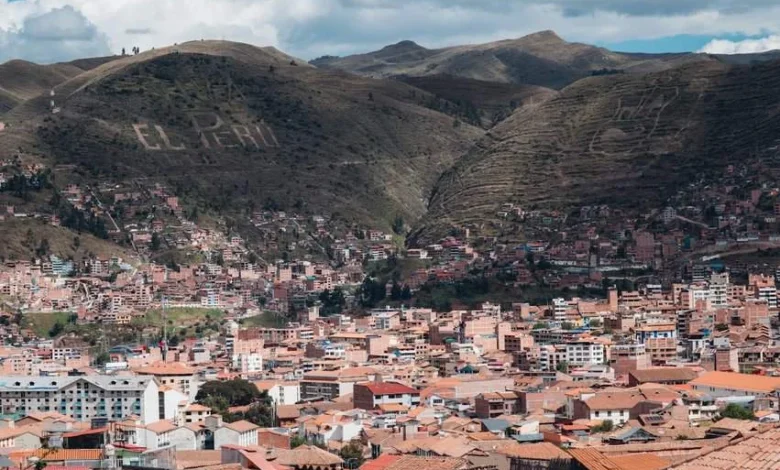
The journey onward from Cusco to the base of the ruins requires a multi-stage transit sequence. Travelers typically board a private vehicle or public bus descending into the Sacred Valley town of Ollantaytambo. From there, rail operators such as PeruRail or Inca Rail provide roughly 90-minute scenic rail services winding along the Urubamba River valley to Machu Picchu Pueblo—historically known as Aguas Calientes. The final leg requires a 25-minute bus transit scaling the steep, winding switchbacks directly to the archaeological entrance gates. Transit coordinators strongly discourage same-day round-trip itineraries originating directly from Cusco, characterizing them as high-stress, temporally compressed schedules vulnerable to unexpected rail delays.

Health, Safety, and Altitude Mitigation
Altitude sickness remains a primary health hazard for tourists navigating the southern Andean corridor. Cusco rests at an elevation of approximately 11,000 feet (3,399 meters) above sea level, where atmospheric oxygen density is significantly lower than at sea level. Federal health agencies, including the Centers for Disease Control and Prevention, strongly advise travelers to allocate a minimum 48-hour acclimatization period upon arrival prior to engaging in strenuous physical exertion. While the Machu Picchu archaeological site itself sits at a lower altitude of roughly 7,972 feet (2,430 meters), the ancient stone staircases are steep, irregular, and physically demanding.
Local medical professionals and tour operators recommend a measured pacing strategy, adequate hydration, and consultation with primary care physicians prior to departure for individuals with pre-existing cardiovascular or respiratory concerns. Furthermore, environmental preservation regulations inside the citadel enforce strict logistical parameters: backpacks exceeding dimensions of 40 by 35 by 20 centimeters are prohibited, external food consumption is restricted, and commercial camera tripods require specialized administrative permits. Because internal restroom facilities and re-entry privileges do not exist within the historical perimeter, visitors must utilize sanitary facilities located exclusively outside the main gates prior to entering their designated circuit.

Economic Implications and Sustainable Tourism Pressures
The implementation of stricter regulatory controls, daily entry caps, and tiered ticketing circuits reflects a broader global shift toward sustainable heritage management. Cultural preservationists and UNESCO representatives have consistently warned that unchecked mass tourism accelerates structural erosion of fragile Incan stonework—engineering marvels constructed without mortar that have successfully withstood centuries of seismic activity since their abandonment in the 16th century following construction under Emperor Pachacuti.
Economically, these caps have created a highly competitive marketplace where budget tour operators frequently employ opaque pricing strategies. Advertised teaser rates often omit essential component costs, such as round-trip rail passes, terminal station transfers, government entry tickets, and ascending bus fares. Analysts advise consumers to audit comprehensive total costs and secure itemized service guarantees in writing. By prioritizing rigorous advance planning, strict adherence to national booking portals, and a thorough understanding of regional transit networks, travelers can successfully transition a potentially stressful administrative ordeal into an organized, deeply rewarding exploration of one of humanity’s most extraordinary archaeological treasures.