Beyond the Summit: The Gritty Reality of the Sosbun Brakk First Ascent and the Evolution of Karakoram Mountaineering

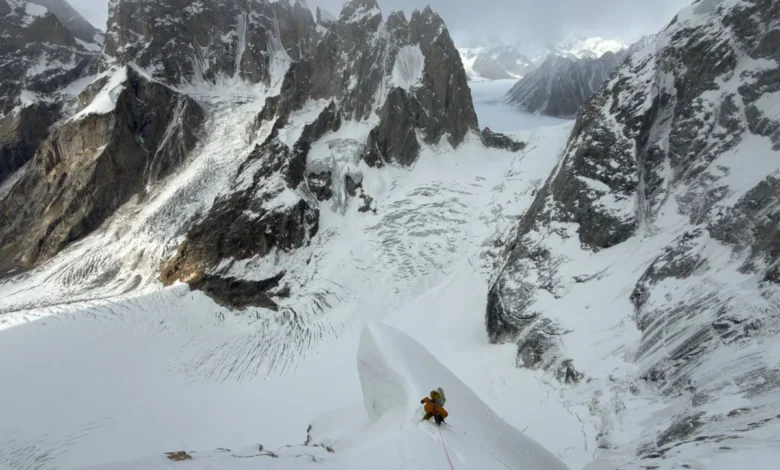
In high-altitude mountaineering, the distinction between a successful expedition and a harrowing ordeal is often measured in inches of ice, fleeting weather windows, and the psychological fortitude required to turn back from a perceived objective. American climber Dane Steadman, who recently secured a Piolet d’Or for his 2024 ascent of Yashkuk Sar, has offered a candid assessment of his team’s latest endeavor: the first ascent of the north face of Sosbun Brakk (6,414m) in Pakistan’s Karakoram range. Joined by fellow American Cody Winckler and Canadian alpinist Grant Stewart, Steadman’s expedition serves as a case study in the shifting paradigms of modern alpine-style climbing, where climate volatility and logistical unpredictability are increasingly defining the sport.
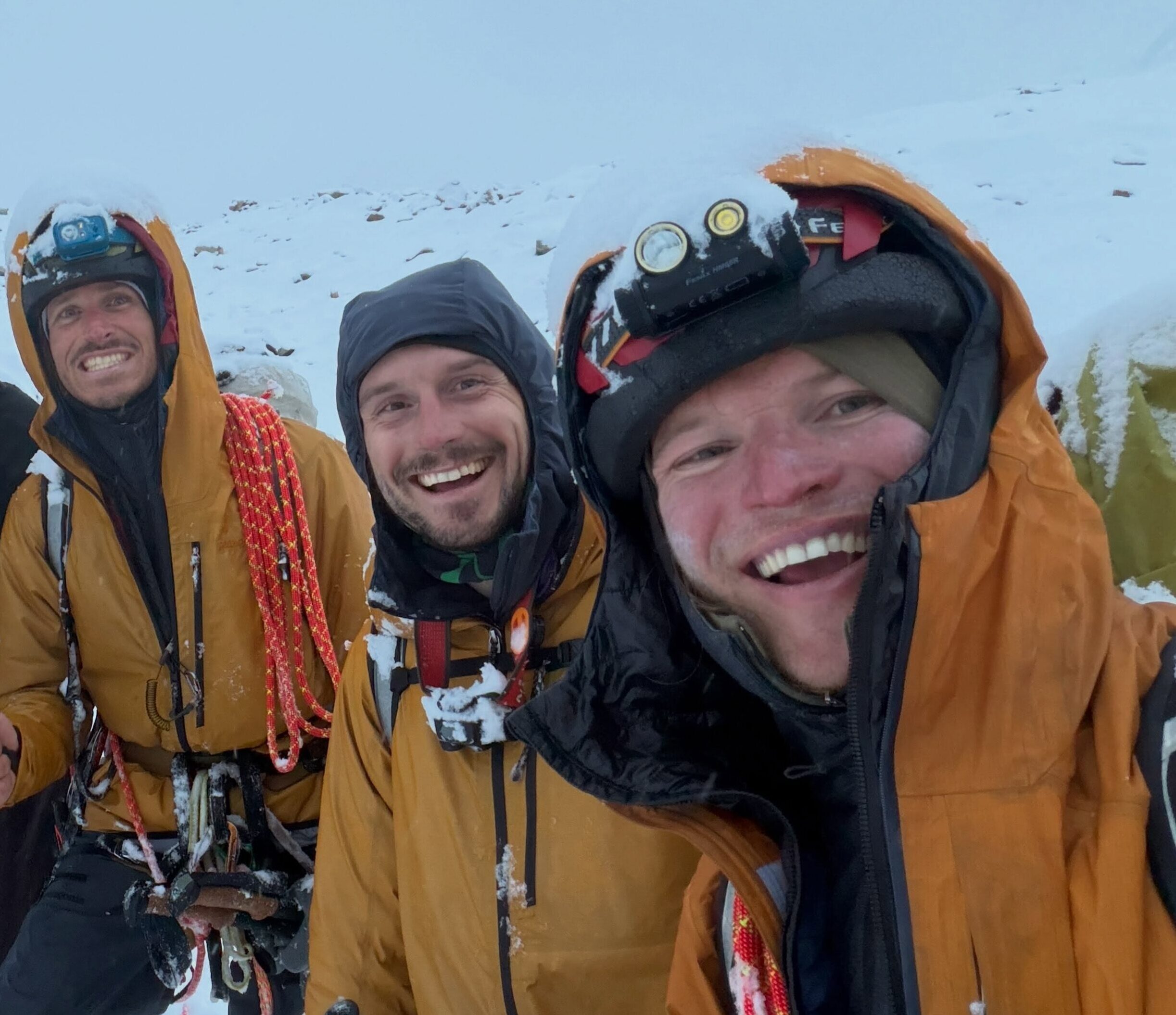
The expedition, which culminated in an 1,800-meter new route rated at M7, WI5, stands in stark contrast to the team’s previous, more clinical successes. While the Yashkuk Sar climb was characterized by favorable conditions and relative tactical fluidity, the Sosbun Brakk expedition was defined by a series of compounding obstacles. From the loss of essential baggage to severe acclimatization-related illness and a persistent, unforgiving weather pattern, the climb necessitated a degree of adaptability that pushed the team to the absolute limits of their capacity.
A Chronology of the 2025 Expedition
The strategic decision to target Sosbun Brakk in the early autumn—specifically October—represented a calculated deviation from the traditional Karakoram climbing season, which historically spans July and August. This timing was not merely a matter of convenience regarding team availability; it was an intentional response to the changing environmental conditions of the high mountains.
As the Indian monsoon patterns shift and influence the broader regional climate, many experienced mountaineers are finding that September and October offer more stable, albeit colder, conditions. For the team, the primary objective was to mitigate the hazards of rockfall and unstable snowpack that frequently plague the lower, unprotected sections of the north face. By opting for a later window, the team hoped that lower temperatures would solidify the ice sheets, providing a safer and more predictable medium for their ascent.
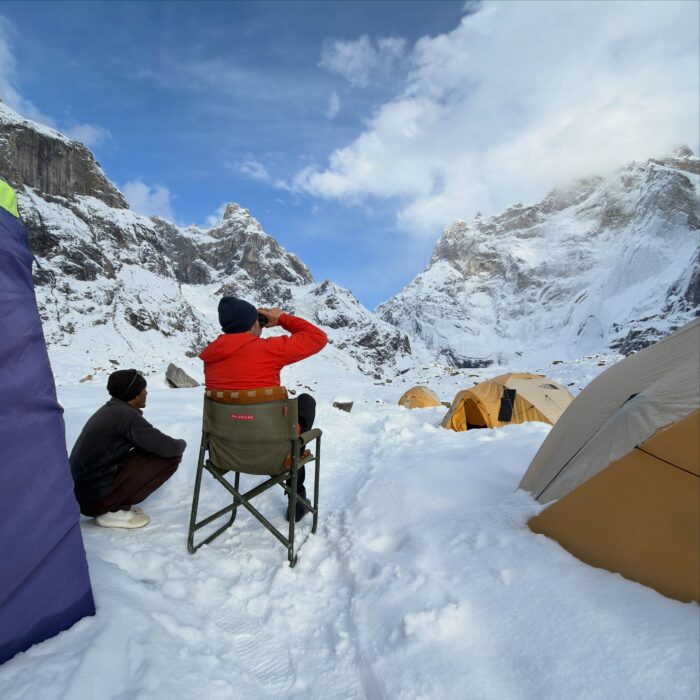
The initial phase of the expedition was fraught with logistical friction. The team arrived in Pakistan facing the immediate challenge of misplaced equipment, a hurdle that often signals the beginning of a taxing campaign. Once on the ground, the transition to the high-altitude environment proved physically taxing, with the team grappling with significant illness during the acclimatization process. These early-stage setbacks set a somber tone for what would become an exercise in extreme resilience.

The Tactical Shift: Navigating Uncharted Terrain
The team’s original plan was to establish a single, pure alpine-style push up the center of the north face. However, upon closer inspection at the base of the wall, the climbers encountered a menacing, overhanging serac that threatened the entirety of their intended path. This discovery forced an immediate and potentially demoralizing reevaluation.
The decision to retreat from the first attempt was not a sign of failure, but rather a display of the disciplined decision-making that characterizes elite alpinism. After abandoning the central line, the team identified a potential route hidden from view during their initial reconnaissance. This right-trending, east-facing gash was obscured by massive walls of monolithic gneiss, remaining invisible from the base camp and their acclimatization vantage points.

This tactical pivot was not without risk. The team faced the prospect of committing to a line that might lead to a dead end, potentially wasting precious energy and resources. Following a three-day recovery period at base camp, the trio launched their final attempt. They were acutely aware of the "choke points"—specifically a steep, mushroom-choked chimney on the headwall—where they could be forced to turn back. Unlike their experience on Yashkuk Sar, where the sense of inevitable success prevailed, the Sosbun Brakk attempt was marked by a persistent, gnawing doubt that they might not reach the summit.
Technical Challenges and Environmental Constraints
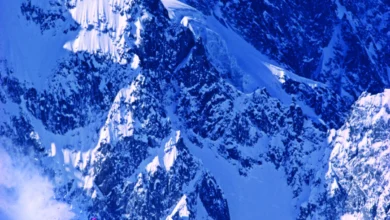
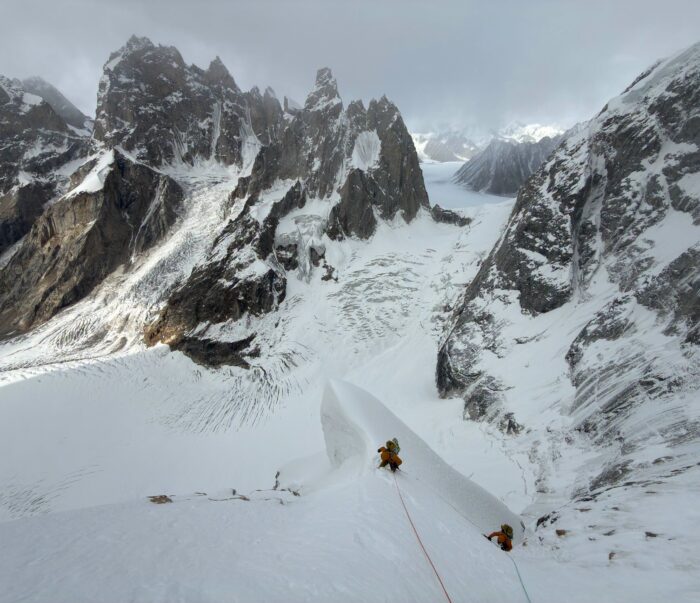
The north face of Sosbun Brakk is a complex, 1,800-meter wall that demands a diverse range of technical skills. The route they eventually forged involves significant mixed climbing (M7) and steep ice (WI5). The difficulty of the terrain was compounded by the weather, which deteriorated significantly during the latter half of the climb.
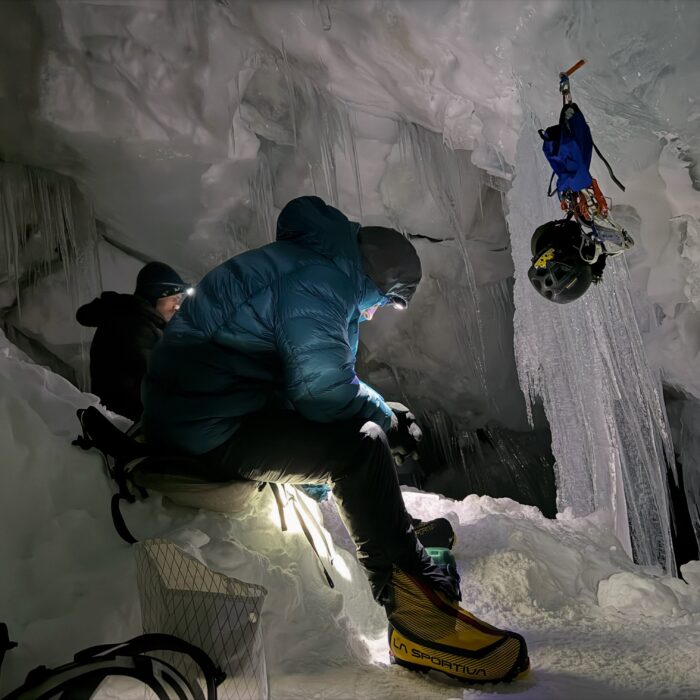
The final ascent required five days of continuous effort. Upon reaching the summit at 4:00 p.m., the team was confronted with the reality of limited daylight and the onset of severe weather, complicating their descent. The return journey involved a mix of rappelling down the line of ascent and navigating new, untested terrain on the northwest spur. By carefully diagonaling across the face to avoid active serac hazards, they managed a safe, if grueling, exit from the mountain.
Implications for Modern Karakoram Expeditions
The successful ascent of the north face of Sosbun Brakk—only the second time the peak has been climbed since a Japanese team reached the summit via a different route in 1981—highlights several emerging trends in high-altitude mountaineering.

First, the "alpine style" of climbing, which eschews fixed ropes, high-altitude porters, and supplemental oxygen, is becoming increasingly reliant on the ability to read the terrain in real-time. As glaciers recede and permafrost degrades, traditional routes are becoming more dangerous, forcing climbers to seek out lines that are less exposed to objective hazards like rockfall or ice collapse. The fact that the team had to abandon their initial, well-researched line in favor of an obscure, hidden feature speaks to the necessity of this "on-the-fly" agility.
Second, the shift in seasonal strategy is becoming a topic of broader discussion within the climbing community. While the team experienced less stability in September and October than in some previous years, the consensus remains that the traditional summer season in the Karakoram is becoming increasingly unreliable. Expeditions may need to continue experimenting with off-season windows to find the right balance between temperature, stability, and access.
Finally, the psychological contrast between the Yashkuk Sar and Sosbun Brakk expeditions illustrates the non-linear nature of mountaineering success. An award-winning performance on one peak does not guarantee ease on the next; rather, it often sets a benchmark of expectation that makes the subsequent "grind" even more taxing. For Steadman, Winckler, and Stewart, the Sosbun Brakk expedition served as a reminder that the most rewarding summits are rarely the ones that come easily.
In a field where many practitioners seek to minimize risk through over-preparation, the Sosbun Brakk team demonstrated that success is often found in the ability to accept ambiguity. By navigating through logistical chaos, health complications, and the literal collapse of their original plans, they have contributed a significant new chapter to the history of Karakoram exploration, proving that the spirit of adventure still thrives in the most challenging and unpredictable corners of the globe.