The conventional winter itinerary for Central Anatolia typically separates two distinct geographical wonders: the snow-draped, volcanic ski slopes of Mount Erciyes and the ethereal, honey-combed cave hotels of Cappadocia. However, travel operators and regional tourism boards are increasingly promoting a unified winter corridor that connects these destinations into a single, seamless expedition. Situated a mere one-hour drive apart, Mount Erciyes—rising to an elevation of over 3,900 meters—and the subterranean cities of Cappadocia share a singular volcanic genesis. This juxtaposition allows travelers to carve tracks through dry, high-altitude powder near 3,400 meters by late morning and explore ancient, hand-carved Byzantine and Phrygian tunnels by late afternoon.
Main Facts of the Integrated Winter Route
Logistically, the combined winter route bridges urban history, high-altitude winter sports, and ancient subterranean architecture. Travelers embarking on structured multi-day excursions typically fly into Kayseri Erkilet Airport (ASR), which serves as the primary gateway for both the ski resort and the broader Cappadocian valleys.
A standard comprehensive package—exemplified by coordinated two-week itineraries starting around €3,247 per person—typically integrates international round-trip flights from major global hubs such as New York, London, Munich, or Toronto. The itinerary structure is deliberately partitioned:
- Istanbul: Four days centered around historical cultural exploration, featuring guided visits to the Hagia Sophia, the Blue Mosque, Topkapi Palace, the Grand Bazaar, and a transit cruise along the Bosphorus, hosted at accommodations like the Radisson Hotel Istanbul Sultanahmet.
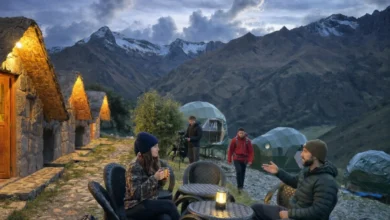
- Cappadocia: Five days immersed in the region’s geological and historical core, utilizing cave architecture hotels such as Les Maisons de Cappadoce, paired with guided tours of the Göreme Open-Air Museum and regional underground cities.
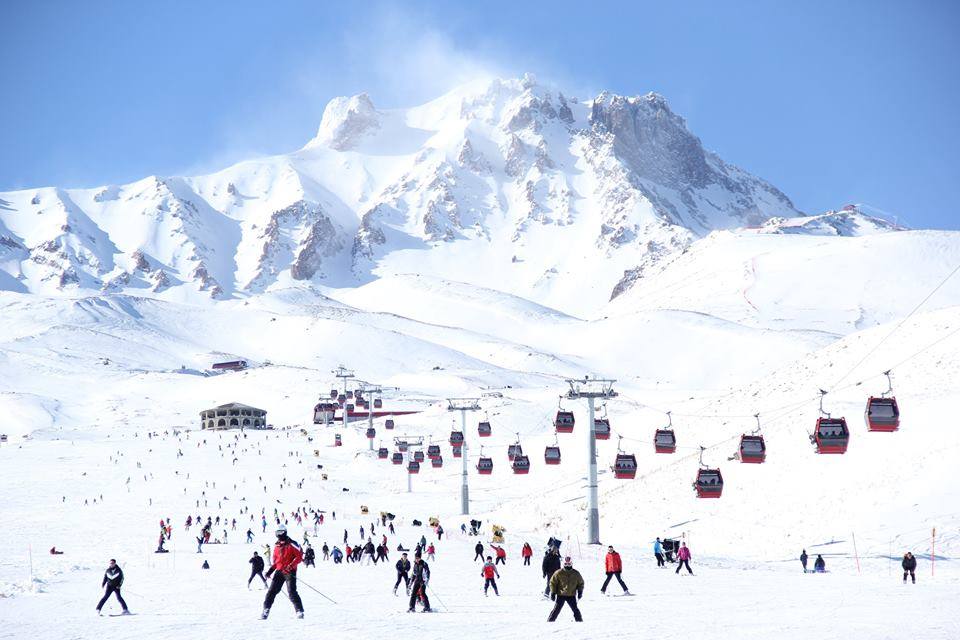
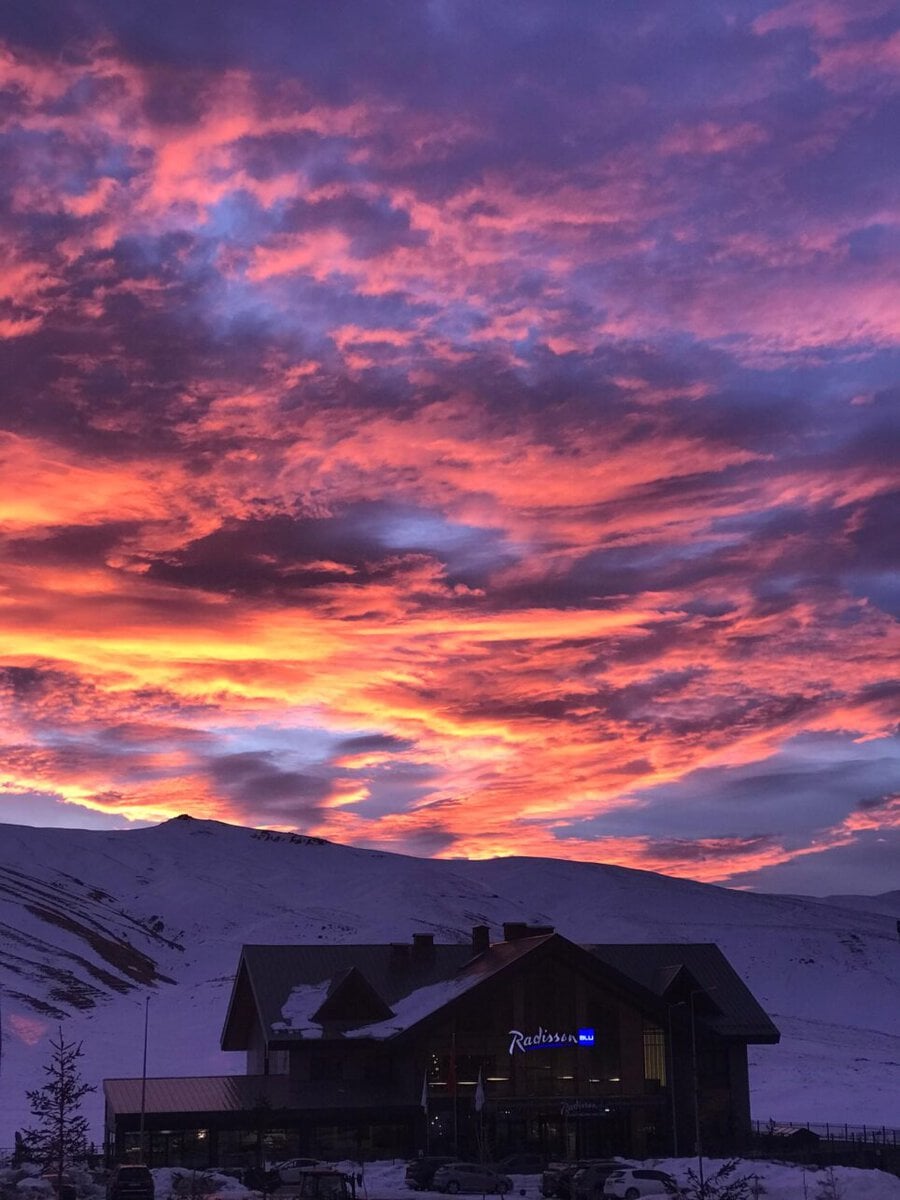
- Mount Erciyes: Four days positioned directly at the base of the mountain at accommodations like the Radisson Blu Hotel Mount Erciyes, emphasizing half-board services, lift access, and structured group ski instruction tailored from beginner to advanced competencies.
Additional inclusions generally encompass domestic flights, ground and airport transfers, licensed guides for cultural segments, and applicable site entrance fees. Notable exclusions involve specialized ski and snowboard equipment rentals, beverage purchases during meals, and optional hot-air balloon excursions.
Chronology and Geographical Timeline of the Region
The interconnected narrative of Kayseri, Mount Erciyes, and Cappadocia spans millennia, rooted heavily in geological activity that preceded recorded human history. Millions of years ago, consecutive eruptions from Mount Erciyes and neighboring stratovolcanoes blanketed Central Anatolia in thick layers of volcanic ash, which subsequently compressed and hardened into tufa.
The chronology of human interaction with this landscape unfolded in distinct eras:
- 8th to 7th Century BC: The Phrygian civilization recognized the structural malleability of the volcanic tufa, initiating the excavation of subterranean sanctuaries and multi-level underground cities, such as Derinkuyu, to serve as secure redoubts against foreign incursions.
- Roman and Byzantine Eras: Under the reign of Archelaus, the last client king of Cappadocia, the regional capital of Mazaka was renamed Caesarea in honor of the Roman Emperor Augustus, eventually linguistic-shifting into modern-day Kayseri. Concurrently, early Christians expanded both underground refuges and above-ground cave monasteries across the Cappadocian valleys.
- Silk Road Zenith: Kayseri evolved into a critical commercial node along the historic Silk Road, leveraging both the agricultural fertility of volcanic soil—which fostered viticulture, notably the native Emir white grape—and the strategic crossroads of Central Anatolian trade routes.
- Modern Tourism Development: Over the past two decades, regional infrastructure investments transformed Mount Erciyes into a premier winter sports destination featuring modern lift systems spanning elevations from roughly 2,090 to 3,350 meters, while Cappadocia established itself as a globally recognized year-round cultural tourism focal point.
Supporting Data and Meteorological Analysis
Meteorological conditions in Central Anatolia dictate the feasibility and quality of the winter sports and aerial components of the itinerary. The high-altitude Central Anatolian steppe generates a cold, dry, and thin atmospheric profile devoid of coastal humidity. This lack of moisture produces what skiers characterize as "champagne powder"—light, low-density snow that accumulates efficiently near the summit ridges above 3,400 meters.
Conversely, the winter season introduces significant operational variables for aerial tourism. According to regional tourism statistics, while Cappadocia’s hot-air balloon industry accommodates hundreds of thousands of passengers annually (recording over 256,000 passenger movements between January and June 2026), winter operations face strict regulatory oversight. Wind shear, dense fog, and snowfall prompt civil aviation authorities to ground approximately 40 to 50 percent of scheduled winter balloon flights. Consequently, travel authorities advise treating the balloon experience as an optional bonus rather than a guaranteed itinerary fixture, recommending that visitors schedule flights for the earliest possible morning of their stay to permit rollover opportunities in the event of weather cancellations.
Gastronomic Implications and Economic Impact
Beyond topography and sport, the region’s culinary heritage reflects centuries of adaptation to the harsh alpine environment of Mount Erciyes. Kayseri serves as the epicentre for traditional food production, most notably pastırma—a heavily spiced, air-cured beef delicacy. Local artisans attribute the distinct curing quality of the meat to Erciyes’in Nefesi (the Breath of Erciyes), the cold, dry wind descending from the mountain peak. Kayseri currently produces approximately two-thirds of Turkey’s pastırma supply, a culinary heritage now protected under European Union geographical indication regulations.
Additionally, the city is renowned for mantı, miniature meat-filled dumplings traditionally served with garlic yogurt and pepper butter. This robust culinary tradition, alongside regional specialities like testi kebabı (meat stew slow-cooked in a sealed clay pot), underpins a thriving gastronomic tourism sector that complements the area’s winter sports and historical sightseeing.
Broader Impact and Industry Analysis
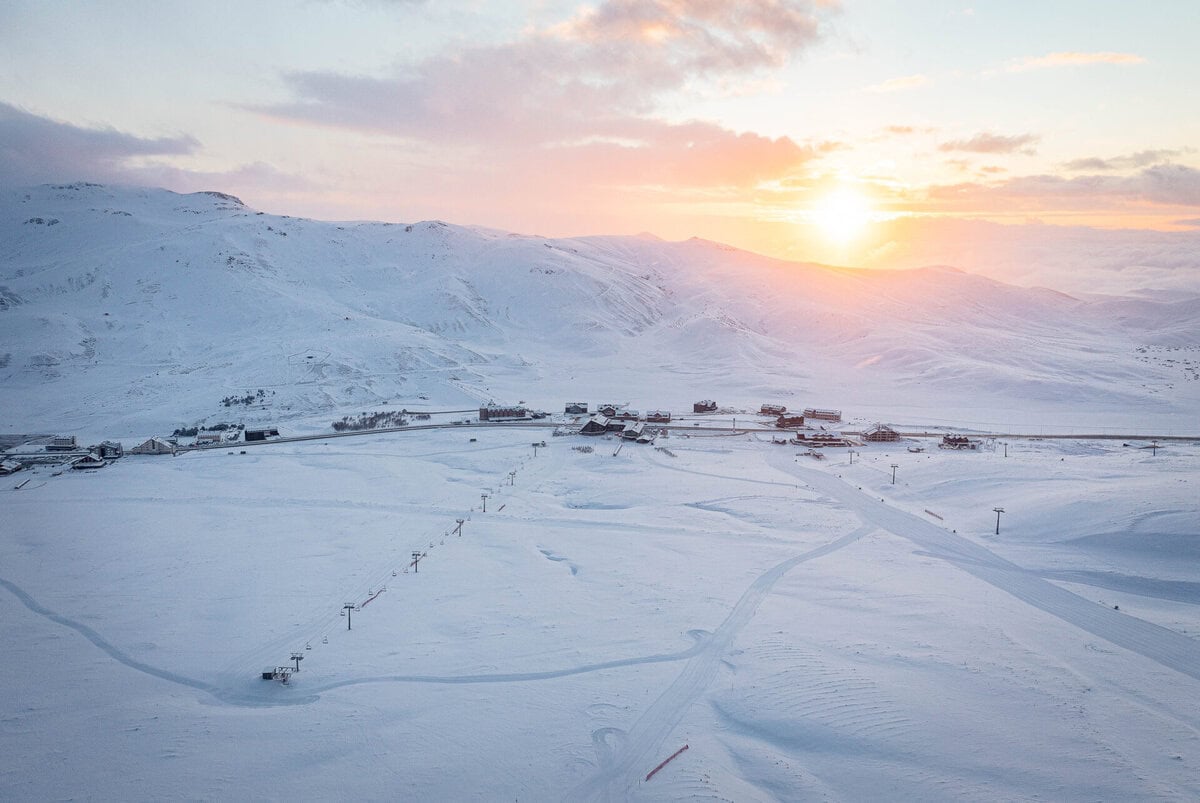
The deliberate pairing of Mount Erciyes’ ski infrastructure with Cappadocia’s cultural landscape represents a strategic shift in Turkish tourism marketing. Historically, Central Anatolia experienced a sharp seasonal dichotomy, with summer drawing massive cultural crowds and winter seeing localized domestic ski traffic. By packaging Istanbul, Cappadocia, and Erciyes into unified, multi-week itineraries, tour operators are successfully mitigating seasonal troughs.
Industry analysts note that this integrated approach diversifies traveler demographics, attracting international visitors who traditionally frequent Alpine resorts in France, Switzerland, or Austria, but seek a richer cultural synthesis. By combining physical adventure—ranging from lift-served carving to backcountry catskiing—with deep historical immersion inside ancient underground cities and cave architecture, the region offers a multifaceted value proposition that redefines Central Anatolia’s status as a comprehensive, year-round international destination.