The Culinary Evolution of Minimalist Home Cooking and the Rise of High-Efficiency Marinades

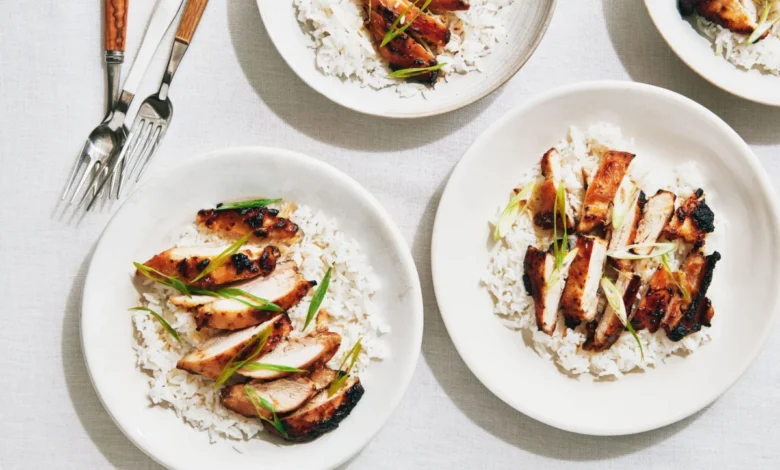
The modern home kitchen is currently undergoing a significant shift toward hyper-efficient preparation methods as consumers balance the demand for high-quality, nutrient-dense meals with increasingly restricted time availability. A prime example of this trend is the emergence of high-viscosity, three-ingredient marinades—specifically the combination of fermented miso, honey, and soy sauce—which has gained traction as a standard for rapid, high-temperature cooking. This culinary approach challenges traditional long-duration marination models by utilizing the chemical properties of fermentation and viscosity to achieve deep flavor penetration in mere minutes rather than hours.
The Science of Accelerated Marination
Traditionally, the culinary definition of a marinade involves an acidic or enzymatic solution designed to tenderize proteins and infuse flavors over an extended period, often spanning 12 to 24 hours. However, current trends in food science and home economics suggest a movement toward "instantaneous infusion." By utilizing a paste-based marinade—such as the miso-honey-soy blend—the surface area of the protein is coated in a concentrated matrix that adheres to the meat during the cooking process.
Miso, a traditional Japanese seasoning produced by fermenting soybeans with salt and kōji, acts as a potent source of umami, or the fifth taste. When combined with the high sugar content of honey and the saline properties of soy sauce, the mixture creates a Maillard-reaction catalyst. When exposed to the high-intensity heat of a kitchen broiler (typically ranging between 500°F and 550°F), these sugars caramelize rapidly, creating a protective, glossy barrier that retains internal moisture while simultaneously developing a complex, savory crust. This process effectively bypasses the need for the "soak time" that defines more traditional recipes.
Historical Context and the Shift to Minimalist Cooking
The prioritization of minimal ingredient lists can be traced to the broader "It’s That Simple" culinary movement, which gained momentum following the 2020 global shift in domestic habits. As remote work and home-based living became the standard, the psychological fatigue associated with daily meal planning—often referred to as "decision fatigue"—necessitated a reduction in complexity.
Data from recent consumer surveys indicate that the average home cook is willing to invest no more than 30 to 45 minutes in active meal preparation on a weekday. This has forced recipe developers to reconsider the role of pantry staples. Fermented products like miso are increasingly marketed not just as traditional soup bases, but as versatile, shelf-stable flavor enhancers that function effectively as glazes. The shift is not merely stylistic; it represents a fundamental change in how households manage inventory, favoring items that serve multiple culinary purposes.
Chronology of Modern Cooking Techniques
The integration of broiler-centric cooking represents a return to classical high-heat methods, yet it is being applied to contemporary ingredients in a way that differs from 20th-century practices.
- 1990s–2000s: The rise of "slow food" and overnight marination dominated home cooking literature, emphasizing depth of flavor achieved through time-intensive preparation.
- 2010–2015: The emergence of "sheet pan" meals became the primary focus of food media, focusing on structural simplicity and reduced cleanup.
- 2016–2020: Increased reliance on fermented ingredients (miso, gochujang, kimchi) became more mainstream as global palate exposure grew.
- 2021–Present: The focus has moved toward "immediate" flavor infusion, where the chemistry of the marinade (viscosity and sugar content) is engineered to work during the high-heat cooking phase, rendering pre-marination obsolete.
Nutritional and Economic Implications
From a nutritional standpoint, the use of miso and honey provides a balanced profile of amino acids and simple carbohydrates. Miso is rich in probiotics and vitamins, though its nutritional profile is often altered by the high temperatures required for broiling. However, the economic implications are more pronounced. By reducing the number of ingredients, households can lower their grocery expenditure and decrease food waste, as a three-ingredient system relies on items that are rarely discarded before use.

Financial analysts monitoring the retail food sector have noted that sales of fermented pastes have risen by approximately 12% annually over the last three years. This growth is attributed to the increased interest in "professional-grade" flavor profiles achieved with minimal technical skill. When home cooks can achieve a "restaurant-quality" glaze in under 20 minutes, the value proposition of processed pre-marinated meats decreases, leading to a rise in the purchase of raw, high-quality proteins.
Technical Application and Broiler Management
The success of a paste-based marinade is heavily dependent on the heat source. The broiler, a tool often underutilized in the modern kitchen, acts as the primary vehicle for this technique. Unlike conventional baking, which relies on ambient heat, the broiler provides intense infrared radiation.
Professional chefs often advise that the margin for error when using high-sugar glazes is slim. In a standard domestic oven, the broiler drawer or top-rack setting can reach temperatures capable of burning sugar in less than 15 minutes. The "peek-and-adjust" method is recommended as a standard operating procedure. Because the miso-honey mixture is dense, it creates a "thermal shield," protecting the chicken from drying out even as the exterior chars. This technique is inherently more forgiving than traditional roasting, which can often lead to the desiccation of leaner proteins.
Broader Impact on Domestic Food Culture
The implications of this movement are significant for the food industry. As the barrier to entry for cooking high-quality meals lowers, the frequency of home-prepared meals increases. Industry observers suggest that this "minimalist" approach may eventually lead to a decline in the consumption of ultra-processed convenience foods, as the time-cost of cooking from scratch has been effectively minimized.
Furthermore, the emphasis on a "gentle, reliable" cooking experience addresses the emotional component of domestic labor. By providing a consistent result—a "tried-and-true" recipe—the cook experiences reduced anxiety regarding potential meal failure. This psychological stability is a core component of why certain minimalist recipes achieve cult status among busy professionals and families.
Expert Analysis and Future Outlook
Industry consultants in the culinary space note that the next evolution of this trend will likely involve the development of "flavor-concentrate" kits. These kits would essentially provide the same chemistry found in the miso-honey-soy trio but tailored for different protein bases. As consumers continue to seek efficiency without sacrificing quality, the reliance on scientific principles—such as the viscosity-to-heat ratio—will become more explicit in instructional recipes.
The miso-honey-soy model serves as a benchmark for the future of home cooking: it is a synthesis of traditional preservation methods and modern time-management requirements. As long as the demand for rapid, high-flavor, and low-complexity meals remains high, the integration of such "instant-marinade" systems will continue to redefine the standard home kitchen workflow. The transition away from long-duration marination is not a loss of culinary standard, but rather a sophisticated adaptation to the realities of a faster-paced, information-heavy lifestyle. As cooks continue to prioritize results that are both aesthetically appealing and flavor-dense, the "three-ingredient" rule will likely become a cornerstone of the modern pantry.
Related posts: