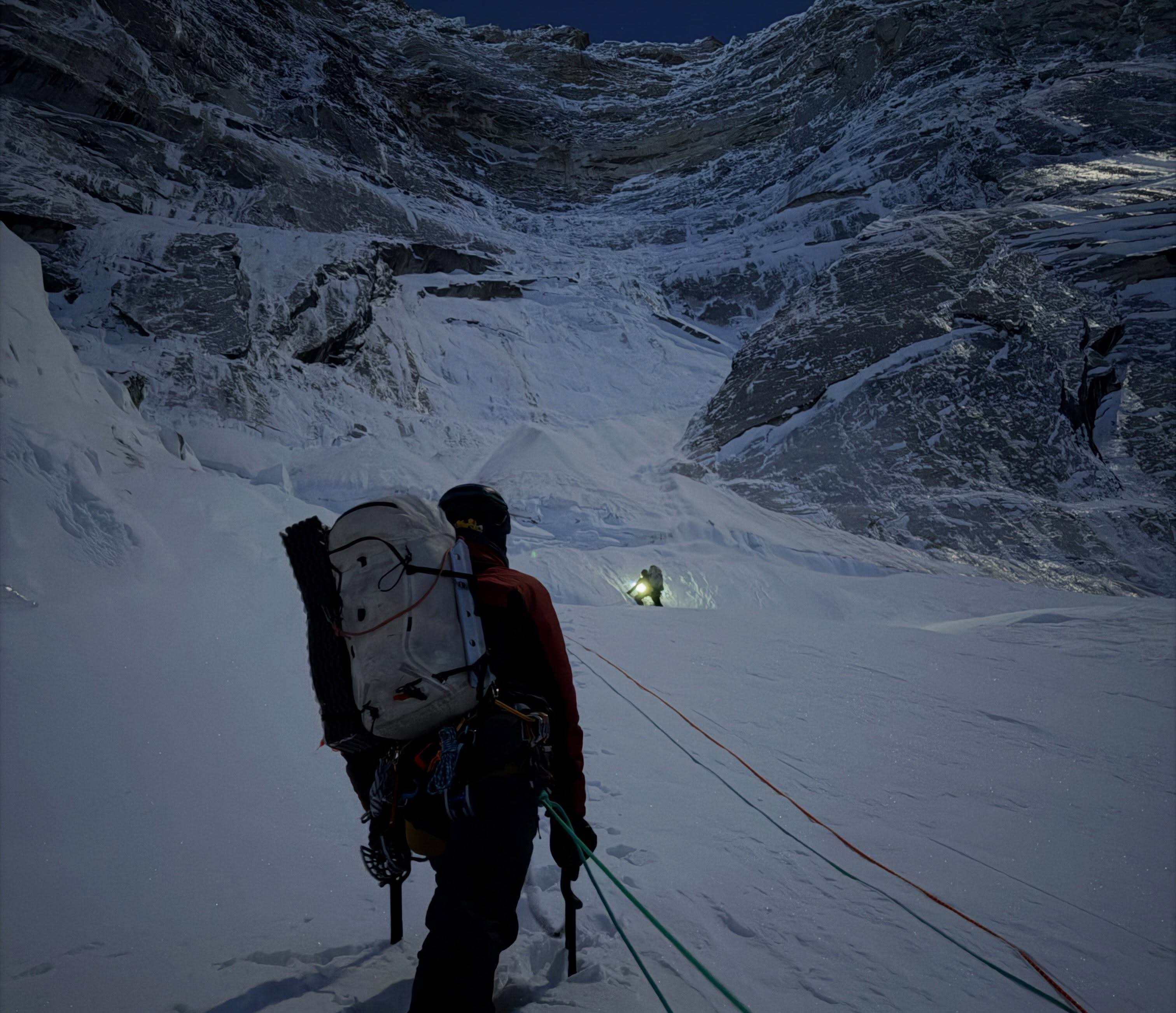
In a remarkable display of resilience and technical prowess, a team of American alpinists—Dane Steadman, Cody Winckler, and Grant Stewart—has successfully completed the first ascent of the imposing 1,800-meter north face of Sosbun Brakk in Pakistan’s Karakoram range. The expedition, which culminated in early October, adds a significant chapter to the history of high-altitude mountaineering, characterized by M7, WI5 technical difficulty and a series of logistical hurdles that nearly derailed the project before it began. This achievement builds upon the team’s established reputation, particularly that of Steadman and Winckler, who were recognized with a Piolet d’Or in 2025 for their ground-breaking ascent of Yashkuk Sar.
A Campaign Defined by Obstacles
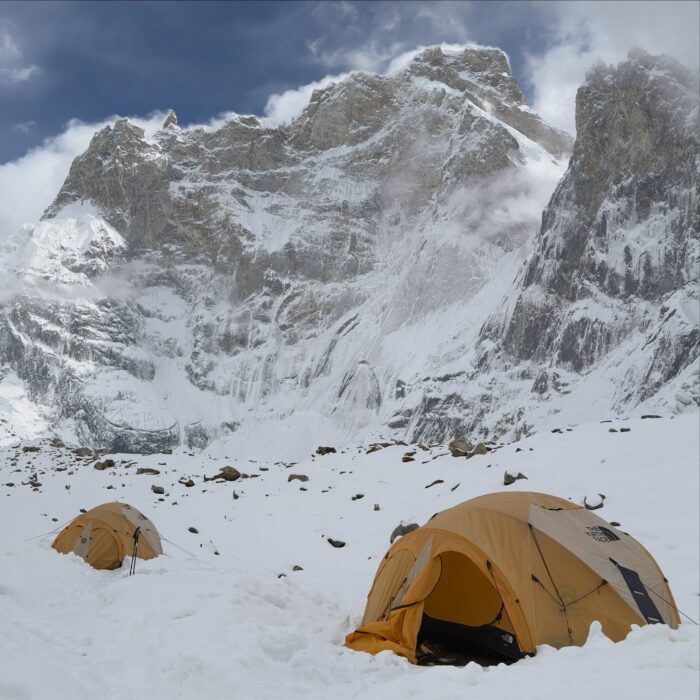
The success on Sosbun Brakk (6,414m) was far from a straightforward endeavor. The team’s journey was marked by a sequence of setbacks that tested their resolve long before they reached the base of the north face. Originally intending to target a different objective, the trio faced the abrupt revocation of their climbing permits just weeks before departure—a recurring challenge for teams navigating the complex bureaucratic landscape of international mountaineering.
Upon arrival in Pakistan, the complications continued. Winckler’s essential climbing gear was misplaced by the airline, leaving the team in a state of suspended uncertainty until the equipment was eventually tracked down and delivered to base camp. Once the physical preparations were underway, the team’s acclimatization process was severely hampered by erratic, unseasonal weather patterns. Furthermore, Steadman suffered from a bout of Acute Mountain Sickness (AMS), a debilitating condition that frequently plagues climbers at high altitudes, forcing a period of forced rest at base camp to ensure the safety of the expedition.
Tactical Reassessment and the Path to the Summit
The initial line selected by the team on the north face proved to be untenable due to the presence of a precarious, hanging serac that threatened the safety of the climbers. This forced a return to base camp, where the trio had to re-evaluate their strategy. According to Steadman, the decision to pivot to an alternative route seen from the wall provided the necessary momentum to push forward.
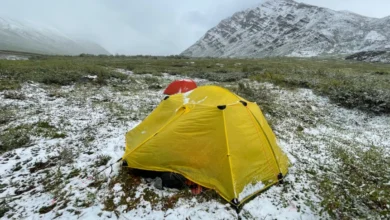
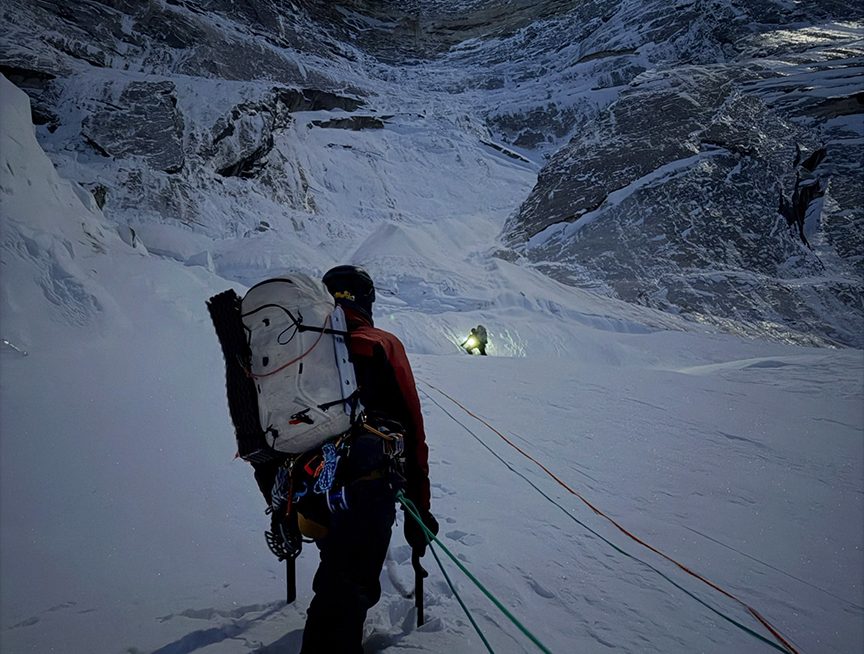
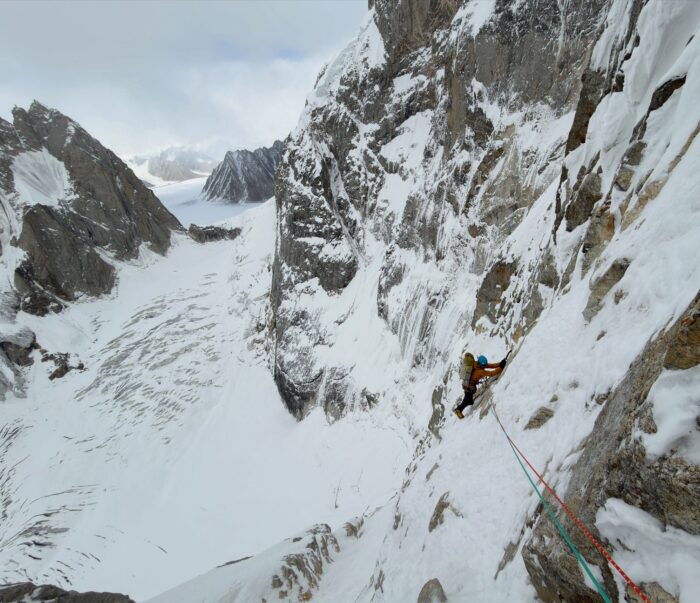
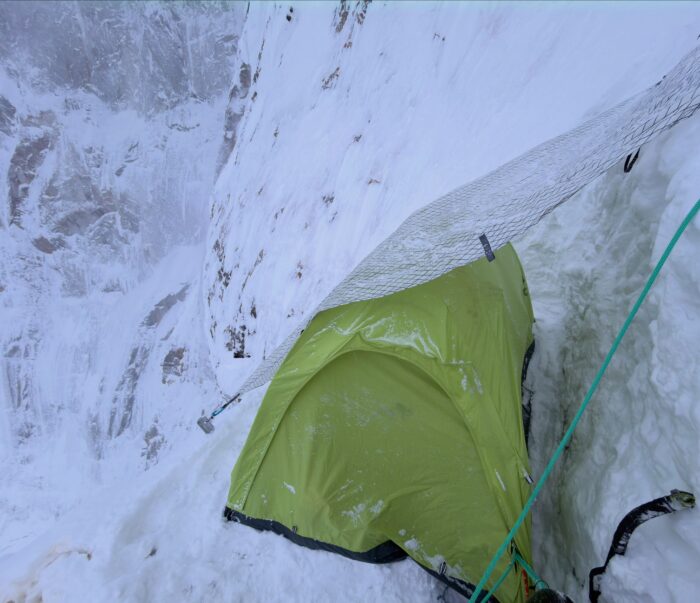
The ascent began in earnest on October 1. The team navigated an intricate path, opting for an arcing traverse to the right across an ice apron to reach the runnels on the face. The first day saw them gain 800 meters of elevation before establishing a bivouac on a snowy arete. The following 24 hours were defined by a violent storm that pinned the climbers to their tent, highlighting the volatile nature of the Karakoram in the off-season.
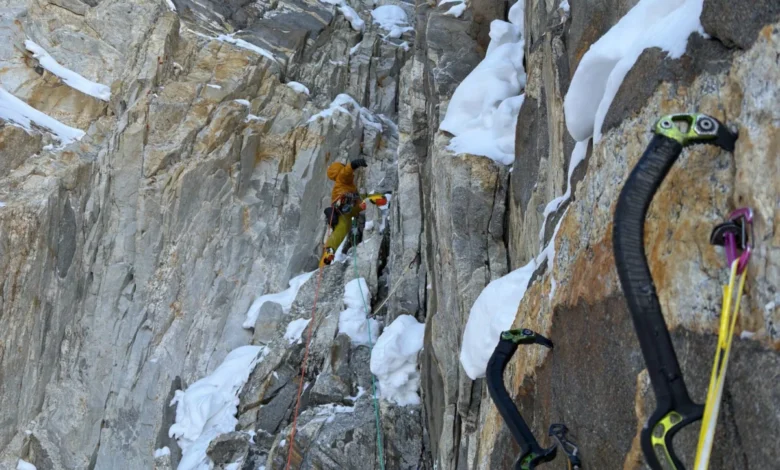
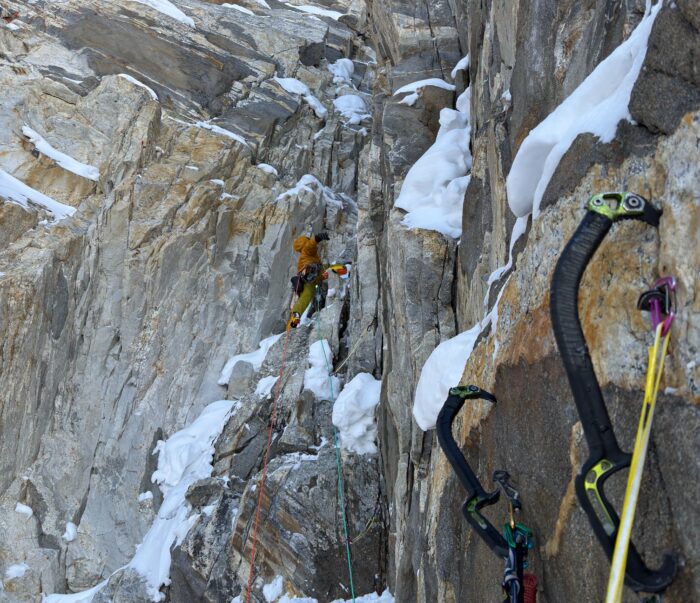
The third day offered a clearing in the weather, allowing the team to tackle the crux: a 250-meter headwall guarded by a steep, mushroom-festooned chimney. The climbing was sustained and demanding, requiring technical mastery over M7 mixed terrain. Grant Stewart noted that the breakthrough beyond the cornice—and the resulting exposure to sunlight—was a pivotal moment in the climb.
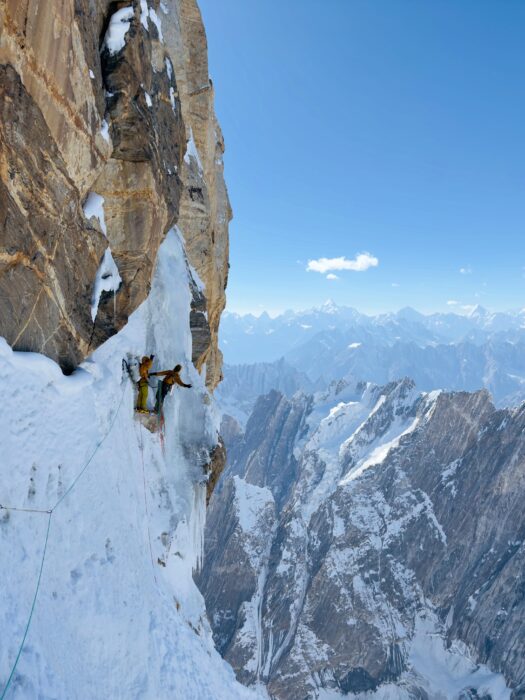
However, the final push was not without errors. On the fourth day, a route-finding mistake at 6,000 meters forced the team to retreat to a lower bivouac at 5,800 meters. With a narrow weather window remaining, they gambled on a direct push to the summit. This final segment required visionary navigation, including a move across a blank slab to access a hidden ice smear, followed by a perilous traverse with 1,800 meters of vertical exposure. They reached the summit at 4:00 p.m., facing the daunting reality of a long descent ahead of an incoming storm.
The Perilous Descent and Survival
The descent proved to be as demanding as the ascent. The team initiated a series of 35 rappels, reaching their high bivouac long after dark. By the following morning, the weather had deteriorated rapidly, with heavy snowfall beginning hours earlier than forecasted.
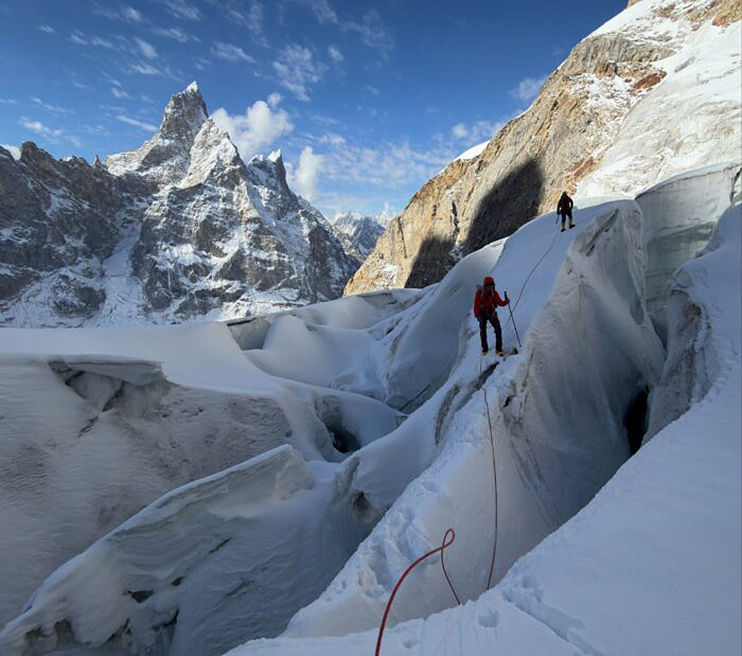
The descent down the west rib to the Sokha/Sosbun col was hampered by high winds that rendered verbal communication nearly impossible. Upon touching down on the glacier at 4:00 p.m., the team’s challenges were not over. As they navigated the glacier toward base camp, Stewart narrowly escaped falling into a hidden crevasse, a reminder of the fragility of the alpine environment. Their safe arrival at base camp was met with support from their local crew, Ibrahim and Idrees, whose presence provided a vital anchor for the exhausted climbers.
Broader Implications for Alpine Mountaineering
The success of the Sosbun Brakk expedition carries significant implications for the alpine community. Firstly, it underscores the viability of "alpine-style" climbing—a minimalist approach that eschews fixed ropes and high-altitude porters—even on major, technically demanding peaks. The ability of the team to adapt to changing conditions and logistical failures demonstrates the necessity of mental agility in modern mountaineering.
Statistically, the Karakoram has seen an increase in interest for off-season expeditions. While this allows for quieter mountains and a more profound wilderness experience, it also exposes teams to higher risks related to weather instability and limited rescue infrastructure. The success of Steadman, Winckler, and Stewart provides a case study in effective risk management and technical execution under extreme pressure.
Furthermore, the team’s public statements emphasize a growing shift in the narrative of mountaineering. Rather than focusing exclusively on the athletic achievement, the climbers highlighted their deep appreciation for the region of Gilgit-Baltistan. This cultural engagement is becoming an increasingly essential component of high-altitude expeditions, as climbers acknowledge that the success of a trip is inextricably linked to the hospitality and support of local communities.
Historical and Geographic Context
Sosbun Brakk, located in the Shigar District of the Gilgit-Baltistan region, remains one of the more elusive targets in the Karakoram. Its geography, characterized by massive rock slabs, hanging glaciers, and complex ice features, makes it a laboratory for world-class alpinists.
The achievement of this team mirrors a wider trend of American climbers seeking out "first ascents" on unclimbed faces of already-named peaks. In an era where many of the world’s highest summits have been reached, the frontier of mountaineering has shifted toward the "how"—the technical difficulty, the style of the climb, and the aesthetic of the route. By choosing a line that demanded M7-grade mixed climbing, the team has set a new benchmark for future attempts in the region.
As the expedition concludes, the climbing community expects that this route will become a reference point for future technical endeavors in the Karakoram. The detailed accounts provided by Steadman and Stewart serve not only as a record of their success but as an educational resource regarding route-finding, crevasse navigation, and the psychological demands of sustained, high-consequence climbing.
In conclusion, the first ascent of the Sosbun Brakk north face represents a triumph of human spirit and technical discipline. By overcoming bureaucratic barriers, equipment loss, physical illness, and treacherous weather, Steadman, Winckler, and Stewart have cemented their status among the elite of the international climbing community, while simultaneously honoring the unique cultural and geographic landscape of the Pakistani Karakoram. Their journey serves as a powerful reminder that in the world of high-altitude exploration, the summit is merely the midpoint of a much larger, more complex endeavor.