Beyond Sustainability: How Regenerative Tourism is Redefining Global Travel at the Asia Symposium

For decades, the global tourism industry operated under a framework of cautious minimization. Initiatives in sustainable travel focused primarily on reducing negative footprints—asking vacationers to use less plastic, lower their carbon emissions, respect foreign customs, and tread lightly upon fragile ecosystems. However, as the compounding pressures of global climate change, over-tourism, and rapid urbanization test the limits of popular destinations worldwide, industry stakeholders are recognizing that merely doing less harm is no longer enough.
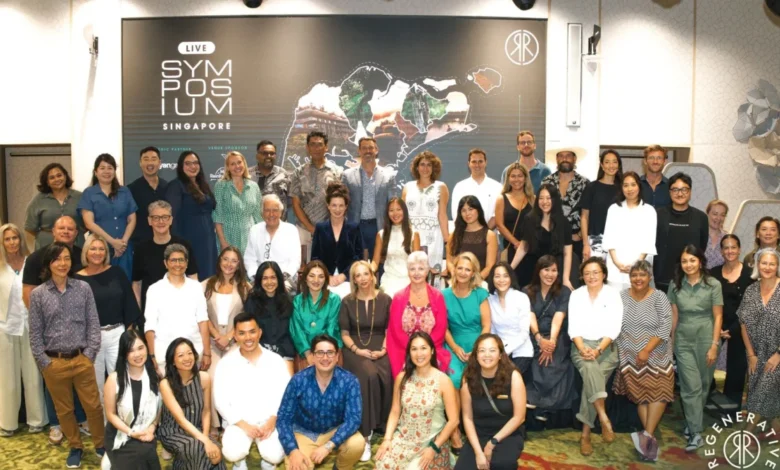
This paradigm shift was the focal point of the recent Regenerative Travel Asia Symposium held in Singapore. Hosted against the backdrop of shifting global travel patterns, the high-profile gathering convened industry leaders, conservationists, hospitality executives, and policymakers to debate a radical proposition: what if the travel and tourism industry could actively restore ecosystems, fortify local communities, and fundamentally rebuild humanity’s relationship with the natural world?
The consensus emerging from Singapore is clear. Traditional tourism has historically been rooted in consumption—a transactional model where visitors extract leisure, scenic views, and cultural experiences from a destination, often leaving environmental degradation and economic disparity in their wake. Regeneration, by contrast, challenges travelers, hoteliers, and planners to view tourism not as an exploitative industry, but as a living, reciprocal relationship between people, places, and nature.
A Paradigm Shift: From Head to Heart and Extraction to Exchange
Setting the foundational tone for the symposium, Amanda Ho, co-founder and CEO of Regenerative Travel, articulated the core philosophical shift required by the movement. Ho described regenerative tourism as a transition from the "head to the heart," moving away from a mindset of scarcity toward one of abundance, and shifting the focus from the individual traveler to the collective well-being of the destination. She challenged attendees to reframe tourism as an active partnership with the planet.
This sentiment was strongly echoed by keynote speaker Juliet Kinsman. In an era increasingly dominated by digital technologies, artificial intelligence, and virtual isolation, Kinsman emphasized the vital necessity of "regenerating humanity." She reminded delegates that human beings are not separate observers standing outside of global biodiversity, but rather deeply embedded components of an interconnected living system. Rebuilding a tactile, meaningful connection with the planet and with local communities, she argued, is an antidote to modern alienation.
The urgency of this message is underscored by shifting consumer attitudes. Jeremy Tran of Sustainable Travel Asia presented compelling research data compiled by Booking.com during the symposium. According to the data, an overwhelming 85 percent of global travelers now express a desire for more sustainable travel options. Furthermore, 69 percent stated a clear intention to leave destinations better than they found them.
However, this data reveals a profound structural disconnect within the modern market: while the public appetite for ethical travel is at an all-time high, a substantial knowledge gap persists regarding how to travel responsibly.
The Social Media Paradox and Intentional Journeying
During panel discussions addressing modern consumer behavior, Jeremy Tran highlighted the powerful, often detrimental influence of social media in driving hyper-tourism. In an age where remote locations and hidden gems can transform into viral global trends overnight, the mechanics of modern travel frequently bypass intentionality.
When destinations become overnight viral phenomena, infrastructure collapses under the sudden influx of foot traffic. Tran raised a critical question for contemporary travelers: Are people choosing their destinations and experiences with genuine intention, or are they simply following digital footprints to places everyone else has already visited?
Moving beyond algorithmic trends requires travelers to interrogate their motivations. Experts at the symposium suggested that tourists must carefully evaluate why they are traveling and how they engage with local cultures upon arrival. This involves looking past surface-level aesthetics to understand the socio-economic and ecological realities of the host region.
This introspective approach directly intersects with the booming wellness tourism market. Traditionally, wellness travel has centered on restoring the individual traveler—often utilizing local healing traditions, indigenous knowledge bases, and therapeutic practices. Regenerative travel expands this framework, posing a critical question: Can a vacation simultaneously restore the personal well-being of the visitor while actively improving the ecological and social health of the community that makes the healing experience possible? True wellness, symposium participants argued, must be relational, not extraction-based.
The Ground Reality: Navigating Overtourism and Community Empowerment
To understand why regenerative practices are urgently needed, one must examine the tangible consequences of unchecked tourism growth. Maitri Fischer, a leader in environmentally sustainable design with Eco-Mantra, addressed the severe tensions that arise when tourism expansion outpaces local carrying capacity.
Drawing on the cautionary tale of Bali, Fischer detailed the severe pressures inflicted by rapid over-development. From critical municipal waste management crises to extreme strain on local water resources and aging infrastructure, Bali serves as a prime example of the vulnerabilities inherent in mass tourism models.
A central thesis of the Singapore symposium was that communities cannot merely be passive hosts or service providers for transient tourists. For tourism to achieve genuine regeneration, local populations must be empowered as active decision-makers who hold agency over their ancestral lands, cultural heritage, and economic futures. Culture and wisdom cannot be treated as commodities to be consumed; rather, tourism must function as an equitable cultural exchange.
Industry in Action: Case Studies in Regeneration
While theoretical frameworks dominated the plenary sessions, several prominent hospitality groups and operators demonstrated that regenerative models are already operational and economically viable. Industry leaders such as the Banyan Group, The Datai Langkawi, and Potato Head Bali showcased concrete examples of sustainability embedded into their core business models.
One of the most notable case studies presented was Song Saa Private Island in Cambodia. Developed on a tract of heavily degraded land, the resort was founded with an explicit mandate to heal the local environment rather than merely exploit it. Through the establishment of the Song Saa Foundation, the property played a pivotal role in creating Cambodia’s very first official Marine Protected Area.
Furthermore, Song Saa’s operational model prioritizes local empowerment, employing approximately 75 percent of its staff from surrounding villages. The resort utilizes on-site waste management systems, aggressive food waste reduction protocols, and comprehensive rainwater harvesting infrastructure to minimize its ecological footprint. Crucially, guests are not relegated to the role of passive luxury consumers; instead, they are integrated into the property’s ongoing conservation work and community outreach initiatives, transforming vacationers into active contributors to regional restoration.
Mitigating the Risk of Greenwashing
As "regenerative travel" rapidly enters the lexicon of the global tourism industry, experts at the symposium issued a stern warning regarding corporate accountability. Much like "sustainability" and "eco-friendly" before it, regenerative travel faces a severe risk of being co-opted as a hollow marketing buzzword or sophisticated greenwashing tool.
Without rigorous transparency, verified community participation, and measurable, long-term ecological impact, the regenerative label risks losing its integrity. Industry analysts stress that both corporate leaders and individual consumers share the responsibility of holding tourism providers accountable. Regeneration must evolve from a promissory corporate marketing pitch into a verifiable, binding operational commitment.
Highlighting the unique power of the sector, Nick Hardman, a marine biologist and Head of Sustainability at the Banyan Group, underscored the profound emotional and psychological dimensions of environmental stewardship. "Tourism has a huge power to be part of the healing process," Hardman told the audience.
However, making populations care about abstract ecological crises requires a localized, intimate approach. "You have to make it personal," Hardman explained. Whether a traveler participates directly in a marine coral restoration dive or engages in a respectful, reciprocal cultural exchange with an Indigenous community, empirical evidence shows that people fiercely protect what they feel personally connected to.
The Accessibility Imperative
A critical equity concern raised during the symposium centered on the democratization of regenerative travel. If regeneration is framed as a holistic, collective global necessity, its practices cannot remain restricted to the high-end luxury travel market.
For the movement to achieve systemic scale, regenerative options must become economically accessible across all tiers of tourism, from budget backpacking and mid-tier hospitality to luxury resorts. Affordability remains a paramount concern for the vast majority of global travelers, meaning that industry-wide structural transformations must occur to lower the barriers to ethical consumption.
The Road Ahead for Global Tourism
As the global climate crisis intensifies alongside a rebounding international travel market, the transition from sustainable to regenerative tourism is rapidly shifting from an idealistic aspiration to an operational necessity.
The path forward for travelers begins at the point of decision-making. By actively seeking out transparency, supporting community-led initiatives, patronizing businesses that reinvest in local infrastructure, and critically evaluating who benefits most from their itineraries, tourists can help steer the global industry toward a future defined by mutual benefit.
Ultimately, regenerative travel is not about achieving unattainable standards of perfection. It is an exercise in intentionality. It invites humanity to step away from cycles of extractive consumption, move toward deep connection, and finish at meaningful contribution. When executed with integrity, travel ceases to be a superficial diversion that merely alters the perspective of the visitor; instead, it becomes a powerful catalyst that strengthens, heals, and sustains the people and places that welcome the world in.