Bay Area Activists Launch Burma Spring Benefit Film Festival to Support Myanmar Democracy Movement

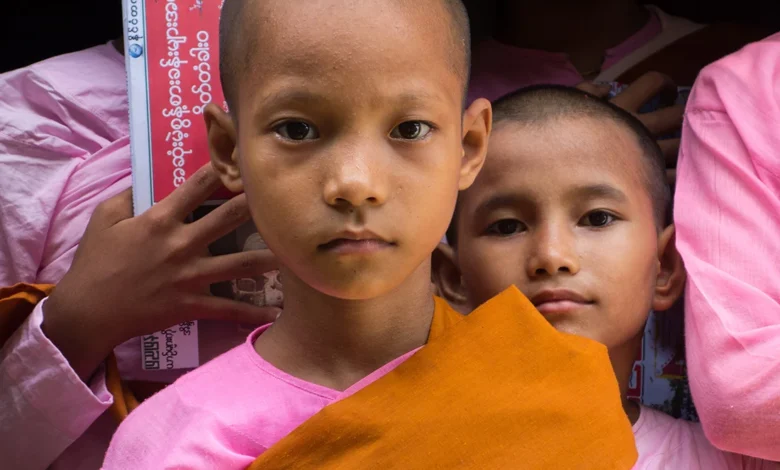
The San Francisco Bay Area has emerged as a vital hub for international solidarity with Myanmar, formerly known as Burma, following the devastating military coup that plunged the Southeast Asian nation into a profound humanitarian and civil rights crisis. In response to the ongoing violence and suppression orchestrated by the military junta, known as the Tatmadaw, local activists, artists, and filmmakers have organized the Burma Spring Benefit Film Festival. Streaming online globally, the festival runs from June 3 through June 20, offering a meticulously curated selection of over thirty films alongside daily live discussions with prominent activists, scholars, and international observers.
Designed to honor the resilience of ordinary citizens engaged in non-violent resistance, the festival features a diverse cinematic lineup spanning documentaries, short films, and dramatic narratives. The programming explores a wide array of critical issues, including human rights abuses, environmental degradation, the struggles of ethnic minority communities, Buddhist traditions, LGBTQ+ advocacy, and women’s rights. All proceeds generated from the event—bolstered by optional donations—will directly benefit grassroots humanitarian organizations operating inside Myanmar, providing critical aid to those sustaining the peaceful pro-democracy movement.
The Genesis and Leadership of the Festival
The initiative was brought to life by a dedicated volunteer organizing committee comprising prominent cultural figures and academics rooted in both the Bay Area and the Burmese diaspora. The team includes Kenneth Wong, a Burmese-American author, translator, and language instructor at the University of California, Berkeley; Gaetano Kazuo Maida, executive director of the Buddhist Film Foundation; award-winning documentary filmmaker Ellen Bruno; Jeanne Marie Hallacy, a filmmaker and director specializing in digital storytelling for refugee and migrant youth; Hozan Alan Senauke, abbot of the Berkeley Zen Center; and Gregg Butensky, operations director of Kirana Productions, co-founder of Ethical Traveler, and principal at Code Refactory.
Reflecting on his motivation for spearheading the event, Maida noted that his initial fascination with Burma stemmed from its rich historical tradition of Buddhism and the architectural splendor of the Bagan valley temples. However, he emphasized that the escalating resistance against military rule over recent years revealed the country’s profound cultural and ethnic diversity. The festival, Maida explained, embraces this rich tapestry of ethnic communities, religions, and creative energies to amplify awareness and financial support for the democratization movement.
Chronology of the Crisis: The February 1 Coup and Its Aftermath
The origins of the current humanitarian catastrophe trace back to the early morning hours of February 1, 2021. In a sudden and calculated move, the Tatmadaw seized control of the government, overthrowing the democratically elected civilian administration led by State Counsellor Aung San Suu Kyi and President Win Myint. The military justified the takeover by alleging widespread fraud in the November general elections—a landslide victory for Suu Kyi’s party, the National League for Democracy (NLD)—despite international election monitors confirming the results were largely free and fair.
Dr. Lee Morgenbesser, an expert on authoritarian politics in Southeast Asia at Griffith University’s School of Government and International Relations in Australia, observed that the coup abruptly terminated Myanmar’s fragile and flawed decade-long experiment with civilian governance.
The military’s actions triggered an immediate wave of popular resistance, characterized initially by the nationwide Civil Disobedience Movement (CDM). Healthcare workers, civil servants, and educational professionals walked off their jobs in mass protest. By May 2021, the swelling dissent crystallized into a coordinated global call for a Spring Revolution, urging the international community to recognize the unity and resolve of the Myanmar populace.
Targeting Culture: The Junta’s Crackdown on Artists and Intellectuals
From the outset of the uprising, cultural figures—including filmmakers, actors, musicians, and poets—placed themselves at the vanguard of the resistance. Kenneth Wong highlighted that these artists went far beyond passive encouragement, paying a heavy price for openly defying the military regime.
Simultaneously with the detention of state leaders on February 1, the junta arrested Min Htin Ko Gyi, founder of the annual Human Rights Human Dignity Film Festival. The crackdown rapidly widened to encompass prominent public figures. Well-known comedian Zarganar, romantic comedy film star Min Lu—who was subsequently incarcerated in the notorious Insein Prison—and popular male model Paing Takhon were all targeted by security forces. Furthermore, more than thirty poets were imprisoned, with reports of some facing fatal violence, while over one hundred professionals from the local film industry were forced into hiding.
According to data compiled by the Assistance Association for Political Prisoners (AAPP), a human rights organization tracking casualties and arrests, the military’s violent suppression resulted in the deaths of well over 800 peaceful protesters and the arbitrary arrest, charging, or sentencing of nearly 12,000 individuals during the early months of the crisis.
Cinematic Perspectives: Bridging Decades and Documenting Atrocities
The Burma Spring Benefit Film Festival leverages the power of visual media to contextualize the historical and contemporary dimensions of the crisis. Among the featured works is the short film Burma Spring 21, a collaborative project capturing the immediate aftermath of the coup and the birth of the Civil Disobedience Movement.
Kenneth Wong noted the profound educational value of screening such contemporary works alongside established documentaries like Burma VJ, which chronicles the courageous video journalists who documented the 2007 Saffron Revolution before the advent of modern digital platforms. Juxtaposing these works allows audiences to analyze the evolution of resistance tactics across generations.
Other notable selections include I Am Rohingya: A Genocide in Four Acts, in which fourteen young refugees theatrically re-enact the harrowing experiences of their families fleeing targeted violence against Burmese Muslims. The Black Zone follows a covert medical team navigating hazardous jungle terrain to deliver emergency healthcare amidst ongoing military atrocities. Meanwhile, A Peaceful Land chronicles the resistance of rural farmers against government agricultural campaigns that precipitated widespread land confiscations and forced labor practices.
Panel Discussions and Political Implications
In addition to film screenings, the festival features a comprehensive series of speaker panels addressing the geopolitical and humanitarian dimensions of the crisis. Sessions such as Myanmar Diaspora and the Milk Tea Alliance, Refugees and the Humanitarian Crisis, and specialized forums featuring representatives of the National Unity Government (NUG)—a parallel administration established by ousted lawmakers—provide critical insights into the political structuring of the resistance.
Wong emphasized the particular importance of sessions dedicated to ethnic minorities, such as Ethnic Nationalities and the Rohingya: A Search for Justice and Peace. The shared experience of state-sponsored brutality has fostered unprecedented solidarity between Myanmar’s urban majority populations and marginalized ethnic minority groups who endured decades of systemic abuse in the country’s borderlands.
Broader Impact and Long-Term Vision
While the festival confronts the stark realities of military rule, civil war, and humanitarian suffering, organizers maintain a broader vision for Myanmar’s cultural identity. Wong expressed hope that international audiences will ultimately perceive the nation beyond the framework of headlines dominated by violence and authoritarian isolation.
He recalled Myanmar’s vibrant literary and cultural heritage—the land that inspired George Orwell’s anti-colonial novel Burmese Days, where citizens gather in bustling teashops to debate poetry and politics, and where rich spiritual traditions endure amidst daily life. The ultimate aspiration of the Burma Spring Benefit Film Festival is twofold: to provide immediate, tangible support to those fighting for democracy today, and to ensure that when the conflict subsides, the global community is prepared to welcome back an enduringly rich and enchanting cultural landscape.