Mangrove Restoration Is Becoming Big Business, But Transparency Gaps Leave Local Communities Behind

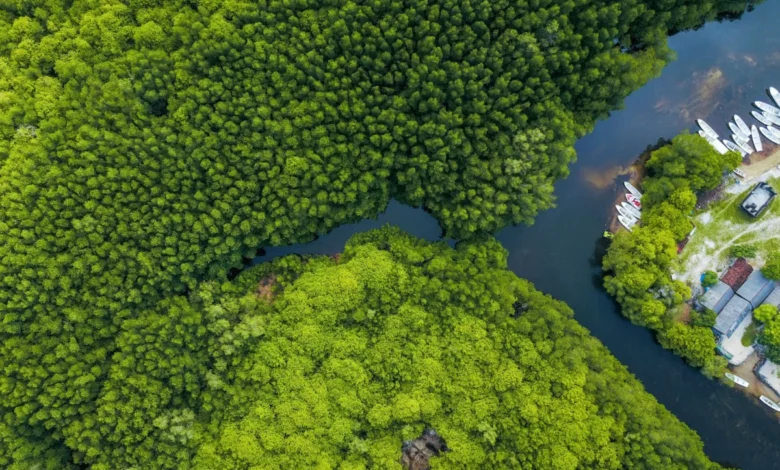
The global rush to restore coastal ecosystems has catalyzed a multi-billion-dollar market focused on carbon sequestration, biodiversity enhancement, and climate change mitigation. Projects spanning thousands of hectares—such as a massive 350,000-hectare mangrove restoration initiative along Pakistan’s Indus delta coast—are increasingly turned into marketable carbon credits. These financial instruments allow corporate entities thousands of miles away to offset their emissions by purchasing verified metric tons of stored carbon. However, a growing body of academic research and policy reviews indicates that this rapidly expanding economy frequently bypasses the indigenous and local populations who have historically managed, inhabited, and protected these coastal environments.
As the international community prepares for the upcoming United Nations Climate Change Conference (COP31) in Antalya, Turkey, questions surrounding climate finance accountability have moved to the forefront of global environmental policy. While governments pledged at COP30 to dramatically scale up adaptation finance by 2035 to help vulnerable regions cope with rising sea levels and intensifying cyclones, critics warn that existing financial conduits remain structurally flawed. Rather than empowering frontline communities, climate funds often flow along established institutional pathways that prioritize quantifiable, exportable metrics over localized, community-defined resilience.

The Two-Tiered Value of Coastal Ecosystems
Mangrove forests possess multiple layers of value, yet current global markets monetize only a narrow slice of what these ecosystems provide. To a distant corporate buyer, a restored mangrove forest represents a discrete volume of sequestered carbon dioxide packaged into tradeable units. To the local residents who inhabit the surrounding villages, however, the forest represents an irreplaceable lifeline. It serves as a natural barrier against catastrophic storm surges, acts as an essential nursery habitat for commercial and subsistence fisheries, and supplies vital materials such as timber, honey, and thatch.
This dichotomy exposes a fundamental imbalance in the contemporary conservation economy. A structured market exists for the carbon stored within the biomass and soils of the forest, but no equivalent market captures the localized, daily utility experienced by the inhabitants. Consequently, restoration initiatives often implement strict conservation zoning that criminalizes traditional subsistence activities. Families who have sustainably harvested wood or fished within these areas for generations are frequently reclassified as encroachers, while corporate intermediaries profit from the commercialization of the ecosystem.
Intermediary Dominance and the Transparency Deficit
The commercialization of coastal restoration has generated an intricate web of market participants, including independent auditors, carbon brokers, project aggregators, and certification bodies. Each tier in this network extracts a financial share before any residual capital reaches the source communities. Quantifying this wealth extraction remains exceptionally difficult due to a widespread lack of financial transparency.

Recent investigations by watchdog organizations highlight systemic reporting deficiencies within the carbon crediting sector. An evaluation of numerous carbon project documents by organizations such as Carbon Market Watch revealed that formal benefit-sharing agreements are remarkably scarce, with only a fraction of reviewed initiatives providing verifiable evidence of distributing financial returns to indigenous populations. Furthermore, research indicates that only a small minority of market intermediaries publicly disclose their profit margins.
This opacity transforms local populations into low-wage laborers for large-scale ecological engineering projects while the majority of financial gains accumulate among distant project developers and brokers. Researchers caution that without enforceable mandates for transparency and equitable revenue sharing, the massive influx of anticipated adaptation and mitigation finance risks exacerbating existing socio-economic inequalities rather than alleviating them.
Historical Evolution of Mangrove Management
The tension between external economic priorities and local stewardship is not a novel phenomenon. Historical precedents demonstrate that the definition of a "healthy" mangrove forest has consistently shifted to align with prevailing economic and political demands.

The management of the Matang mangroves on Malaysia’s west coast provides the longest documented record of systematic mangrove silviculture anywhere in the world, dating back to 1902. Over more than a century, the primary objective of the forest has undergone continuous transformation:
- Early 20th Century: The forest was managed primarily to produce charcoal to fuel colonial economic demands.
- Post-Independence Era: The focus shifted toward timber production to support the development needs of a newly independent nation.
- Late 20th Century: Conservation priorities expanded to emphasize regional biodiversity preservation.
- Contemporary Era: The ecosystem has been integrated into the global carbon market, with emerging frameworks for biodiversity credits close behind.
Throughout these evolutionary phases, local communities have typically been incorporated into management schemes only when their physical labor was required, and systematically sidelined when resource governance policies were formulated.
Trade-Offs and Ecological Realities
Every ecological restoration project necessitates complex trade-offs, the burdens of which are disproportionately borne by local inhabitants. While external stakeholders celebrate the immediate quantitative success of planting uniform, single-species mangrove blocks to satisfy monitoring criteria, the ecological and social consequences can be severe.

Global scientific analyses of mangrove restoration initiatives indicate that artificially replanted forests frequently recover fewer ecological functions compared to naturally regenerating ecosystems. Furthermore, the multi-year recovery period often imposes acute short-term costs on coastal communities. For instance, prioritizing carbon sequestration or strict biodiversity targets can require the closure of traditional fishing grounds or the cultivation of non-fruit-bearing tree species. This top-down engineering can produce a landscape that scores well on a remote monitoring report but fundamentally disrupts the socio-ecological systems upon which residents depend for daily survival.
Researchers have increasingly applied the term "green colonialism" to describe projects where external entities dictate land-use policies, restrict traditional access rights, and rebrand long-standing community spaces as exclusive conservation zones. This dynamic shifts not only who is permitted to extract resources, but also who holds the authority to define environmental degradation versus sustainable stewardship.
Toward Just Restoration: Implications and Future Outlook
Addressing the structural deficiencies in coastal carbon and biodiversity markets requires a fundamental pivot in how project success is evaluated. A comprehensive review of dozens of ocean and coastal carbon storage projects underscores the difficulty of distinguishing successful community-centered outcomes from projects that merely enrich intermediaries, largely because community engagement and benefit distribution are rarely documented systematically.
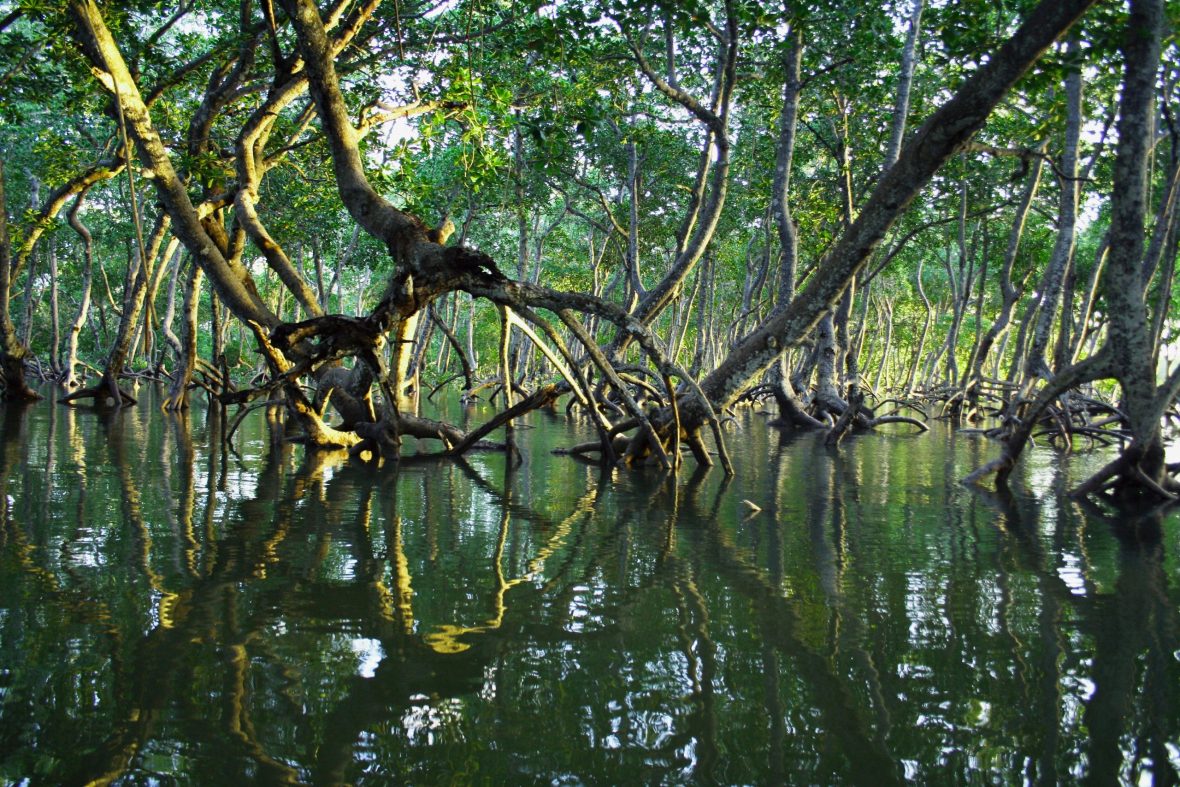
Academic initiatives—such as the Revive project operating across multiple sites in Malaysia—are actively attempting to redefine these parameters. By anchoring evaluation metrics in the priorities articulated by local residents rather than external corporate buyers, these frameworks seek to invert traditional power structures.
As global leaders convene for COP31 to discuss the tripling of climate adaptation finance, the core challenge remains institutional rather than financial. Without
stringent regulatory mechanisms that guarantee transparency, protect traditional access rights, and place indigenous populations at the center of project governance, increased funding may simply amplify existing inequities. True restoration cannot be measured solely in metric tons of carbon removed from the atmosphere; it must account for the social, economic, and cultural costs absorbed by the communities living along the shoreline.