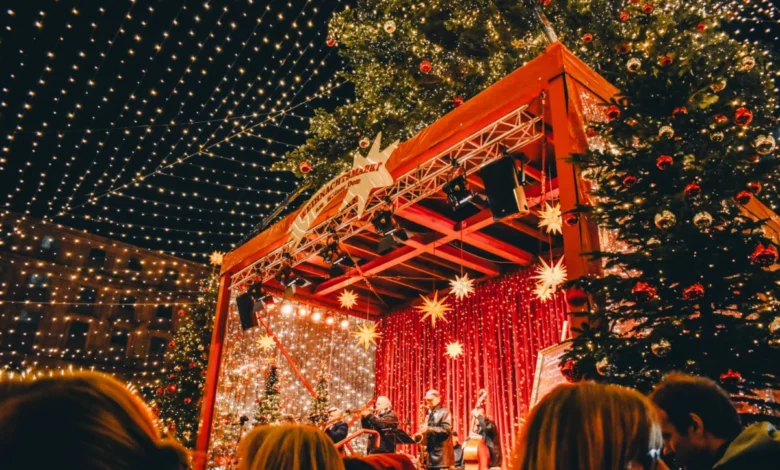
The tradition of the German Christmas market, or Weihnachtsmarkt, stands as one of Europe’s most enduring cultural legacies, with roots tracing back to the late Middle Ages. Historical records indicate that the earliest precursors to these markets emerged in the 14th century, initially serving as essential community gatherings where local artisans and bakers sold goods to help residents prepare for the harsh winter months. Today, these markets have evolved into a global phenomenon, drawing millions of international visitors annually to Germany to experience a blend of regional gastronomy, centuries-old craftsmanship, and festive pageantry.

As the 2026 holiday season approaches, municipal planners and tourism boards across Germany are finalizing preparations for what is expected to be a record-breaking year for tourism. From the iconic cathedral backdrops of the Rhineland to the medieval, walled charm of Bavaria, the following analysis details the premier locations, operational logistics, and cultural significance of Germany’s most prominent holiday markets.

Historical Context and Economic Impact

The modern German Christmas market is more than a commercial endeavor; it is a manifestation of regional identity. Each market typically features a specific local specialty—ranging from Nuremberg’s world-renowned gingerbread (Lebkuchen) to Dresden’s Stollen—ensuring that visitors receive a unique cultural experience in every city. Economically, these markets serve as a vital stimulus for local businesses, the hospitality sector, and the artisan crafts industry. According to industry data, the holiday market season contributes billions of euros to the German economy, with small-scale artisans reporting that up to 40% of their annual revenue is generated during the four weeks of Advent.
Chronology and Regional Scheduling

While individual market schedules vary, most major German Christmas markets operate from the final week of November through December 23 or 24. A select number of markets, particularly those in historic hubs like Speyer or Baden-Baden, extend their operations into early January to accommodate post-holiday travelers.

For the 2026 season, the staggered opening dates are as follows:

| City | 2026 Operational Period |
|---|---|
| Cologne | Nov 16 – Dec 23 |
| Aachen | Nov 20 – Dec 23 |
| Munich | Nov 20 – Dec 24 |
| Trier | Nov 20 – Dec 22 |
| Rothenburg ob der Tauber | Nov 20 – Dec 23 |
| Berlin | Nov 23 – Dec 27 |
| Frankfurt | Nov 23 – Dec 22 |
| Hamburg | Nov 23 – Dec 23 |
| Heidelberg | Nov 23 – Dec 22 |
| Leipzig | Nov 24 – Dec 23 |
| Erfurt | Nov 24 – Dec 22 |
| Wiesbaden | Nov 24 – Dec 23 |
| Dresden | Nov 25 – Dec 24 |
| Stuttgart | Nov 25 – Dec 23 |
| Nuremberg | Nov 27 – Dec 24 |
| Bonn | Nov 18 – Dec 23 |
| Freiburg | Nov 19 – Dec 23 |
| Düsseldorf | Nov 19 – Dec 30 |
Analysis of Major Market Landscapes

Cologne remains the undisputed leader in market density and visitor volume. With seven distinct markets spread across the city, the Cologne Cathedral market offers a centralized, high-visibility experience, while the Old Market (Alter Markt) provides a more intimate, storybook atmosphere. The city’s strategic emphasis on varied themes—from the Angel’s Market in Neumarkt to the gnome-themed stalls in the Old Town—ensures that the city can manage large crowds while maintaining distinct cultural zones.

Nuremberg’s Christkindlesmarkt, by contrast, focuses on preservation. Dating back to 1530, it enforces strict regulations on stall decor and merchandise to prevent commercial dilution, maintaining the traditional red-and-white aesthetic that defines the historic German Christmas identity. This adherence to tradition has cemented its status as a primary destination for those seeking an authentic, historical experience.

In the eastern regions, Dresden’s Striezelmarkt offers a different experience, focusing on scale and monumental display. As the oldest documented market in Germany, it functions as the region’s cultural anchor, hosting elaborate stage performances, gospel concerts, and exhibitions that highlight Saxon traditions. The scale of the Dresden markets, which collectively encompass 11 different locations, demonstrates the successful integration of large-scale tourism infrastructure with regional heritage.

The Strategic Importance of Smaller Towns

While major metropolitan markets garner the most international attention, smaller towns often provide a higher quality of interaction with local artisans. Locations like Rothenburg ob der Tauber, which retains its medieval fortifications, offer a unique aesthetic immersion. The town’s year-round commitment to Christmas culture, epitomized by the Käthe Wohlfahrt flagship store, allows it to function as a living museum. Similarly, the market in Monschau, situated on the Belgian border, showcases the architectural beauty of the Eifel region, proving that smaller, niche markets can offer a more tranquil, atmospheric experience compared to the high-traffic urban centers.

Logistical Considerations for International Travelers

For visitors traveling from outside the European Union, navigating the market landscape requires careful planning. Most German cities are well-connected by high-speed rail (ICE trains), making a "market-hopping" itinerary feasible. However, experts recommend focusing on a specific region—such as the Rhineland or Bavaria—to avoid excessive travel time and to maximize time spent at the markets themselves.

Language barriers are rarely a concern in major tourist centers, where English is widely spoken among vendors. However, basic knowledge of German phrases—such as "Frohe Weihnachten" (Merry Christmas)—is consistently well-received by locals. Visitors are also advised to prepare for varying weather conditions; while the markets are often covered or located near indoor areas, the majority of the experience takes place outdoors in temperatures that often hover near or below freezing.

Implications and Future Outlook

The German Christmas market sector has demonstrated remarkable resilience, having successfully adapted to modern technological and security requirements. Digital mapping, app-based schedules, and enhanced safety protocols are now standard across all major municipalities. Furthermore, there is an increasing emphasis on sustainability, with many markets transitioning to reusable Glühwein mugs (Pfand system), which significantly reduces waste.

As we look toward 2026, the markets are expected to continue serving as a primary driver of European cultural diplomacy. By balancing the demands of global tourism with the preservation of local craft and culinary traditions, Germany ensures that the Weihnachtsmarkt remains a vibrant, evolving, and essential component of the global holiday calendar. For the prospective visitor, these markets offer a unique opportunity to witness a centuries-old tradition that continues to thrive in the 21st century, providing a rare sense of continuity and community in an increasingly fast-paced world.

The synthesis of history, economy, and social cohesion found within these markets serves as a model for cultural tourism. Whether one visits for the culinary offerings, the historical architecture, or the sheer atmosphere of the Advent season, the German Christmas market remains a standard-bearer for holiday tradition, reflecting the depth and diversity of German culture.